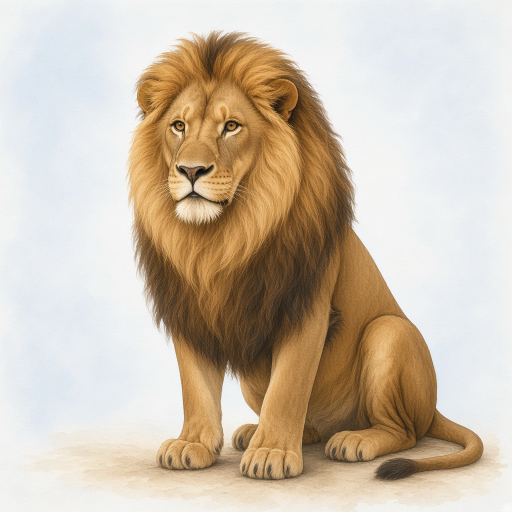
A lion is a large wild cat found mainly in Africa, with one population in India. Many lions live in social groups called prides, although some travel alone or in small coalitions. Adult males usually grow a mane, but mane size varies and rare females can develop manes. Lions use savannas, grasslands, shrublands, dry forests, and open woodlands; they are not tropical-rainforest specialists.
Why lions are tricky to understand
Most wild cat species are mainly solitary. Lions are unusually social: a pride usually centers on related females and their cubs, while male coalitions may join for a time. Pride size changes widely, and not every lion belongs to a pride.
Lionesses often carry out cooperative hunts, while resident males spend substantial effort defending territory. Males also hunt, especially when nomadic or when cover and large prey favor their greater body size. Hunting roles are not a simple females-only rule.
The “jungle king” nickname is misleading. Lions use savannas and grasslands, but also shrublands, dry woodlands, and some other open habitats.
Key facts about lions
Many lions live in prides. These flexible groups usually center on related females and their cubs, sometimes joined by a coalition of males.
Lionesses often hunt together. Resident males also hunt and may be especially important hunters in some habitats.
Most wild lions live in Africa on open grasslands and savannas, not in jungles.
Most adult male lions grow a mane. Its length and color vary with age, hormones, genes, health, and climate. Rare maned females and nearly maneless males are exceptions.
A lion’s roar is very loud. On a calm night it can be heard about 5 miles (8 km) away. Lions roar to tell other lions where they are.
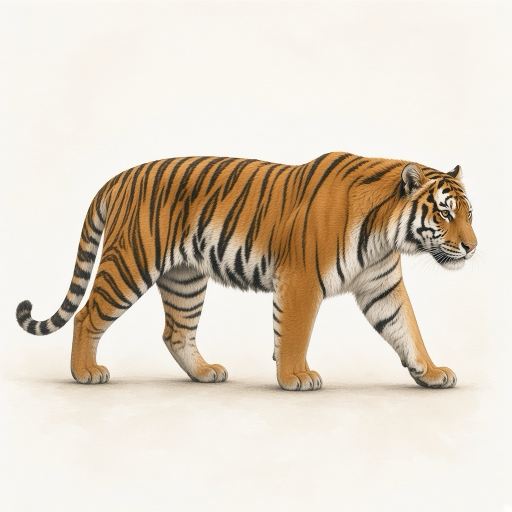
Tigers generally reach greater maximum masses than lions. By that measure, the lion is the second-largest living cat. Both are much bigger than a pet cat.
A male lion can weigh from about 330 to 550 pounds (150 to 250 kg). That is as heavy as two or three grown people. Females are lighter.
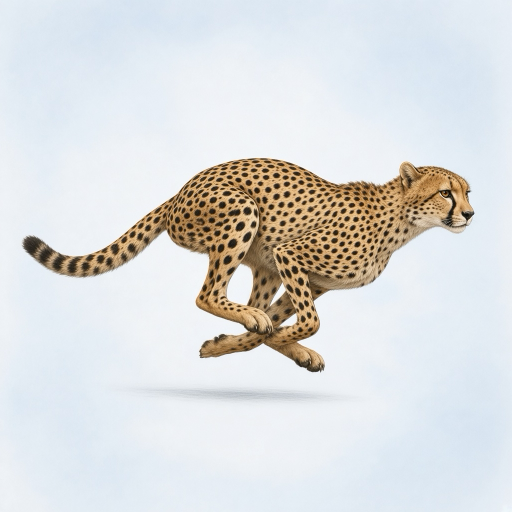
Lions rely on short bursts, not long chases. They stalk close before rushing at prey because they cannot sustain their top speed over a long distance.
Lions rest a lot. They sleep for a big part of the day, often up to about 20 hours, usually in the shade.
Baby lions are called cubs. Cubs are small and helpless when they are born, and they drink milk from their mother.
Common myths about lions
Myth: Lions are the “king of the jungle” and mainly live in tropical jungle. Lions are not tropical-rainforest specialists. They use grasslands and savannas as well as shrublands, dry woodland, and thick brush. The nickname is famous, but it is not a precise habitat description.
Myth: Only one sex hunts. Lionesses often cooperate in hunts, and resident males often defend territory, but males also hunt. Their contribution varies with habitat, prey, and whether they are resident or nomadic.
Myth: The lion is always the biggest cat in the world. Tigers generally reach greater maximum masses and lengths, making lions second by that comparison. Individuals overlap, so species rankings do not tell you which of two particular cats is larger.
Myth: Lions live only in Africa. Almost all wild lions live in Africa, but an Asiatic population survives across the Gir landscape and nearby areas of Gujarat, India. It is the only wild population outside Africa today.
Myth: Lions eat grass and plants as food. Lions are carnivores that get their nutrition from other animals, including zebras and wildebeest. Several lions may feed from the same carcass, but access is competitive and not an equal family-style sharing system.
Frequently asked questions about lions
Where do lions live?
Most wild lions live in sub-Saharan Africa and use savannas, grasslands, shrublands, and open woodlands. An Asiatic population survives in Gujarat, India. Lions generally are not tropical-rainforest specialists, although their habitats are more varied than bare grassland.
Why do lions live in groups?
Pride life can help lions defend territories and cubs and can make some hunts more effective. A pride is flexible rather than one fixed family unit, and some lions spend long periods alone or in coalitions.
Do male or female lions do the hunting?
Lionesses often hunt cooperatively. Male lions also hunt, including when nomadic and in habitats where dense cover helps them ambush prey. Resident males commonly devote more time to territorial defense.
How loud is a lion’s roar?
A lion’s roar is one of the loudest sounds any big cat makes. On a calm night, it can be heard about 5 miles (8 km) away. Lions roar to tell other lions where they are.
What is a baby lion called?
A baby lion is called a cub. Cubs are tiny and weak when they are born, and they drink milk. Pride females may form a creche in which cubs rest and move together under the care of several adults.
Each of this topic’s quiz questions cites a source for the fact it tests. You can play at any level: Rookie, Curious, Sharp, or Expert.
A lion is a large wild cat found mainly in Africa, with an Asiatic population in India. Many live in flexible social groups called prides, while other individuals travel alone or in coalitions. Lions also stand out for the mane normally grown by adult males, although mane development varies and rare females can become maned.
Why lions are tricky to understand
Most wild felids are mainly solitary, making the lion unusually social. A pride generally centers on related females and dependent young and may associate with a coalition of males. Group size varies widely, and nomadic lions may live outside prides.
Lionesses often hunt cooperatively, while resident males devote much effort to territorial defense. But male lions also hunt, especially when nomadic or where cover and large prey favor their size. Studies find different contributions in different habitats.
The “king of the jungle” nickname is also misleading. Lions commonly use grasslands and savannas, but also shrublands and open woodlands. They are not specialists of dense tropical rainforest.
One more surprise: lions are not found only in Africa. Almost all wild lions live there, but Asiatic lions survive across the Gir landscape and neighboring parts of Gujarat, India, the only region outside Africa with a wild population.
Key facts about lions
Pride size varies widely. A pride usually centers on related females and cubs and may associate with one or more adult males. Females are often philopatric but do not invariably remain in one group for life.
Lionesses often hunt cooperatively, while resident males often emphasize defense. Males also hunt, and their share varies by habitat and social status.
Most adult males grow a mane. Mane development varies with age, hormones, genetics, condition, and climate; rare females grow manes and some males have very sparse ones.
A male lion can weigh from about 330 to 550 pounds (150 to 250 kg), roughly the weight of two or three grown people. Females are lighter.
Lion cubs are born with spots. Newborn cubs have dark spots, called rosettes, on tawny fur, a little like a leopard. The spots usually fade as the lion grows up.
Lions obtain some water from prey. They still drink when water is available, and how long an individual can go without drinking depends on heat, activity, food, and health.
A lion has retractable claws, five on each front paw and four on each back paw. It can pull them back into the paw to keep them sharp, then push them out to grip prey.
Most wild lions live in Africa, but one Asiatic population ranges across the Gir landscape and other parts of Gujarat, India. These are the only wild lions outside Africa.
White lions are not albino. They have pale, cream-colored fur because of a rare gene, but they keep normal color in their eyes and skin.
The lion has been a royal symbol for centuries. Three golden lions have stood for England since the time of King Richard I in the 1100s, and England’s national sports teams are still nicknamed the “Three Lions.”
Common myths about lions
Myth: Lions are the “king of the jungle” and mainly live in tropical jungle. Lions are not tropical-rainforest specialists. They use grasslands and savannas, but also shrublands, dry woodland, and thick brush. The nickname is cultural rather than a precise habitat description.
Myth: Only one sex hunts. Lionesses often hunt cooperatively while resident males spend much time on defense, but male lions also hunt. Their contribution varies with habitat, prey, and social status.
Myth: The lion is always the biggest cat in the world. Tigers generally reach greater maximum masses and lengths, making lions second by that comparison. Individual size still varies and overlaps.
Myth: Lions live only in Africa. Almost all wild lions live in Africa, but one geographically concentrated Asiatic population ranges across the Gir landscape and other parts of Gujarat, India.
Myth: White lions are albino. White lions are leucistic, not albino. Their pale coat comes from a rare recessive variant, but pigment remains visible in their eyes and skin. Albinism is a different pigment condition that also affects the eyes.
Frequently asked questions about lions
What is a lion pride?
A pride is a flexible social group centered on related females and their cubs, sometimes associated with a coalition of males. Size and membership change, females may transfer, and dispersing or nomadic lions can live outside prides.
Why do lionesses do the hunting?
Lionesses often coordinate to stalk or surround prey. Resident males spend substantial energy defending access to a pride, but they also hunt, and studies in wooded habitats have found important male hunting contributions. Body size, cover, prey, and social status all affect hunting roles.
Where do Asiatic lions live?
Asiatic lions live across the Gir landscape and an expanding range in Gujarat, India. They form the only wild lion population outside Africa. Males often have less extensive manes than many African males, although mane development varies within both groups.
What is a white lion?
A white lion is an ordinary lion with very pale, cream-colored fur. The pale coat comes from a rare recessive gene, a condition called leucism. White lions are not a separate species, and they are not albino. They keep normal color in their eyes and skin, and they come from warm parts of southern Africa, not snowy places.
Why does a male lion’s mane get darker?
A male lion’s mane tends to grow longer and darker as he matures. In field experiments, mane darkness correlated with nutrition and testosterone; females preferred dark-maned models, while males treated dark or long manes more cautiously. These are average signals, not a health test for every individual.
How long can a lion go without water?
Lions can meet part of their water needs from prey, but they drink when water is available. There is no single safe countdown for every lion: heat, activity, food, health, and access to shade all affect dehydration.
Each of this topic’s quiz questions cites a source for the specific fact it tests. You can play at any level: Rookie, Curious, Sharp, or Expert.
A lion (Panthera leo) is a large, unusually social cat of the genus Panthera, found across parts of sub-Saharan Africa with one Asiatic population in India. Many live in prides, while nomads and dispersers may live alone or in coalitions. Tigers generally reach greater maximum masses. Most adult male lions grow manes, although nearly maneless males and rare maned females occur. The IUCN lists the species as Vulnerable with a declining trend; abundance estimates are in the tens of thousands but remain uncertain.
What is often misunderstood about lions
Lions are not tropical-rainforest specialists. They occupy savannas and grasslands as well as shrublands and open woodlands. The “king of the jungle” label is cultural rather than a precise habitat description.
The hunting roles inside a pride are simplified in popular accounts. Lionesses conduct much of the cooperative hunting, while resident males spend substantial effort defending access to territory and prides. Males also hunt and can obtain most of their own food in some wooded habitats. Cover, prey, body size, and social status all change the balance.
Lions are also not the largest cats. The tiger holds that distinction; the lion is second. A male lion weighs from about 330 to 550 pounds (150 to 250 kg), and females are lighter, but the largest tigers exceed the heaviest lions.
And lions are not confined to Africa. The vast majority of wild lions live in sub-Saharan Africa, but one geographically concentrated Asiatic population ranges across the Gir landscape and other parts of Gujarat, India. It is the only wild lion population outside Africa.
Key facts about lions
Pride structure. A pride generally centers on related females and dependent young and may associate with one or more males. Size, membership, and male tenure vary widely; some females transfer and many males live as nomads outside prides.
Male dispersal and coalitions. Young males typically leave their birth pride as subadults. During a nomadic period they may form a coalition, often but not always with relatives, that can later compete for access to a pride.
Hunting. Lionesses frequently hunt cooperatively, while males also hunt and can contribute substantially in some habitats. Published sprint speeds are rough observations rather than standardized track records; all lions rely on stalking close before a short rush.
Bite force. Direct, standardized bite measurements are not available for wild lions, and internet PSI rankings mix incompatible methods. Comparative biomechanical models estimate force from skull dimensions and body mass; in such work, the jaguar scores higher relative to body size than the lion. A model estimate is not a pressure-gauge reading from a living animal.
Reproduction. Gestation lasts about 110 days, and a typical litter is 1 to 4 cubs, born blind and helpless. Females in a pride often synchronize births and raise cubs together in a creche, where a lioness may nurse cubs that are not her own.
Night vision. Lions often hunt after dark and have eyes adapted to low light. A reflective layer behind the retina, the tapetum lucidum, sends light back through the retina and produces eyeshine in a beam of light. A universal numerical comparison with human vision is not well established.
Tongue. A lion’s tongue is covered in small backward-facing spines called papillae, made of keratin (the same material as fingernails). The spines help with grooming and with scraping meat from bone.
Roar. A lion’s roar can carry about 5 miles (8 km) on a calm night. Lions roar to advertise and defend territory and to keep scattered pride members in contact, not to frighten prey before an attack.
Mane and climate. Mane size is not fixed. In hot Tsavo, many males grow sparse manes, consistent with temperature affecting mane development. In field experiments, darkness correlated with nutrition and testosterone and altered how females and rival males responded, but it is not a complete health test.
Lifespan. Wild lionesses can live to about 16 years; males rarely live past 12, largely because of deadly fights over territory and prides. Lions in well-run zoos often live longer than wild lions.
Conservation status. The lion is listed as Vulnerable with a declining trend. Global estimates are in the tens of thousands but vary by method and year. Habitat loss, prey depletion, poorly managed killing, and conflict with people are major pressures.
Common myths about lions
Myth: Lions are the “king of the jungle” and mainly live in tropical jungle. Lions are not tropical-rainforest specialists. They occupy open plains, savannas, shrublands, dry forest, and thick brush. The nickname is cultural, not ecological.
Myth: Hunting belongs to one sex. Lionesses often conduct cooperative hunts and resident males invest heavily in defense, but males hunt too. Habitat, prey, and whether a male is resident or nomadic change the balance.
Myth: The lion is always the biggest cat. Tigers generally reach greater maximum masses, placing lions second by that measure. Individual size overlaps, and a species maximum is not an average.
Myth: Lions live only in Africa. Almost all wild lions live in sub-Saharan Africa, but one Asiatic population ranges across the Gir landscape and other parts of Gujarat. That Indian population is the only one outside Africa.
Myth: Lions roar to frighten prey before attacking. Lions hunt in silence and stalk close to prey. A loud roar before a chase would only warn the target and ruin the ambush. The roar is used to mark territory and to keep the pride in contact.
Myth: Lions are nearly blind in the dark. Lions are adapted for low-light vision, in part because a tapetum lucidum reflects light through the retina. They often hunt after dark, although activity patterns vary and they also hunt in daylight.
Frequently asked questions about lions
Are lions endangered?
The lion is listed as Vulnerable on the IUCN Red List with a declining population trend. Available estimates place wild abundance in the tens of thousands, but methods and dates differ. Habitat loss, prey depletion, and conflict with people are major drivers. The geographically concentrated Asiatic population faces additional regional risk; older subspecies listings and current species-wide categories should not be treated as directly interchangeable.
Why do female lions do the hunting?
Lionesses often hunt cooperatively, and resident males invest substantial effort in defending access to territory and prides. That does not make hunting female-only: males hunt alone or in coalitions and can be particularly successful where cover helps them approach large prey. Hunting roles vary with habitat, prey, body size, and social status.
How strong is a lion’s bite?
There is no single verified PSI reading for “the” lion bite. Researchers instead use skull measurements, muscle estimates, bite position, and body mass in biomechanical models. Comparative modeling indicates that jaguars generate greater estimated bite force relative to body mass than lions, but figures from different methods should not be placed in one simple ranking.
Why do lions’ eyes glow at night?
A lion has a reflective layer behind the retina called the tapetum lucidum. It reflects incoming light back through the light-sensing cells, giving the eye a second chance to register it, which improves night vision. When a beam of light hits the eye, that same layer reflects light back out, producing the glow. The eyes do not produce their own light.
How long do lions live?
In the wild, lionesses tend to live longer than males, often reaching around 16 years, while males rarely live past 12. Males face deadly fights over territory and prides, which shortens their lives. Lions in well-run zoos often live longer than wild lions because they are spared fights, hunger, and disease.
Why do some male lions have small manes or none at all?
Mane size varies with climate, age, health, and heritable traits. In the hot, dry Tsavo region of Kenya, many males grow little or no mane, which is thought to help them avoid trapping heat in a full mane. This shows that mane development is not identical across all lions; it responds to environment as well as to the individual.
What is a lion creche?
A creche is a group of cubs that rests and moves together under the care of pride females. Births may overlap, and a lioness can nurse a cub that is not her own, a behavior called allonursing. Nursing access and maternal investment are not equal or automatic, so a creche should not be pictured as unrestricted communal feeding.
Source notes
The population estimate of roughly 20,000 to 25,000 wild lions and the Vulnerable IUCN listing follow current Red List assessments; weight, lifespan, and reproductive figures come from the Smithsonian’s National Zoo and the Lion reference page. Pride and coalition behavior follows Panthera, the reduced manes of Tsavo’s males follow the Tsavo Trust, and the roar’s territorial function follows Britannica. The Asiatic lion details come from National Geographic.
Trivia question references throughout this topic’s Rookie, Curious, Sharp, and Expert quiz sets each cite a primary source for the specific fact tested.
A lion (Panthera leo) is a large felid distinguished by unusually flexible social organization and conspicuous, though not exceptionless, mane dimorphism. Linnaeus described it as Felis leo in 1758; it was later placed in Oken’s genus Panthera. Tigers generally reach greater maximum masses, making lions the second-largest living cats by that measure. The IUCN assesses the species as Vulnerable with a declining trend, but abundance is estimated rather than directly counted. One Asiatic population survives in western India.
Why lion biology resists simple summary
Several features of lion biology run against assumptions carried over from solitary cats. Lions often organize into matrilineal prides of related females and dependent offspring that associate with male coalitions. Females are often philopatric, while males commonly disperse as they mature. This is not obligate sociality: nomads, dispersers, and small temporary groupings are normal parts of lion life history.
The second is a division of labor that popular summaries make too rigid. Lionesses conduct much of the cooperative hunting, and resident males allocate substantial effort to territorial defense against rival coalitions. Males nevertheless hunt and can obtain most of their food directly in some wooded systems. Habitat, prey, body size, and social status matter more than a females-hunt, males-defend rule.
The third is that the mane itself is not mere ornament. Peyton West and Craig Packer, publishing in Science in 2002, found that mane darkness correlated with nutrition and testosterone. In model presentations, females preferred darker manes and males approached dark or long manes more cautiously. Mane length and darkness also vary with ambient temperature, which makes the signal environmentally contingent rather than a fixed badge. In hot Tsavo, many males have sparse manes, consistent with climate affecting mane development.
The fourth is that “lion” is not a single uniform animal across its range. A 2017 taxonomic revision recognized two subspecies on genetic grounds, and the deep history of the lineage includes giant Pleistocene relatives and recently extinct regional populations that reshape the naive picture of a strictly African species.
Key facts
Taxonomic history. Linnaeus described Felis leo in 1758. Oken coined Panthera in 1816. The species epithet leo derives from Latin leo and Greek leon. The lion belongs to the genus Panthera, not to Felis; the domestic cat (Felis catus) is in the same family, Felidae, but a different genus.
2017 two-subspecies revision. The IUCN Cat Specialist Group’s Cat Classification Task Force grouped lions into two subspecies based on genetic clades. Panthera leo leo covers West and Central African lions plus the Asiatic lion; Panthera leo melanochaita covers southern and eastern African lions. Genetic work showed West and Central African lions are more closely related to Asiatic lions than to those in southern and eastern Africa. Many previously named subspecies were merged in this revision.
Roaring. Lions, tigers, jaguars, and leopards produce full roars; snow leopards, also in Panthera, do not. Specialized vocal folds and laryngeal geometry are central to the low-frequency call. Hyoid anatomy differs among cats but does not by itself create a clean roar-versus-purr division.
Mane as a condition signal. West and Packer (2002) linked mane traits to nutrition, testosterone, social responses, and temperature. Mane expression also varies with age, health, hormones, genetics, and climate; a dark mane is a population-level signal, not a complete diagnosis of one male.
Sexual dimorphism. Lions show conspicuous mane dimorphism in most populations, in addition to body-size differences found in many felids. Nearly maneless males and rare maned females show that the visual distinction is not absolute.
Individual identification. Researchers identify individual lions by the unique pattern of whisker spots at the base of the vibrissae, a stable, individually distinct arrangement. Pennycuick and Rudnai described the whisker-spot method in 1969, and it remains a standard noninvasive tool, now combined with ear notches and other permanent marks.
Asiatic lion. The Asiatic lion survives across the Gir landscape and surrounding parts of Gujarat, India, as one geographically concentrated population. The current global assessment treats Panthera leo as Vulnerable, while the northern subspecies or subpopulation is assessed as Endangered. Its restricted distribution remains a major conservation risk. Belly folds and less extensive manes are more frequent, not universal, in Asiatic lions.
Barbary lion. Lions persisted in North Africa into the twentieth century before hunting and habitat loss eliminated them from the wild. Lions descended from the Moroccan royal collection are managed as possible descendants, but genetic matches between those captive lines and verified wild Barbary specimens have not been conclusively established. Mane size and color alone cannot prove ancestry.
American lion.Panthera atrox ranged across much of North America during the Pleistocene and was among the largest known felids. Size estimates vary with sample and method. Mitochondrial evidence links it closely to cave lions, but no high-coverage P. atrox nuclear genome has yet resolved every branch and admixture question. Its exact rank and ancestry remain active topics.
European lions. Lions ranged into southeastern Europe in antiquity. Classical texts describe lions in the Balkans and northern Greece, and archaeological lion remains support a former Holocene range. The final disappearance date is reconstructed rather than directly observed, with estimates commonly placing it near the end of the first millennium BCE or early in the first millennium CE.
Phylogeny within Panthera. Molecular studies place the lion and leopard as close relatives within Panthera, more closely related to each other than either is to the jaguar, which branched off earlier from the common ancestor of this group. The tiger and snow leopard form a separate, earlier-diverging branch. The cheetah is not a Panthera cat at all; it belongs to the genus Acinonyx.
Conservation status.Panthera leo is listed as Vulnerable with a declining trend. Published abundance estimates are in the tens of thousands and carry substantial uncertainty. Habitat loss, prey depletion, poorly managed killing, and conflict with people are major drivers.
Common misconceptions at expert level
Misconception: The lion is a tropical-jungle specialist, always the largest cat, found only in Africa, with males as the primary hunters. Four popular framings fail at once. Lions use many open, wooded, and scrub habitats; tigers generally reach greater maximum masses; a relict Asiatic population survives in India; and lionesses conduct much cooperative hunting while males both defend and hunt.
Misconception: The genus name Panthera comes from a Sanskrit phrase meaning “spotted predator.”Panthera traces to Latin panthera and Greek panther, and the genus was coined by Oken in 1816. The popular “pan-thera” folk etymology meaning “all beast” is also not the accepted origin.
Misconception: Lions are the only cat that can roar. Tigers, jaguars, and leopards also produce full roars. Specialized vocal folds and laryngeal geometry are central; the familiar explanation based only on an incompletely ossified hyoid is outdated.
Misconception: West African lions are genetically closest to southern African lions. Genetic work reverses this. West and Central African lions are more closely related to the Asiatic lion than to southern and eastern African lions, which is the basis for grouping them together in Panthera leo leo.
Misconception: The lion’s closest living relative is the tiger. Molecular phylogenies place the leopard, not the tiger, as the lion’s closest living relative. The tiger sits on a separate, earlier-diverging branch of Panthera with the snow leopard, and the jaguar branched off before the lion-leopard split.
Misconception: The Barbary lion went extinct in the last Ice Age. Lions survived in North Africa into the twentieth century before disappearing from the wild. Historical accounts often emphasize heavy manes, but mane appearance varies with environment and cannot by itself authenticate captive ancestry.
Misconception: The mane is purely decorative. Mane traits carry social information. West and Packer linked darkness to nutrition and testosterone and found that females and males responded differently to experimental models with altered mane traits. Temperature also affects mane expression, so the signal has environmental costs and limits.
Frequently asked questions
How many subspecies of lion are recognized?
The 2017 revision by the Cat Classification Task Force recognizes two subspecies, based on genetic clades rather than on geography alone or on national parks. Panthera leo leo spans West and Central Africa plus the Asiatic lion, and Panthera leo melanochaita spans southern and eastern Africa. The revision merged many older named subspecies, replacing a once-fragmented list with a two-clade scheme supported by molecular data.
Why is the Asiatic lion especially vulnerable despite the species-wide listing?
The Asiatic lion persists in one connected regional population across the Gir landscape and neighboring areas of Gujarat. Concentration exposes it to disease outbreaks, extreme events, and habitat disruption. The species-wide IUCN category is Vulnerable, while the northern subspecies or subpopulation is assessed as Endangered; those categories and Indian legal protections describe different units and should not be interchanged.
What anatomical feature lets lions roar?
Lions produce low-frequency roars through specialized laryngeal structures, including unusually shaped vocal folds. Hyoid anatomy also varies among felids, but flexibility alone does not explain roaring, and purring and roaring are not mutually exclusive categories derived from one bone. The sound is produced in the throat, not by a second set of chest vocal cords.
How do field researchers tell individual lions apart?
The most widely used noninvasive method relies on whisker-spot patterns: the arrangement of small spots at the base of the whiskers is individually unique and stable through life, and even differs between the two sides of a single lion’s face. Pennycuick and Rudnai introduced the technique in 1969. Modern surveys combine whisker spots with permanent marks such as ear notches to track individuals over time.
Was the American lion really an American animal?
Yes. Panthera atrox ranged across much of North America during the Pleistocene and is well represented at the La Brea Tar Pits. It was among the largest known cats, although mass reconstructions vary. Mitochondrial work places it near cave lions, while its deeper ancestry remains incompletely resolved without a high-coverage nuclear genome from the species. It disappeared near the end of the Pleistocene.
Did lions ever live in Europe?
Lions inhabited southeastern Europe in antiquity. Classical authors described lions in the Balkans and northern Greece, and archaeological sites have yielded lion remains. The final date is uncertain but is usually placed near the end of the first millennium BCE or early in the first millennium CE. No wild lions live in Europe today.
Source notes
Taxonomic history, the genus Panthera, and the lion’s placement within Felidae follow the Lion and Panthera reference entries; the 2017 two-subspecies revision follows the Panthera leo melanochaita entry, which documents the Cat Classification Task Force scheme. The honest-signal interpretation of the mane, including the testosterone correlation and thermoregulatory trade-off, comes from West and Packer’s 2002 study in Science. Asiatic lion range, status, and the belly skin fold follow the Asiatic lion entry; the Barbary lion and American lion details follow their respective references; and the European range follows SAPIENS.
Trivia question references throughout this topic’s Rookie, Curious, Sharp, and Expert quiz sets each cite a primary source for the specific fact tested.
Think you know Lions?
Test yourself. Can you spot the true fact among 3 convincing bluffs?