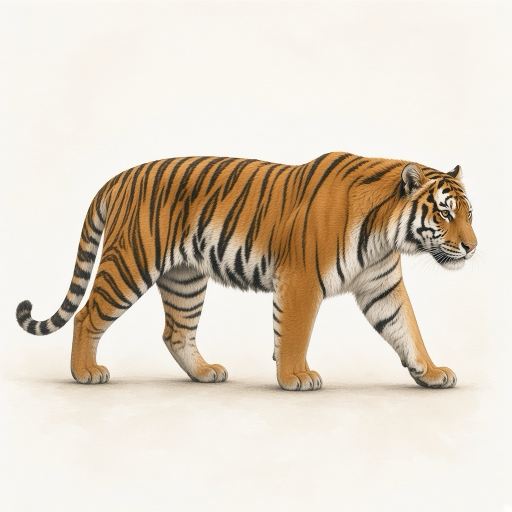
A tiger is the largest living cat species by commonly reported maximum mass. Tigers are carnivores with dark stripes over an orange-to-rufous coat and pale underside, although rare color variants occur. Wild tigers survive in parts of Asia across forests, grasslands, mangroves, and other habitats. Reliable weights vary by population, sex, and measurement method.
Why tigers are tricky to understand
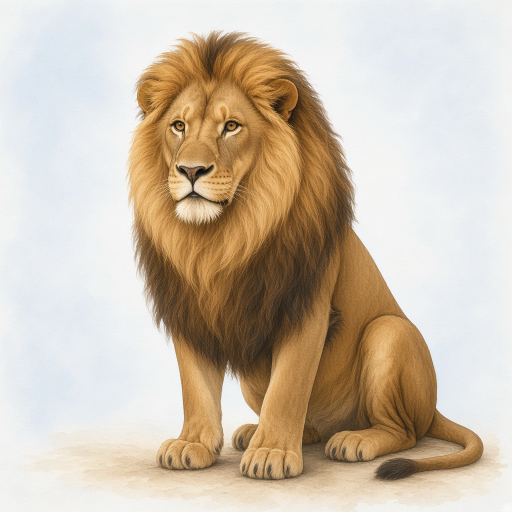
Most people picture a lion when they think of the “king of the cats,” but the largest reliably measured tigers are generally heavier than lions. Reports near 660 pounds (300 kg) exist, although record comparisons often mix verified wild measurements with captive or unverified figures.
A lot of people also think cats hate water. Pet cats often do. Tigers do not. Tigers are strong swimmers, and on a hot day they will climb right into a river or pond to cool off. They can swim across water that is miles wide.
One more surprise is the stripes. Their arrangement is individually distinctive enough for researchers to identify tigers in camera-trap photographs. It works like a natural name tag, although no one could compare every tiger that has ever lived.
Key facts about tigers
The tiger is the largest living cat species. Large males can exceed 500 pounds (225 kg), and exceptional reports approach 660 pounds (300 kg), although record claims require careful verification.
Amur and Bengal tigers include the largest individuals. Body size overlaps, so calling either population always largest is too simple.
Tiger stripe patterns are individually distinctive. Researchers use photographed patterns to recognize known animals.
A tiger’s stripes are on its skin too. If you shaved a tiger, the dark stripe pattern would still be there on the skin underneath.
Tigers have orange fur with black stripes and a white belly. The orange coat helps them hide while they sneak up on food.
Tigers are strong swimmers. They like to cool off in water and can cross rivers and lakes that are miles wide.
Tigers usually live alone. Unlike lions, a tiger hunts and lives by itself most of the time.
A tiger’s roar is very loud. How far it carries depends on terrain, wind, vegetation, and background noise. Tigers use roars and other calls in long-distance communication.
Tigers are meat-eaters, called carnivores. They hunt animals like deer and wild pigs.
A baby tiger is called a cub. Cubs are born blind, and their eyes open after about one to two weeks.
Common myths about tigers
Myth: The lion is always the biggest cat. Tigers generally reach greater maximum masses, although individual size overlaps and sensational record weights are not all reliable.
Myth: All cats hate water. Tigers are capable, willing swimmers. They enter rivers and ponds to cool off and can swim long distances. Many pet cats avoid water, but tigers often use it.
Myth: All tigers have the same stripes. Stripe arrangements differ enough for scientists to identify individuals from good photographs.
Myth: A tiger’s stripes are only on its fur. The stripes are on the skin as well as the fur. The dark pattern goes all the way down to the skin.
Myth: Tigers live in big groups like lions. A tiger usually lives and hunts alone. Lions live in family groups called prides, but tigers like to be by themselves.
Frequently asked questions about tigers
What is the biggest cat in the world?
Tigers are the largest living cat species by commonly reported maximum mass. Large males can exceed 500 pounds (225 kg), while exceptional figures near 660 pounds (300 kg) need careful sourcing. Bengal and Amur populations both produce very large individuals, and their size ranges overlap.
Where do tigers live?
Wild tigers live in Asia. Functional wild populations remain in about 10 countries, from India to the cold forests of Russia, while Cambodia, Laos, and Vietnam are among former range countries planning or considering recovery. Tigers do not live wild in Africa.
Do tigers like water?
Yes. Tigers are strong swimmers, and they often climb into rivers and ponds to cool off on hot days. They can even swim across water that is miles wide. This makes tigers different from most pet cats, which usually try to stay dry.
Why do tigers have stripes?
A tiger’s dark stripes break up its outline among vegetation and shadow. Many hoofed prey are dichromats, and visual modeling suggests orange may contrast less strongly for them than for humans, but visibility still depends on light, distance, movement, and background. Stripe arrangements also help researchers identify individuals.
What is a baby tiger called?
A baby tiger is called a cub. Cubs are born blind and helpless, and their eyes open after about one to two weeks. A mother tiger usually has two to four cubs at a time, and she feeds them milk and keeps them safe.
Each of this topic’s quiz questions cites a source for the fact it tests. You can play at any level: Rookie, Curious, Sharp, or Expert.
A tiger is the largest living cat species by commonly reported maximum mass, a striped predator found in parts of Asia. Tigers are obligate carnivores and hunt animals including deer and wild pigs. Their dark stripe arrangements are individually distinctive enough for researchers to recognize animals from photographs.
Why tigers are tricky to understand
Tigers generally reach greater maximum masses than lions, but size varies by sex, population, and how it is measured. Exceptional reports approach 660 pounds (300 kg), though not every record is reliable. Both Amur and Bengal populations produce very large males, and their size ranges overlap.
The idea that all cats hate water also breaks down with tigers. House cats usually keep away from water, but tigers are strong, willing swimmers. On hot days they wade into rivers and lakes to cool off, and they can swim across stretches of water several miles wide. This helps them live in steamy forests and swampy areas.
Tiger stripes are more interesting than they first look. Their arrangement is distinctive enough to identify individuals in camera-trap images, much like a practical fingerprint. Pigmentation patterns also occur in the skin beneath the hair, although shaving a wild animal is neither needed nor harmless.
One more surprise is the white tiger. It is a color morph caused by a recessive SLC45A2 variant, not a separate species or a snow adaptation. White tigers retain stripes and pigment in their eyes, so they are not albino. Known captive lineages are largely Bengal-derived and have often been heavily inbred.
Key facts about tigers
The tiger is the largest living cat species by commonly reported maximum mass. Exceptional figures near 660 pounds (300 kg) should be distinguished from typical verified weights.
Amur and Bengal tigers include the largest animals, while Sumatran tigers are generally smaller. Population ranges overlap.
Stripe patterns are individually distinctive. Researchers use them to identify photographed tigers without claiming an impossible comparison of every animal.
A tiger’s stripes are on the skin, not just the fur. Shave a tiger and the dark pattern is still there.
Tigers are strong swimmers and will cross rivers and lakes that are miles wide to cool off or to reach prey.
Tigers usually live alone, unlike lions, which live in family groups called prides. Each tiger patrols its own home range.
Tiger roars carry over long distances. The actual distance depends on terrain, vegetation, wind, and noise.
A tiger can leap about 30 feet (9 m) in a single bound, which helps it pounce on prey.
A mother tiger is pregnant for about 100 days, then usually gives birth to two to four cubs. The cubs are born blind, and their eyes open after about one to two weeks.
Functional wild tiger populations remain in about 10 Asian countries, including India, Indonesia, China, and Russia. The wider conservation partnership includes former range countries where tigers have disappeared.
Common myths about tigers
Myth: The lion is the biggest cat. The tiger is larger than the lion and is the biggest cat in the world. The heaviest tigers weigh about 660 pounds (300 kg), more than the heaviest lions.
Myth: All cats hate water. Tigers are confident swimmers and often enter water on purpose. They cross rivers and lakes and use water to stay cool. House cats may avoid water, but tigers often use it.
Myth: All tigers have the same stripes. Stripe arrangements are distinctive enough for scientists to identify known individuals from photographs.
Myth: White tigers are albino. Their recessive color variant reduces normal orange coloration while retaining stripes and eye pigment. They are not a separate subspecies, and captive breeding for the trait has caused welfare problems through inbreeding.
Myth: Tigers live in big groups like lions. A tiger usually lives and hunts on its own. Adult tigers mostly meet only to mate. Lions are the social big cats; tigers are not.
Frequently asked questions about tigers
Why is the tiger the biggest cat?
Tigers generally reach greater maximum masses than other living cats. Bengal and Amur males include the largest verified individuals, but their ranges overlap and record claims mix different measurement quality. Large body size helps tigers tackle prey such as deer and wild pigs.
Where do tigers live?
Functional wild tiger populations remain in about 10 countries in Asia, including India, Nepal, Indonesia, China, Thailand, and Russia. Other members of the historic 13-country range partnership have lost their wild populations. Tigers occupy habitats as different as tropical rainforest, mangrove swamp, grassland, and snowy taiga. They do not live wild in Africa.
Why do tigers have stripes?
A tiger’s striped coat breaks up its outline in vegetation and dappled shade. Visual models suggest orange may be less conspicuous to dichromatic hoofed mammals than to humans, but this does not make a tiger invisible. Stripe arrangements are stable enough for individual identification, and related pigment patterning is visible in the skin.
What is a white tiger?
A white tiger carries a recessive SLC45A2 color variant that produces a cream-white coat while retaining dark stripes and eye pigment. It is not a separate species, an albino, or a snow-adapted form. Most captive white-tiger pedigrees derive largely from Bengal ancestry.
How many tigers are left in the wild?
Wild tiger numbers remain low. The IUCN’s 2021 assessment estimated roughly 3,700 to 5,600 mature animals, while later government totals may use different methods and include all ages. The often-repeated estimate of 100,000 around 1900 is a historical reconstruction, not a census. Poaching, habitat loss, and prey depletion drove declines, while protection has helped some populations recover.
Each of this topic’s quiz questions cites a source for the specific fact it tests. You can play at any level: Rookie, Curious, Sharp, or Expert.
A tiger (Panthera tigris) is the largest living cat species by commonly reported maximum mass, a striped predator native to Asia. It is an obligate carnivore that usually stalks close before a short rush. Stripe arrangements are individually distinctive enough for camera-trap identification. The species is Endangered on the IUCN Red List; assessment estimates are in the low thousands, while national counts use varying methods and dates.
What is often misunderstood about tigers
Tigers generally reach greater maximum masses than lions. Exceptional reports approach 660 pounds (300 kg), but records vary in reliability and often mix wild and captive animals. Both Bengal and Amur populations produce very large males, with overlapping size ranges; Sumatran tigers are generally smaller.
The belief that all cats avoid water also fails for tigers. Tigers are capable swimmers that enter rivers and lakes by choice, partly to cool off in hot, humid habitats. They can cross stretches of water several miles wide, which suits forest and mangrove environments where water is unavoidable.
Tiger stripe arrangements are distinctive enough for researchers to identify known individuals from camera-trap photos, and related pigment patterning occurs in the skin beneath the coat. This practical individuality does not require the untestable claim that no two tigers have ever matched.
The orange coat is less conspicuous to many dichromatic hoofed mammals than it is to trichromatic humans. Visual modeling supports that principle, while stripes also disrupt the body’s outline. It does not show that every prey species or viewing condition makes orange indistinguishable from green.
Key facts about tigers
Largest cat species. Tigers have the greatest commonly reported maximum mass among living felids. Bengal and Amur males include the largest individuals; exact record claims need source scrutiny.
Distinctive stripes, on the skin. Stable stripe arrangements support individual identification, and related dark pigment patterning occurs in the skin.
Camouflage and prey vision. Many deer and wild pigs are dichromatic, and visual models suggest orange may contrast less strongly against vegetation for them than for trichromatic humans. Detection still depends on light, distance, movement, and background.
Swimming. Tigers swim readily, can cross wide stretches of water, and often use water to cool down in hot climates.
Solitary. Tigers are largely solitary and territorial. A tiger patrols a home range and defends it against others of the same sex, scent-marking boundaries with sprayed urine and scratch marks. Lions are the social exception among big cats; tigers are not.
Roar. Tiger roars can carry over long distances, depending on habitat and weather. Lions, leopards, and jaguars also produce full roars; snow leopards belong to Panthera but do not.
Leaping and speed. A tiger can leap roughly 30 feet (9 m) in a single bound and sprint up to about 35 miles per hour (56 km/h) in short bursts, relying on ambush rather than a long chase.
Teeth and bite. A tiger’s canine teeth, at about 2.5 to 3 inches (6.4 to 7.6 cm), are the longest of any living cat. Its average bite force at the canine tips is around 1,234 newtons, the strongest measured among living big cats.
Feeding. After a kill, a tiger can consume a large quantity of meat in one sitting, up to around 75 to 80 pounds (34 to 36 kg). It may then go days before eating again.
Low-light vision. A tapetum lucidum reflects light back through the retina and contributes to eyeshine and low-light sensitivity. The popular claim that tiger night vision is exactly six times human vision is not a standardized comparison.
Reproduction. Gestation lasts about 100 days, and a typical litter is two to four cubs, born blind. The cubs’ eyes open after about one to two weeks, and the mother raises them alone.
Lifespan. Wild tigers usually live about 10 to 15 years. Tigers in well-run zoos can live longer, sometimes reaching about 20 years.
Conservation status. The tiger is listed as Endangered. The IUCN’s 2021 assessment estimated roughly 3,700 to 5,600 mature animals; other totals may include cubs or use national methods. Habitat loss, poaching, and prey depletion are major threats.
Common myths about tigers
Myth: The lion is the largest cat. The tiger is larger. The heaviest tigers reach about 660 pounds (300 kg), more than the heaviest lions, which makes the tiger the largest living cat.
Myth: All cats avoid water. Tigers swim by choice and can cross water several miles wide. They use water to cool off in hot habitats. Most other cats avoid water, but the tiger is a strong, willing swimmer.
Myth: All tigers share the same stripe pattern. Stripe arrangements differ enough for researchers to identify known individuals from photographs. Related pigment patterning extends into the skin.
Myth: A tiger’s orange coat must look equally bright to its prey. Many hoofed prey are dichromats, and models suggest orange contrasts less strongly for them than for humans. Actual detection still depends on movement, light, distance, background, and species.
Myth: The tiger is the only cat that can roar. Lions, leopards, and jaguars also produce full roars. Specialized laryngeal structures and vocal folds are central; hyoid flexibility alone is not the mechanism.
Myth: White tigers are albino. A recessive SLC45A2 variant produces the pale coat while leaving stripes and eye pigment. White tigers are neither albino nor a separate subspecies, and captive selection for the trait has often involved harmful inbreeding.
Frequently asked questions about tigers
Are tigers endangered?
The tiger is listed as Endangered. The IUCN’s 2021 assessment estimated roughly 3,700 to 5,600 mature animals. The familiar figure of 100,000 around 1900 is a reconstruction, not a census. Habitat loss, poaching, and prey depletion are major drivers. Bali, Javan, and Caspian tiger populations disappeared in modern times, whether treated as subspecies or geographic forms.
Why is a tiger’s orange coat good camouflage?
Many deer and wild pigs are dichromatic, so orange may contrast less strongly from green vegetation for them than for humans. Modeling supports this camouflage advantage but does not make orange universally indistinguishable or account for every prey species and viewing condition. Tigers themselves are also thought to be dichromats.
How strong is a tiger’s bite?
A tiger’s average bite force at the canine tips is around 1,234 newtons, the strongest recorded among the living big cats of the genus Panthera. Its canine teeth are also the longest of any living cat, at about 2.5 to 3 inches (6.4 to 7.6 cm). The long canines and powerful bite let a tiger seize and kill large prey, often with a bite to the neck or throat.
Why do tigers’ eyes glow at night?
A tiger has a reflective layer behind the retina called the tapetum lucidum. It sends some light back through photoreceptors and produces eyeshine when illuminated. This supports low-light vision, but a fixed “six times human” ratio is not a standardized measure across brightness levels and visual tasks.
Do tigers live alone or in groups?
Tigers are solitary and territorial. An adult tiger holds and patrols a home range, defending it against others of the same sex and marking boundaries with scent and scratch marks. Adults mostly come together only to mate, and a mother raises her cubs by herself. This sets tigers apart from lions, which live in cooperative family groups called prides.
Which is the most numerous kind of tiger?
Most wild tigers occur in India and are conventionally called Bengal tigers. Names such as Amur, Sumatran, Malayan, Indochinese, and South China remain important in conservation, although taxonomists disagree between a two-subspecies scheme and finer traditional divisions. Bali, Javan, and Caspian populations disappeared in modern times.
Source notes
The Endangered listing and the wild population range follow the IUCN Cat Specialist Group tiger assessment and Tiger conservation reference. Size, bite force, canine length, swimming, night vision, and reproductive figures come from the Smithsonian’s National Zoo and the Tiger reference page, with the Amur tiger’s size from the Siberian tiger entry. The Bengal tiger’s status as the most numerous subspecies follows the Bengal tiger entry, and the white tiger genetics follow the White tiger entry.
Trivia question references throughout this topic’s Rookie, Curious, Sharp, and Expert quiz sets each cite a primary source for the specific fact tested.
A tiger (Panthera tigris) is the largest extant felid, a striped, solitary apex predator of the genus Panthera within the family Felidae, native to Asia. Carl Linnaeus first described the species as Felis tigris in the tenth edition of Systema Naturae in 1758; in 1929, Reginald Innes Pocock reassigned it to the genus Panthera. It is an obligate carnivore that ambushes large ungulate prey, the only striped big cat, and one of the four Panthera species capable of a true roar. The species is assessed as Endangered on the IUCN Red List, with a wild population in the low thousands distributed in scattered subpopulations across roughly 13 Asian range states.
Why tiger biology resists simple summary
Several features of tiger biology cut against familiar assumptions. Tigers generally reach greater maximum masses than other living cats, but the often-repeated 660-pound (300 kg) ceiling mixes records of varying quality. Bengal and Amur populations both produce very large males, and their distributions overlap; Sumatran tigers are generally smaller. Latitude alone does not explain all population and individual variation.
The second is the relationship of stripe pattern to identity. Stable arrangements are individually distinctive enough for noninvasive identification from camera-trap imagery. Related pigment patterning occurs in the skin beneath the pelage. This practical method does not require the untestable assertion that no two tigers have ever shared a pattern.
The third is the camouflage effect of receiver vision. Many ungulate prey are dichromats, and visual modeling indicates that orange can contrast less strongly against vegetation for a dichromatic observer than for a trichromatic human. That general model does not establish complete indistinguishability for every prey species, habitat, light level, or moving tiger.
The fourth is phylogenetic placement. The tiger’s closest living relative is not the lion but the snow leopard. Genetic analyses indicate the tiger and snow leopard form a sister pair whose lineages diverged on the order of 2.70 to 3.70 million years ago, an earlier-branching split within Panthera than the lion-leopard pairing.
Key facts
Taxonomic history. Linnaeus described Felis tigris in 1758. Pocock placed the species in Panthera in 1929. The lion, tiger, jaguar, leopard, and snow leopard all belong to Panthera; the domestic cat (Felis catus) shares the family Felidae but a different genus.
Snow leopard sister lineage. Molecular phylogenies place the tiger and snow leopard as sister species, diverging roughly 2.70 to 3.70 million years ago. The popular intuition that the lion is the tiger’s nearest relative is incorrect; the lion’s closest relative is the leopard.
Competing subspecies schemes. The 2017 Cat Classification Task Force adopted two subspecies, mainland Panthera tigris tigris and Sunda P. t. sondaica. Other genetic and conservation treatments retain more named populations. The two-clade scheme is influential, not an uncontested replacement for every purpose.
The roaring clade and the hyoid. The tiger is one of four Panthera cats that can produce a full roar, with the lion, jaguar, and leopard. Roaring is associated with an incompletely ossified hyoid apparatus and a specialized larynx bearing large, fibro-elastic vocal folds. Hyoid flexibility alone does not determine the sound, and the snow leopard, though placed in Panthera, does not produce the same full roar.
Bite force and dentition. Model-based estimates of tiger bite force vary with body size, jaw position, and method, so a single 1,234-newton value is not a species-wide measured average. Tigers have exceptionally long canines and commonly kill large prey with throat or nape bites.
Sexual dimorphism and size. Males are substantially larger than females. Bengal and Amur populations include the largest individuals, with substantial overlap and uncertain extreme records; Sumatran tigers are generally smaller.
Locomotion and hunting. Tigers sprint up to about 35 miles per hour (56 km/h) in short bursts and can leap roughly 30 feet (9 m), favoring a stalk-and-ambush strategy over sustained pursuit. After a kill, a tiger may consume on the order of 75 to 80 pounds (34 to 36 kg) of meat in a sitting and then fast for several days.
Caspian-Amur identity. The extinct Caspian tiger, once ranging across central and western Asia, is genetically very close to the surviving Amur tiger; the two represent one lineage, separated only recently in evolutionary terms. This has informed proposals to restore tigers of Amur stock to parts of the former Caspian range.
Extinct forms. Three formerly recognized subspecies are extinct in modern times: the Bali tiger, the Javan tiger, and the Caspian tiger. The Bali and Javan tigers were endemic to their respective islands; the Caspian ranged broadly across continental western and central Asia.
White tiger genetics. The white coat results from a recessive change in the pigment-transporter gene SLC45A2, which reduces the normal orange coloration while leaving dark stripes and eye pigment. White tigers are a color morph, not albinos or a separate subspecies. Most known white tigers derive from Bengal ancestry.
National symbol. The tiger, specifically the Bengal tiger, is the national animal of India, a designation tied to the launch of national tiger-protection efforts in the early 1970s.
Conservation status and the Tx2 goal. The tiger is Endangered. The 2010 Tx2 initiative sought to double wild abundance by 2022, but global totals combine national surveys with different dates, age classes, and methods. A later tally near 5,500 should not be compared directly with the IUCN estimate of mature individuals without those distinctions.
Common misconceptions at expert level
Misconception: The tiger’s closest living relative is the lion. Genetic data place the snow leopard as the tiger’s sister species, with the lineages splitting roughly 2.70 to 3.70 million years ago. The lion’s nearest living relative is the leopard, on a separate branch of Panthera. The tiger and lion are congeners but not sister taxa.
Misconception: The tiger is the only cat that can roar. The tiger shares the full roaring capacity with the lion, jaguar, and leopard. The ability is linked to both the hyoid apparatus and a specialized larynx, not to a second voice box or any structure unique to the tiger. Hyoid anatomy alone does not provide a complete purr-versus-roar rule.
Misconception: Tiger subspecies have one universally accepted count. A 2017 task-force scheme recognizes two subspecies, while other scientific and conservation treatments retain finer divisions among living mainland and island populations. Bali, Javan, and Caspian forms disappeared in modern times. The appropriate count depends on the taxonomy being cited.
Misconception: White tigers are albino, which is why they look pale. Their coat arises from a recessive variant in the pigment-transporter gene SLC45A2 that reduces normal orange coloration while sparing dark stripes and eye pigment. They are a color morph rather than albinos or a separate subspecies.
Misconception: The Caspian tiger was a distinct lineage unrelated to today’s tigers. Genetic study shows the Caspian tiger was closely allied to the Amur tiger, one lineage rather than a deeply separate one. This finding underpins the idea that Amur-stock tigers could one day be reintroduced into parts of the historic Caspian range.
Misconception: A liger is a natural product of lions and tigers meeting in the wild. A liger, the hybrid of a male lion and a female tiger, is a captive-bred animal; present wild lion and tiger ranges do not overlap. Ligers can grow larger than either parent species, and parental growth-regulation differences are a leading explanation.
Misconception: A tiger’s bright orange coat must look equally conspicuous to its prey. Many ungulate prey are dichromats, and visual modeling suggests orange can contrast less strongly against vegetation for them than for trichromatic humans. This is a general camouflage advantage, not proof that every prey species or viewing condition makes a tiger difficult to detect.
Frequently asked questions
What is the tiger’s closest living relative?
The snow leopard. Genetic analyses indicate the tiger and snow leopard form a sister pair within Panthera, with their lineages diverging on the order of 2.70 to 3.70 million years ago. This places the tiger-snow leopard split earlier than the lion-leopard pairing on the Panthera tree. The common assumption that the lion is the tiger’s nearest relative does not hold; the lion is more closely tied to the leopard.
How many subspecies of tiger are currently recognized?
The 2017 Cat Classification Task Force recognizes two subspecies: mainland Panthera tigris tigris and Sunda-island P. t. sondaica. Other genomic analyses and conservation programs use finer population or subspecies divisions. Traditional names such as Bengal and Amur therefore remain scientifically and operationally relevant; the two-subspecies scheme has not erased the debate.
What anatomical feature lets a tiger roar?
Roaring in the tiger, lion, jaguar, and leopard is associated with an incompletely ossified hyoid apparatus combined with a larynx carrying large, fibro-elastic vocal folds. Together these structures support deep, low-frequency calls. Hyoid flexibility alone does not explain roaring, and there is no second voice box.
Were the Caspian and Amur tigers really the same lineage?
Genetically, they are extremely close. Analysis of historical Caspian tiger material shows it was most closely related to the Amur tiger, indicating the two were effectively a single lineage separated only in recent evolutionary time as tigers spread across Asia. That close relationship is the scientific basis for proposals to reintroduce Amur-descended tigers into portions of the Caspian’s former central Asian range.
What causes the white coat in white tigers?
The white coat is produced by a recessive variant of the pigment-transporter gene SLC45A2, reducing the normal orange coloration while leaving dark stripes and eye pigment. White tigers are predominantly of Bengal ancestry and are a captive color morph, not albinos, a separate species, or a snow-adapted form.
Source notes
Taxonomic history, the snow leopard sister relationship, bite force, and canine dimensions follow the Tiger and Panthera reference entries; the 2017 two-subspecies revision and the roaring-clade anatomy are documented in the same sources and the IUCN Cat Specialist Group assessment. The Amur tiger’s size follows the Siberian tiger entry, the Caspian-Amur lineage relationship follows the Caspian tiger entry, the SLC45A2 basis of the white coat follows the White tiger entry, and the captive-only origin and large size of ligers follow the Liger entry. Conservation status and the Tx2 goal follow the Tiger conservation reference.
Trivia question references throughout this topic’s Rookie, Curious, Sharp, and Expert quiz sets each cite a primary source for the specific fact tested.
Think you know Tigers?
Test yourself. Can you spot the true fact among 3 convincing bluffs?