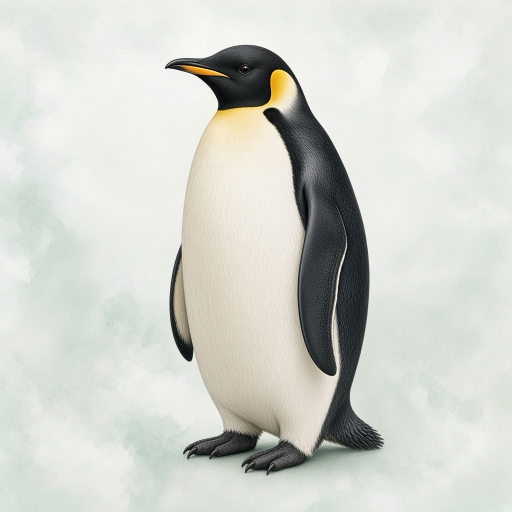
A penguin is a bird that cannot fly but is a wonderful swimmer. Penguins have feathers, beaks, and wings, and they hatch from eggs, so they are 100 percent birds. Instead of flying through the air, their wings work like flippers to push them through the water. There are 18 kinds of penguin, and almost all of them live in the bottom half of the world, far away from where people in the United States live.
What makes penguins so cool
Most birds you see can fly, but penguins gave that up a long, long time ago. Their ancestors stopped flying more than 60 million years ago, soon after the dinosaurs died out. Penguins traded flying for swimming, and they got very good at it. A penguin in the water looks like it is flying, but underwater.
Penguins also live in some of the coldest places on Earth. The biggest kind, the emperor penguin, lives in Antarctica, the icy land at the very bottom of the world and the coldest place on the planet. But other penguins live in much warmer spots, like sunny islands near the middle of the world. So a penguin is not always a cold-weather bird.
Cool penguin facts
One widely used bird list recognizes 18 penguin species. Their natural ranges are in the southern half of the world, except that the Galapagos penguin’s range crosses the equator.
The biggest penguin is the emperor penguin. It stands about 3 feet 7 inches (1.1 m) tall and weighs about 75 pounds (35 kg). That is taller than most kindergartners.
The smallest penguin is the little penguin. It is only about 12 inches (30 cm) tall, about as tall as a ruler, and its feathers are slate-blue instead of black.
Penguins are great swimmers. Guinness World Records lists the gentoo penguin as the fastest swimming bird, with a reported top speed of 22 miles per hour (36 km/h).
Emperor penguins can hold their breath underwater for more than 20 minutes while they dive deep to catch food.
Penguins mainly eat animals such as fish, squid, and tiny shrimp-like creatures called krill.
A penguin’s back is black and its belly is white. This pattern helps hide it from animals that hunt it in the water.
Once a year, a penguin replaces its whole coat of feathers during a short, intense molt. While its waterproof coat grows back, it stays out of the water, so it eats a lot before this happens.
Penguins drink seawater. A special part above each eye pulls the salt out of their body, and the salty drips come out near the beak, like a runny nose.
The Galapagos penguin lives on warm, sunny islands near the equator. It is the only penguin species whose natural range crosses into the Northern Hemisphere.
How a baby emperor penguin starts life
Emperor penguins have a breeding cycle unlike that of any other living bird. They incubate their eggs on Antarctic sea ice during the dark polar winter.
The mother penguin lays one egg. Then she carefully rolls it onto the father’s feet and walks all the way back to the ocean to eat, sometimes 50 miles (80 km) away. The father stays behind and holds the egg on top of his feet, tucked under a warm flap of skin, so it never touches the freezing ice.
The father keeps the egg warm for more than two months. The whole time, he does not eat anything. To stay warm, all the fathers squeeze together into a big huddle and take turns standing on the cold outside edge. When the baby finally hatches, the mother comes back from the sea. She finds her partner in a crowd of thousands by listening for his special call. Then it is the father’s turn to walk to the ocean and finally eat.
Things people often get wrong about penguins
Myth: Penguins are a kind of fish. Penguins are birds, not fish. They have feathers and breathe air with lungs. Fish have scales and breathe underwater with gills.
Myth: Polar bears eat penguins. Polar bears live near the North Pole, at the top of the world. Wild penguins live near the bottom of the world. The two animals never meet in the wild, even though picture books often show them together.
Myth: All penguins live in the snow and ice. Many penguins live in warm places. The Galapagos penguin lives near the equator, African penguins live in South Africa, and little penguins live in Australia and New Zealand.
Myth: Penguins wear black and white because they like to look fancy. Penguins did not pick their colors. The black-and-white pattern is camouflage that helps hide them in the water. It just happens to look like a tuxedo.
Penguin questions kids ask
Can penguins fly?
No penguin can fly. Their wings are short, stiff flippers built for swimming, not for flapping through the air.
Why don’t penguins freeze?
Penguins have layered feathers that trap insulating air near the skin. A modern emperor-penguin study measured about 9 feathers per square centimeter, or 58 per square inch, below an older estimate of more than 100 per square inch. Blood vessels in their feet and flippers also exchange heat in ways that limit heat loss.
What eats a penguin?
In the cold seas near Antarctica, leopard seals are major penguin predators. Sharks and orcas can also catch penguins, and orcas sometimes prey on leopard seals.
How long do penguins live?
It depends on the kind of penguin, but many live about 15 to 20 years in the wild. Penguins spend most of their lives in the ocean and only come onto land to lay eggs and raise their chicks.
Do penguin moms and dads both take care of the chick?
Yes. In most penguin families, the mother and father take turns. One parent stays with the egg or chick while the other swims out to catch food. Raising a penguin chick is a team job.
A penguin is a flightless seabird that spends most of its life in the ocean and comes onto land mainly to lay eggs and raise its chicks. One widely used taxonomy recognizes 18 living species. Their natural ranges are in the Southern Hemisphere (the bottom half of the planet), except that the Galapagos penguin’s range crosses the equator. Over millions of years, penguin wings evolved into flippers specialized for swimming rather than flight.
Why penguins are stranger than they look
The most surprising thing about penguins is how different they are from most familiar birds. Penguins use their wings as flippers, beating them underwater much as a flying bird beats its wings in the air. Many of their bones are relatively dense and less air-filled than those of flying birds, which reduces buoyancy while diving.
The living species are also far less alike than the cartoon penguin suggests. Three of them show just how different penguins can be:
The emperor penguin is the largest, standing about 3 feet 7 inches (1.1 m) tall and weighing around 75 pounds (35 kg). It breeds on the Antarctic ice during the brutal polar winter.
The little penguin is the smallest, only about 12 inches (30 cm) tall and 2 pounds (1 kg), roughly the size of a small cat. Its feathers are slate-blue, not black, so Australians call it the “little blue penguin.”
The Galapagos penguin is the only species whose range crosses the equator. Cool ocean currents bring nutrient-rich water to its islands.
Key penguin facts
Number of species. The International Ornithologists’ Union recognizes 18 living penguin species in one family and 6 genera, though taxonomies can differ. They include the emperor and king, the brush-tailed Adelie, chinstrap, and gentoo, the crested penguins like the macaroni, and the warm-water banded penguins like the African and Galapagos.
The deepest dive. The deepest dive ever recorded for any bird was made by an emperor penguin near the Auster rookery in Antarctica in 1994. It reached 1,850 feet (564 m), deeper than most submarines go.
The longest dive. The longest underwater dive recorded for a bird is 32.2 minutes, set by an emperor penguin in the Ross Sea during a 2013 study. That is longer than a TV show without commercials.
The fastest swimmer. Guinness World Records lists the gentoo penguin as the fastest swimming bird at 22 miles per hour (36 km/h), almost as fast as Usain Bolt sprinting.
The most numerous penguin. The macaroni penguin is the most common, with about 18 million birds. Even so, its numbers have dropped sharply since the 1970s, so it is listed as Vulnerable.
Drinking seawater. Penguins drink ocean water and get rid of the extra salt using a special salt gland above each eye. The salty fluid drips out through the nostrils, so a feeding penguin can look like it has a runny nose.
Catastrophic molt. Once a year, penguins rapidly replace their entire plumage over a period that varies by species. While the new waterproof coat grows in, they stay ashore, so they eat heavily beforehand and live off stored body fat.
Insulating feathers. Penguin plumage combines short outer feathers with downy afterfeathers that trap air near the skin. Measurements of emperor penguins found about 9 feathers per square centimeter, or 58 per square inch, below the old claim of more than 100 per square inch.
Camouflage colors. A penguin’s black back and white belly is a kind of camouflage called countershading. From below, the white belly blends with the bright surface; from above, the black back blends with the dark deep water.
Krill, fish, and squid. Smaller penguins like the Adelie and chinstrap often eat large amounts of krill, which are tiny shrimp-like animals. Larger penguins like the emperor and king eat more fish and squid. Diets vary with species, place, and season.
How emperor penguins raise a chick in winter
The emperor penguin is the only bird that breeds entirely on Antarctic sea ice through the polar winter, when temperatures can drop below minus 22 degrees Fahrenheit (minus 30 degrees Celsius) and winds can top 120 miles per hour (200 km/h).
The cycle starts in fall, when adults walk far inland onto the refrozen sea ice. After courtship, the female lays a single egg, then gently passes it to the male’s feet and walks back to the open ocean to feed, often 50 miles (80 km) or more away. The male balances the egg on top of his feet, tucked under a warm flap of skin called a brood pouch, and keeps it warm for 65 to 75 days.
The hard part is that the male does not eat the entire time. By the time the chick hatches, he has gone without food for about four months and lost roughly half his body weight. To survive, the males pack into tight, rotating huddles of thousands of birds, taking turns on the freezing outer edge. When the female returns near hatching time, she finds her partner among the thousands by his call alone, then takes over feeding the chick. Only then does the exhausted father finally walk to the sea to eat.
Common myths about penguins
Myth: Polar bears hunt penguins. Polar bears live only in the Arctic, at the top of the world, while wild penguins live in the Southern Hemisphere. The two never meet in the wild. Leopard seals are major aquatic predators of Antarctic penguins.
Myth: All penguins live in Antarctica. Most penguin species do not. The Galapagos penguin lives at the equator, African penguins live in South Africa, Magellanic and Humboldt penguins live along the coasts of South America, and little penguins live in Australia and New Zealand. Only a few species, like the emperor and the Adelie, breed mainly on the Antarctic continent.
Myth: The female emperor penguin sits on the egg. It is the other way around. The female lays the egg and heads back to the sea, while the male keeps the egg warm through the entire Antarctic winter.
Myth: All penguins are black and white. Many have extra colors. Macaroni penguins have bright yellow-orange head crests, and little penguins are slate-blue rather than black. The classic “tuxedo” look is just the most common pattern.
Myth: The macaroni penguin is named after the pasta. The name comes from an 18th-century English word, “macaroni,” which described fashionable young men who wore flashy, feathered hats. The penguin’s bright crest reminded people of those hats.
Frequently asked questions about penguins
Why can penguins dive so deep when most birds float?
Penguins have several built-in tools. Many of their bones are denser and less pneumatic than those of flying birds, which reduces buoyancy. During long dives, emperor penguins can slow their heart rate and store substantial oxygen in their blood and muscles. Together, these adaptations let an emperor penguin remain underwater for more than 20 minutes.
Why don’t penguin feet freeze on the ice?
Penguins use a trick called counter-current heat exchange. In their feet and flippers, the warm blood flowing in runs right next to the cool blood flowing out. Heat passes from the warm blood to the cool blood before it reaches the foot, so the foot stays just above freezing while the rest of the body stays warm. This saves a huge amount of body heat.
How do penguins move on land?
Penguins waddle on two short legs, which looks slow but works. On snow and ice, many of them flop onto their bellies and slide, pushing with their feet and steering with their flippers. This is called tobogganing, and it is faster and easier than waddling.
Why is the emperor penguin in trouble?
Emperor penguins need stable sea ice to raise their chicks and grow new feathers. If the ice breaks up too early, before the chicks have grown waterproof adult feathers, the chicks can drown or freeze. As the climate warms, this is happening more often. On April 9, 2026, the IUCN moved the emperor penguin to Endangered on its Red List, warning that the population could drop by half by the 2080s.
Which penguin lays the most eggs?
No penguin lays a big clutch like a chicken. Most species lay 2 eggs per season, and both parents take turns keeping them warm. The two largest species, the emperor and the king, lay only 1 egg, because raising a single big chick already takes an enormous amount of work.
You can test these facts on the penguin trivia quiz, a 10-question true-or-bluff round at the Curious reading level.
Penguins are flightless seabirds in the order Sphenisciformes. The International Ornithologists’ Union recognizes 18 living species in 6 genera, though taxonomies can differ. They live almost entirely in the Southern Hemisphere, from the Antarctic continent to the equator, and their flipper-shaped wings make them highly efficient underwater swimmers. The largest species is the emperor penguin (Aptenodytes forsteri) at about 3 ft 7 in (1.1 m) and 75 lb (35 kg); the smallest is the little penguin (Eudyptula minor) of Australia and New Zealand at about 12 in (30 cm) and 2 lb (1 kg). The emperor was reclassified as Endangered on the IUCN Red List on April 9, 2026, joining several other penguin species under increasing climate pressure.
Why penguins are so unusual among birds
Penguins parted ways with the rest of modern birds early. Molecular and fossil evidence places the split between the penguin order (Sphenisciformes) and its closest living relatives, the procellariiform seabirds (albatrosses, petrels, and shearwaters), near the Cretaceous-Paleogene boundary about 70 million years ago, the same window in which the asteroid impact ended the age of dinosaurs. The earliest known penguin fossils, from the Waipara Greensand of New Zealand, date to roughly 60.5 million years ago and already show the flightless, deep-diving body plan; flight was lost within the first few million years after the lineage split.
Three consequences of that early divergence shape every penguin alive today.
The first is the flipper. Penguin wings are short, flat, paddle-shaped, and packed with bone, with a kink at the elbow that is locked rigid. They cannot generate lift in air, but they can push hard against water. The gentoo penguin (Pygoscelis papua) is the fastest-swimming bird recognized by Guinness World Records, recorded at 22 mph (36 km/h) in 2007, slightly under Usain Bolt’s average speed across his 100 m world record.
The second is bone density. Many flying birds have extensively air-filled bones that reduce weight; penguins have relatively dense, less pneumatic bones in much of the wing and chest skeleton. This reduces buoyancy during diving.
The third is the vascular plumbing of the flipper and foot, a counter-current heat exchanger called the humeral arterial plexus. Warm arterial blood heading toward the flipper runs alongside cool venous blood returning from it; heat moves from artery to vein before reaching the cold tissue. The flipper stays only a few degrees above ambient seawater while the body core stays at about 100 to 102 °F (38 to 39 °C). Without this trick, a penguin in the Southern Ocean would shed heat from its flipper as fast as a household radiator.
Key penguin facts
Living species. 18, in 6 genera: Aptenodytes (emperor, king); Pygoscelis (Adelie, chinstrap, gentoo); Eudyptes (the 6 crested penguins, including macaroni and rockhoppers); Spheniscus (the 4 banded warm-water penguins, including African and Galapagos); Eudyptula (little penguin); Megadyptes (yellow-eyed penguin).
Largest species. Emperor penguin, about 3 ft 7 in (1.1 m) and 49 to 99 lb (22 to 45 kg).
Smallest species. Little penguin (also called fairy penguin or kororā), about 12 to 13 in (30 to 33 cm) and 2.6 to 2.9 lb (1.2 to 1.3 kg). Slate-blue rather than black on the back.
Most numerous species. Macaroni penguin, roughly 18 million individuals (about 9 million pairs) across more than 200 colonies. IUCN status: Vulnerable, after declines exceeding 50 percent at some sites since the 1970s.
Galapagos penguin. The Charles Darwin Foundation estimated about 2,000 to 3,000 individuals in 2025. It is the only penguin whose range crosses the equator.
Deepest bird dive on record. 1,850 ft (564 m), set by an emperor penguin near the Auster rookery in 1994.
Longest bird dive on record. 32.2 minutes, set by an emperor penguin in the Ross Sea during a March 2013 satellite-tagging study, ratified by Guinness in 2018. The previous record was 27.6 minutes.
Diving physiology. Emperor penguins can reduce their heart rate sharply on long dives, a response called diving bradycardia. Their swimming muscles also contain high concentrations of oxygen-binding myoglobin.
Salt regulation. A supraorbital salt gland above each eye removes excess salt from the blood and excretes concentrated brine through the nasal passages. This lets penguins obtain water at sea.
Feathers. Emperor penguins have been measured at about 9 feathers per square centimeter, or about 58 per square inch; older claims exceeding 100 per square inch were based on poor estimates. Once a year, penguins rapidly replace their entire plumage in a molt whose timing varies by species, during which they cannot enter the water.
Largest king penguin colony. St. Andrew’s Bay is widely identified as South Georgia’s largest king penguin colony. Counts vary with survey date and with the species’ long, asynchronous breeding cycle.
Known emperor penguin colonies. 66 as of January 2024, after British Antarctic Survey researchers identified 4 new ones using Sentinel-2 satellite imagery.
Largest extinct penguin (described). Kumimanu fordycei, New Zealand, late Paleocene, body mass estimated at roughly 340 lb (154 kg), about three times that of any living penguin.
The emperor penguin breeding cycle
The emperor penguin is the only bird species that breeds entirely on Antarctic sea ice through the polar winter, and the cycle is unlike anything else in vertebrate biology.
Adults arrive at colonies in March or April, after the sea ice has refrozen, with a long walk inland from the ocean. After courtship, females lay a single egg in May or June and immediately transfer it to the male’s feet. The female then walks back to open water, often 50 mi (80 km) or more away, to feed.
The male holds the egg for 65 to 75 days through the worst of the Antarctic winter, balanced on the tops of his feet inside a feathered brood pouch. Daily temperatures can drop below -22 °F (-30 °C) with winds exceeding 120 mph (200 km/h). To survive, males pack into rotating huddles that can include thousands of birds, taking turns at the cold outer edge. Throughout incubation, the male eats nothing; by the time the chick hatches, he has fasted for about 4 months and lost roughly half his body weight.
The female returns just as the chick hatches, identifies her mate from among thousands by call alone, and takes over feeding the chick from a stomach reserve. The exhausted male then walks to the sea to feed for the first time since autumn. Both parents alternate after that, sharing feeding trips through the rest of the rearing season. Chicks fledge in December and January, by which point the sea ice they stand on has begun to break up.
The cycle has no margin. If the sea ice breaks up early, before chicks have grown adult feathers, an entire colony can fail in a single season.
Common myths about penguins
Myth: Polar bears eat penguins. Polar bears live only in the Arctic; wild penguins live almost entirely in the Southern Hemisphere. The 2 species do not meet in the wild. Leopard seals are major aquatic predators of Antarctic penguins, and orcas sometimes prey on both penguins and leopard seals.
Myth: All penguins live in Antarctica. Most penguin species do not. Galapagos penguins live at the equator, African penguins on the southern African coast, Magellanic and Humboldt penguins along the cool-water coasts of South America, and little penguins along southern Australia and New Zealand. Only emperor and Adelie penguins breed mainly on the Antarctic continent itself.
Myth: Penguins mate for life. Some species, including emperors, frequently switch partners between seasons. Studies at the Pointe Geologie colony in Terre Adelie found that fewer than 15 percent of emperor pairs reunited the following year. Long-term pair fidelity is more common in king and gentoo penguins, but even there it is far from universal.
Myth: Female emperor penguins incubate the egg. The reverse: the male emperor incubates while the female feeds at sea. The female lays the egg, transfers it to the male’s feet, and walks back to open water for the winter.
Myth: All penguins look alike (black on top, white on the bottom). Yellow-eyed penguins have a band of pale yellow feathers across the head; macaroni and rockhoppers have flamboyant yellow-orange head crests; and little penguins are slate-blue rather than black. The classic ‘tuxedo’ pattern is countershading camouflage that hides the bird from predators looking up from below or down from above; head color varies widely among species.
Myth: Penguins drink fresh meltwater. Penguins drink seawater. The supraorbital salt gland above each eye excretes excess salt as a hypertonic brine through the nostrils, allowing the birds to live without freshwater for months at a stretch.
Myth: The Galapagos penguin moves north because it is migrating. Galapagos penguins are largely sedentary year-round, breeding mostly on Fernandina and the west coast of Isabela. The northern tip of Isabela crosses the equator, which means some Galapagos penguins live in the Northern Hemisphere as a permanent fact of their geography, not as a migration.
Frequently asked questions about penguins
How many penguin species are there, and where are they?
The International Ornithologists’ Union recognizes 18 living species across 6 genera, though other taxonomies may lump or split some forms differently. Northern and southern rockhoppers were split into separate species in the 2000s in that taxonomy. Penguin ranges lie in the Southern Hemisphere except where the Galapagos penguin’s range crosses the equator. The greatest species diversity is in the sub-Antarctic islands (South Georgia, Crozet, Kerguelen, Heard, Macquarie); the Antarctic continent itself hosts emperor and Adelie penguins as widespread breeders, with chinstrap and gentoo concentrated mainly around the Antarctic Peninsula.
Why can penguins dive so deep when most birds drown after a few seconds?
Three traits work together. Relatively dense, less pneumatic bones reduce buoyancy. Diving bradycardia can slow heart rate during deep dives, conserving oxygen and directing blood preferentially to essential tissues. Muscle myoglobin stores extra oxygen in working tissue, while air spaces such as the lungs compress safely with depth. Variations on this suite of adaptations also occur in seals and whales, making penguins a bird example of convergent evolution toward deep diving.
Why is the emperor penguin in trouble?
The emperor depends on Antarctic ‘fast ice’ (sea ice attached to the shore) as a stable platform for the entire breeding cycle. Eggs and chicks live on the ice for 8 to 9 months out of the year. If the ice breaks up before chicks have molted into waterproof adult feathers, the chicks drown or freeze. In late 2022, satellite imagery from the British Antarctic Survey documented the first widespread case: 4 of 5 colonies in the Bellingshausen Sea lost nearly all chicks, an estimated 9,000 dead, after sea ice disintegrated in November before fledging. Across 2018 to 2022, roughly 19 of about 62 known colonies (about 30 percent) experienced partial or total breeding failure from sea-ice loss. On April 9, 2026, the IUCN reclassified the emperor penguin from Near Threatened to Endangered, citing projections of population halving by the 2080s under current climate trajectories.
What does a penguin actually eat?
Penguin diets vary by species, place, and season. Many smaller brush-tailed penguins and macaroni penguins consume large amounts of krill, while king and emperor penguins take more fish and squid on deeper dives. The warm-water Spheniscus species (African, Humboldt, Magellanic, Galapagos) often eat schooling fish and squid in cool upwellings, where fisheries can compete for the same prey.
Is the gentoo really faster than other birds?
In water, yes. Guinness World Records lists the gentoo penguin’s burst swim speed at 22 mph (36 km/h), based on a 2007 measurement, the highest documented for any swimming bird. Penguins achieve high underwater speeds in part by ‘feathering’ their flippers, tilting them about 18 degrees on each beat to reduce drag while flapping at roughly once per second. Cormorants and shags swim well by foot propulsion but do not approach gentoo speeds. In air, of course, no penguin moves at all, and an albatross gliding in a strong wind will outpace any penguin under water by a wide margin. The gentoo speed comparison is bird against bird in water, where penguins specialize.
You can test these facts on the penguin trivia quiz, a 10-question true-or-bluff round at the Sharp reading level.
A penguin is a flightless, wing-propelled diving seabird in the order Sphenisciformes, characterized by paddle-shaped flippers with a stiffened elbow, relatively dense and less pneumatic wing and pectoral bones, supraorbital salt glands for marine osmoregulation, and counter-current vascular heat exchangers in the flippers and feet. The International Ornithologists’ Union recognizes 18 living species in 6 genera, though taxonomies can differ: Aptenodytes (emperor and king), Pygoscelis (the brush-tailed Adelie, chinstrap, and gentoo), Eudyptes (the crested penguins, including macaroni and the rockhoppers), Spheniscus (the banded warm-water penguins, including African and Galapagos), Eudyptula (little penguin), and Megadyptes (yellow-eyed). Their ranges are restricted to the Southern Hemisphere by latitude except where that of the Galapagos penguin (Spheniscus mendiculus) crosses the equator. The emperor penguin (Aptenodytes forsteri) was reclassified as Endangered on the IUCN Red List on April 9, 2026.
Why penguins persist as a research model
Penguins are an unusually informative lineage for questions that reach well beyond seabird natural history, for three reasons.
The first is that they record an early and well-dated loss of flight. Molecular and fossil evidence places the divergence of Sphenisciformes from its sister group, the procellariiform seabirds (albatrosses, petrels, and shearwaters), near the Cretaceous-Paleogene boundary, roughly 70 million years ago. The earliest stem penguin, Waimanu manneringi from the Waipara Greensand of New Zealand, dates to about 60.5 million years ago and was already a flightless underwater diver with a long, dagger-like beak rather than the modern hook. The lineage therefore lost aerial flight within a few million years of its origin, making penguins one of the oldest specialized wing-propelled diving groups among modern birds. New Zealand’s near-absence of terrestrial predators in the Paleocene is widely cited as a permissive factor.
The second is convergence with marine mammals on the deep-diving phenotype. Emperor penguins hold the avian records for both depth, 1,850 feet (564 m) near the Auster rookery in 1994, and duration, 32.2 minutes in the Ross Sea in 2013. They reach these performances using the same broad toolkit seen in pinnipeds and cetaceans: a pronounced dive reflex, elevated tissue oxygen stores, and tolerance of anaerobic byproducts. Penguins are the bird arm of a textbook case of convergent evolution toward sustained breath-hold diving.
The third is that they are a leading sentinel for Antarctic and Southern Ocean change. Because the emperor’s entire breeding cycle is bound to seasonal fast ice, and because colonies can be counted from orbit by their guano stains, the species offers a continent-scale, satellite-trackable readout of sea-ice conditions. The 2022 Bellingshausen Sea breeding failure and the April 2026 IUCN reclassification both rest on that monitoring.
Phylogeny and fossil gigantism
Crown penguins sit within Sphenisciformes, and the order is closely related to Procellariiformes, the group that includes albatrosses and petrels. Early Paleocene penguins from New Zealand show that flightlessness and wing-propelled diving arose near the base of the lineage, while the fully rigid flipper and many features of living penguins developed later.
Fossil penguins were, on average, far larger than living ones, and gigantism arose more than once. Anthropornis nordenskjoeldi, a Late Eocene species from the La Meseta Formation on Seymour Island, Antarctica, reached roughly 5 feet 11 inches (1.8 m) in length and about 200 pounds (90 kg), with the largest estimates exceeding 220 pounds (100 kg). It lived from about 45 to 33 million years ago, when Antarctica was still partly forested and far less glaciated. Its wing skeleton retains a kink at the elbow inherited from flying ancestors, an anatomical relict lost in later lineages. The largest fossil penguin currently described is Kumimanu fordycei from the late Paleocene of New Zealand, with a body mass estimated near 340 pounds (154 kg), roughly three times the mass of any living penguin. Its fossils date to between about 59.5 and 55.5 million years ago, making it one of the oldest known giant penguins and pushing the first appearance of penguin gigantism to within 5 to 10 million years of the lineage’s origin.
Among living species, the size range remains wide. The emperor stands about 3 feet 7 inches (1.1 m) and 49 to 99 pounds (22 to 45 kg); the little penguin (Eudyptula minor) stands about 12 to 13 inches (30 to 33 cm) and 2.6 to 2.9 pounds (1.2 to 1.3 kg) and is slate-blue rather than black on the dorsum. The little penguin is also the only species whose activity on land is strictly nocturnal: birds raft offshore at dusk, then come ashore in groups to reach their burrows after a day of foraging at sea.
Thermoregulation and the flipper as a thermal window
Penguins occupy water that is frequently within a few degrees of freezing while maintaining a body core near 100 to 102 degrees Fahrenheit (38 to 39 degrees Celsius). They manage this with a combination of layered plumage, subcutaneous fat, and vascular counter-current heat exchange in the appendages. A modern study of emperor penguin plumage measured about 9 feathers per square centimeter, or roughly 58 per square inch, below older estimates above 100 per square inch.
The central structure in the flipper is the humeral arterial plexus, a rete in which warm arterial blood entering the flipper is bundled with cool venous blood returning to the body. Heat passes from artery to vein across the vessel walls before the arterial blood reaches the cold distal tissue, so the flipper itself becomes a poor heat sink and the core stays warm. The feet use an analogous arrangement, holding foot temperature just above freezing rather than at core temperature. Critically, the flipper is not insulated by a thick fat layer; it is thin and acts as an adjustable thermal window the bird can open to dump excess heat after vigorous exercise, when overheating rather than cooling is the risk. Comparative work shows the emperor has the largest number of arterial branches in the plexus among living penguins, consistent with its colder niche relative to tropical species such as the Galapagos penguin. The heat-retention rete in penguins evolved early, during a warmer greenhouse interval, rather than as a late response to Antarctic glaciation.
Diving physiology
Penguin breath-hold diving rests on managing a finite oxygen budget across dives that routinely exceed the aerobic dive limit.
The first element is diving bradycardia. An emperor penguin can reduce its heart rate sharply during a long dive, and measurements show that the rate changes from moment to moment with dive duration, depth, stroking, and ascent. Together with reduced blood flow to less essential tissues, this response stretches the available oxygen store.
The second is elevated tissue oxygen storage. Penguin skeletal muscle is rich in myoglobin, the iron-bearing oxygen-binding protein that colors red meat. Emperor pectoralis (flipper) muscle reaches roughly 6 to 8 percent myoglobin by wet weight, against about 0.5 to 1 percent in human or beef muscle, which is to say roughly six to eight times the concentration in land mammals. This gives the working muscle its own deep burgundy oxygen reserve, independent of lung and blood stores, and is part of why penguins can sustain dives that vastly exceed what lung volume alone would permit.
The third is pressure tolerance and anaerobic capacity. Air spaces in diving birds compress with depth, while much of their usable oxygen is stored in blood and muscle. Emperors can also tolerate elevated blood lactate after long dives. A 2018 study of Ross Sea birds recorded a 32.2-minute dive, which Guinness World Records lists as the longest-duration bird dive; the same study found a mean of 4.6 minutes across more than 96,000 dives. Emperor penguins usually forage at about 150 to 250 m but can descend much deeper.
A separate performance metric belongs to the gentoo (Pygoscelis papua), the fastest swimming bird recognized by Guinness World Records at 22 miles per hour (36 km/h), recorded in 2007 and just under the average pace of Usain Bolt’s 100-meter world record. Gentoos reduce drag by “feathering” the flippers, tilting them about 18 degrees on each beat while flapping at roughly once per second.
Osmoregulation: drinking seawater
A marine bird that ingests seawater with its prey faces an osmotic load its kidneys cannot handle alone. Penguins solve this with a supraorbital salt gland seated in a depression above each orbit. Specialized secretory tissue removes sodium and chloride from the bloodstream, producing concentrated brine that drains through the nasal passages and over the bill. Related salt glands occur in other marine birds, including albatrosses, and let penguins obtain water at sea without depending on freshwater meltwater.
Key penguin facts
Species and genera. 18 living species in 6 genera. The 17-to-18 increase reflects the 2000s split of the northern and southern rockhoppers into separate species. Greatest species diversity is on the sub-Antarctic islands (South Georgia, Crozet, Kerguelen, Heard, Macquarie); the Antarctic continent itself hosts only emperor and Adelie as widespread breeders.
Most numerous species. Macaroni penguin (Eudyptes chrysolophus), roughly 18 million individuals (about 9 million pairs) across more than 200 colonies. IUCN status Vulnerable, following declines exceeding 50 percent at some colonies, including a roughly 50 percent fall on South Georgia between the mid-1970s and mid-1990s. The name derives from the 18th-century English “macaroni,” a label for flamboyantly dressed young men who favored feathered hats, not from the pasta.
Galapagos penguin. The Charles Darwin Foundation estimated about 2,000 to 3,000 individuals in 2025. It is the only penguin whose range crosses the equator, sustained by cool, nutrient-rich upwelling around the western Galapagos Islands.
Yellow-eyed penguin.Megadyptes antipodes is endemic to New Zealand and is the sole living member of its genus; a congener, M. waitaha, disappeared after Polynesian arrival. New Zealand’s Department of Conservation reported an estimate of 4,000 to 5,000 mature individuals in 2019, while noting steep declines in the better-monitored northern population. The species appears on the New Zealand 5-dollar banknote.
Deepest bird dive on record. 1,850 feet (564 m), an emperor penguin near the Auster rookery, 1994.
Longest bird dive on record. 32.2 minutes, an emperor penguin in the Ross Sea, March 2013, ratified by Guinness in 2018.
Fastest swimming bird. Gentoo penguin, 22 miles per hour (36 km/h), Guinness 2007.
Diving physiology. Emperor penguins can reduce heart rate sharply on long dives, and their swimming muscles contain high concentrations of oxygen-binding myoglobin.
Salt regulation. A supraorbital salt gland removes excess salt from the blood and excretes concentrated brine through the nasal passages.
Catastrophic molt. Once a year, a penguin rapidly replaces its entire plumage in a molt whose duration varies by species. It cannot enter the water while its waterproof coat is being renewed and therefore lives on stored fat.
Largest king colony. St. Andrew’s Bay on South Georgia is widely identified as the island’s largest king penguin colony. Counts change with survey date and with the birds’ long, asynchronous breeding cycle.
Known emperor colonies. 66 as of January 2024, after the British Antarctic Survey identified 4 new ones in Sentinel-2 satellite imagery, adding roughly 5,700 pairs; the global emperor population is estimated near 595,000 adults.
Largest extinct penguin described.Kumimanu fordycei, late Paleocene New Zealand, body mass estimated near 340 pounds (154 kg).
Common myths about penguins
Myth: Polar bears prey on penguins. Polar bears are restricted to the Arctic; wild penguins are restricted to the Southern Hemisphere. The two do not meet in the wild. Leopard seals (Hydrurga leptonyx) are major aquatic predators of Antarctic penguins, and orcas sometimes prey on both penguins and leopard seals.
Myth: Penguins are most closely related to other diving birds such as cormorants. Cormorants and shags are foot-propelled divers with a separate origin. The penguin’s closest living relatives are the wing-propelled procellariiform seabirds (albatrosses, petrels, shearwaters), and the divergence dates near 70 million years ago.
Myth: The female emperor incubates the egg. The male incubates. The female lays a single egg, transfers it to the male’s feet, and returns to open water; the male fasts and incubates for 65 to 75 days through the polar winter.
Myth: Penguins keep their flippers near body temperature to stay warm. The reverse. Counter-current exchange in the humeral arterial plexus deliberately holds the flipper well below core temperature to limit heat loss; the flipper functions as a thermal window for dumping heat, not as an insulated limb.
Myth: Penguins mostly inhabit Antarctica. Most species do not. The Galapagos penguin lives at the equator, African penguins on the southern African coast, Magellanic and Humboldt penguins along cool South American coasts, and little penguins along southern Australia and New Zealand. Only emperor and Adelie breed mainly on the continent.
Myth: The supraorbital gland dilutes seawater toward fresh. It does the opposite, actively transporting salt out of the blood to produce a brine several times saltier than plasma. Excess salt leaves the body; it is not diluted in place.
Frequently asked questions about penguins
How does emperor penguin diving compare mechanistically with that of seals and whales?
The strategies are convergent rather than inherited from a shared diving ancestor. Penguins, pinnipeds, and cetaceans all use controlled heart rate and circulation, substantial blood and muscle oxygen stores, and some tolerance of anaerobic metabolism during long dives. The anatomy differs: penguins retain compressible air in their plumage, lungs, and air sacs, which affects buoyancy and stroke mechanics in ways that have no direct mammalian equivalent.
Why are fossil penguins so much larger than living ones?
Penguin gigantism appeared early and repeatedly, with giants present by the Paleocene (Kumimanu fordycei) and again in the Eocene (Anthropornis). Large body size lowers the surface-to-volume ratio and improves heat retention and dive endurance, both advantageous for a cold-water diver, and the absence of marine-mammal competitors in the early Cenozoic likely left that niche open. The later radiation of pinnipeds and toothed whales, which overlap penguins in prey and habitat, is one hypothesis for why the largest penguin body sizes were not sustained. No clean single-cause explanation is established, and body-size evolution in the order is an active research area.
Is the emperor penguin a true endotherm with special cold adaptations, or just a well-insulated bird?
The emperor is a standard avian endotherm, regulating a core near 100 to 102 degrees Fahrenheit (38 to 39 degrees Celsius), but it carries an unusually deep stack of cold and dive adaptations: layered insulating plumage, a large-branching humeral arterial plexus, social huddling that cuts individual heat loss, a months-long fasting capacity in breeding males, and the muscle and cardiovascular traits behind its record dives. It is not a physiological category apart from other birds so much as an extreme expression of avian endothermy pushed to the limits of a polar marine life.
Why is the emperor penguin now listed as Endangered?
The emperor depends on Antarctic fast ice as a stable platform across the roughly 8-to-9-month chick-rearing and molting window. If the ice breaks up before chicks have molted into waterproof adult feathers, they drown or freeze. In late 2022, British Antarctic Survey satellite imagery documented the first widespread case attributed directly to sea-ice contraction: 4 of 5 colonies in the Bellingshausen Sea lost nearly all chicks, an estimated 9,000 or more dead. Across 2018 to 2022, roughly 19 of about 62 known colonies (about 30 percent) experienced partial or total breeding failure from sea-ice loss. On April 9, 2026, the IUCN moved the species from Near Threatened to Endangered, citing a roughly 10 percent population loss between 2009 and 2018 and projecting possible population halving by the 2080s under current emissions trajectories. The same announcement also reclassified the Antarctic fur seal as Endangered.
Do all penguins fit the black-and-white pattern, and what is it for?
No. The little penguin is slate-blue dorsally, the crested penguins (macaroni, rockhoppers) carry yellow-orange head plumes, and the yellow-eyed penguin has a band of pale yellow across the head. The shared black-back, white-belly scheme is countershading camouflage: a predator looking up sees the white belly against bright surface light, and a predator looking down sees the black back against dark deep water. The head and crest coloration that varies among species functions largely in species recognition and display rather than camouflage.