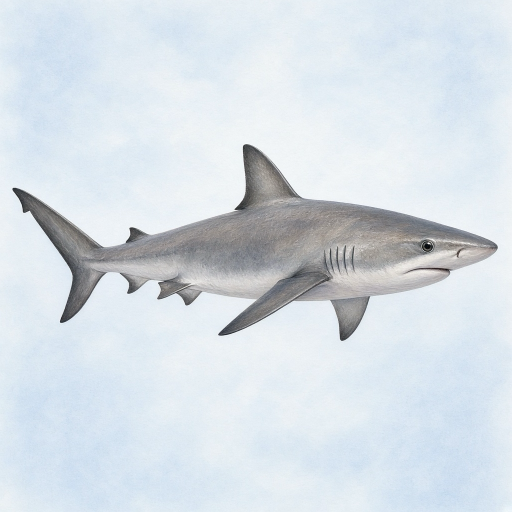
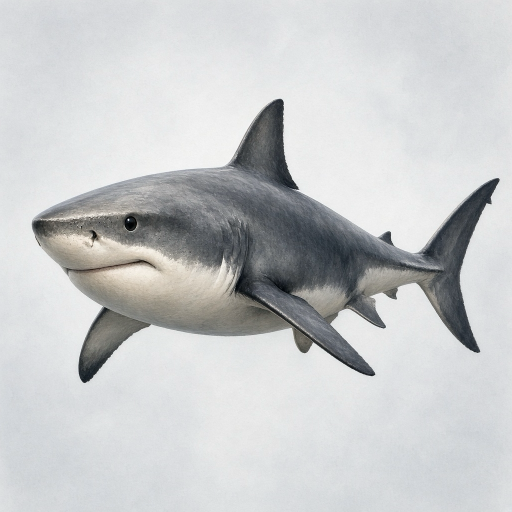
A shark is a kind of fish with a skeleton made of cartilage instead of bone. There are more than 540 different shark species alive today. They range in size from the dwarf lanternshark, which fits in your hand at about 8 inches (20 cm) long, all the way up to the whale shark, which can grow to 39 feet (12 m) and weigh 23 tons (21 metric tons), making it the biggest fish on Earth.
Why sharks are full of surprises
Sharks have been around so long that they are older than trees. The first sharks swam in the oceans about 450 million years ago, while the first forests on land did not show up until roughly 65 million years later. Sharks were already old by the time the dinosaurs appeared, and they were still around long after the dinosaurs went extinct.
A lot of the most famous shark facts are wrong, or at least mixed up. Sharks do not all have to keep swimming, most of them can rest on the seafloor for hours. Sharks do not have bones like you do, but their bodies are not soft like jelly either. And the idea that a shark can smell a single drop of blood from a kilometer away is much bigger than the truth.
Key shark facts
Sharks are older than trees. The first sharks appeared about 450 million years ago. The first forests appeared about 385 million years ago.
Sharks do not have bones. Their skeleton is made of cartilage, the same bendy material that makes the tip of your nose or the top of your ears.
The whale shark is the biggest fish in the ocean. It can grow to 39 feet (12 m) long and weigh 23 tons (21 metric tons), but it eats only tiny plankton and small fish.
The smallest shark is the dwarf lanternshark. Adults grow to about 8 inches (20 cm), short enough to lie across your hand.
Sharks have at least eight senses. Sight, smell, hearing, taste, touch, electric-field sensing, a pressure-sensing line along the side of the body, and (in some species) a built-in compass that uses Earth’s magnetic field.
Shark skin feels like sandpaper. It is covered in tiny tooth-shaped scales called dermal denticles that all point toward the tail. Rubbed one way the skin is smooth; rubbed the other way it is very rough.
Sharks lose and replace teeth all their life. Behind every working tooth is a row of replacement teeth ready to move forward. A single shark can use many thousands of teeth in its lifetime.
Sharks do not have a swim bladder. Most other fish have a gas-filled balloon inside that helps them float. Sharks float using a giant oily liver and by swimming to push themselves up like an airplane wing.
The Greenland shark is the longest-living animal with a backbone. Scientists used a special method on the proteins inside one shark’s eye lens and estimated it was about 392 years old.
Some sharks glow in the dark. The kitefin shark, about 6 feet (1.8 m) long, makes its own blue-green light. It is the largest known animal with a backbone that can glow on its own.
Some sharks walk on land. The epaulette shark can hold its breath, climb out of the water at low tide, and walk across exposed coral reef using its paired fins.
Common shark myths
Myth: Sharks have to swim all the time or they will die. Some shark species, including the great white and the mako, do need to keep moving so water flows across their gills. But most sharks, including nurse sharks and wobbegongs, can rest motionless on the seafloor for hours at a time and breathe by pumping water with their mouths.
Myth: Sharks can smell a drop of blood from a kilometer away. Sharks do have a great sense of smell. In lab tests they react to tiny traces of certain chemicals in seawater. But smelling something is not the same as finding it. A shark smells prey only when a water current carries the scent to its nose, and moving water breaks a scent trail into separate patches. A shark can swim right past food if the scent never reaches it.
Myth: Sharks never get cancer. Sharks do get cancer. Tumors have been found in dozens of shark species, including in their cartilage. The myth came from a 1992 book and was used to sell fake cartilage health pills.
Myth: A shark attack is one of the most likely ways to die at the beach. Sharks kill about 5 to 10 people in the whole world each year. You are far more likely to be hurt by something else: a car, a dog, a wasp, or a slip on the rocks.
Myth: Great white sharks are warm-blooded like a person. Great whites can keep certain parts of their body, like the swimming muscles, eyes, and brain, warmer than the seawater around them. But the rest of the body still matches the water temperature, so they are not truly warm-blooded the way you are.
Frequently asked questions about sharks
How old are sharks as a group?
Sharks first appear in the fossil record about 450 million years ago. That means they were swimming the oceans long before there were trees on land, and long before dinosaurs walked on Earth. The shark group has lived through every major mass extinction, although a lot of shark types went extinct along with the dinosaurs at the end of the Cretaceous period.
How does the cookiecutter shark cut a perfect circle?
The cookiecutter shark is small, growing to about 22 inches (56 cm) long, but it bites whales, dolphins, big sharks, and even submarines. It uses its lips like a suction cup to stick onto the skin of a much bigger animal. Then it spins its body in a circle, and its sharp lower teeth scoop out a round plug of flesh. The cookie-shaped scar is how the shark got its name.
Do sharks really hunt people?
Almost never on purpose. The great white, tiger, and bull sharks are the species most often involved in serious bites, and most of those happen by mistake when a shark thinks a swimmer or surfer is a seal or a fish. Worldwide, sharks are responsible for about 5 to 10 human deaths per year. People kill tens of millions of sharks every year, mostly for their fins.
What do orcas (killer whales) have to do with great white sharks?
Off the coasts of South Africa and California, orcas have been seen hunting great whites. The orca flips the shark upside down, which puts the shark into a still, trance-like state. The orca then eats only the shark’s giant oil-rich liver and leaves the rest. Sometimes great whites move out of an area for months after orcas show up.
A shark is a fish in the class Chondrichthyes, the cartilaginous fish, which means its skeleton is made of cartilage instead of bone. Sharks first appear in the fossil record about 450 million years ago, which makes them older than trees, older than dinosaurs, and older than most of the major animal groups alive today. There are more than 540 known shark species in the modern oceans, ranging from the dwarf lanternshark at about 8 inches (20 cm) to the whale shark at up to 39 feet (12 m) and 23 tons (21 metric tons), the largest fish on the planet.
Why sharks are tricky to study
Sharks look like they should be easy to summarize: scary fish with big teeth. The reality is more interesting. Sharks split off from the bony-fish family more than 400 million years ago and have evolved their own way of doing almost everything: a different skeleton, a different way of floating, a different way of detecting prey, and several different ways of having babies, depending on the species.
Modern science also keeps overturning the most familiar shark facts. Most sharks do not have to swim constantly to breathe. The shark sense of smell is excellent but not magical. Tiger sharks really will eat almost anything, but the line between truth and tall tale is hard to draw. And the popular image of sharks as ruthless killers does not match the actual numbers: sharks kill about 5 to 10 people worldwide each year, while people kill tens of millions of sharks each year.
Key shark facts
Sharks are older than trees. The shark lineage goes back about 450 million years, while the first true trees show up roughly 65 million years later. Sharks have lived through all five major mass extinctions in Earth’s history, although the end-Cretaceous extinction (which ended the dinosaurs) wiped out a lot of shark types as well.
Cartilage skeleton. Shark vertebrae and jaws are made of cartilage, the same flexible tissue you have in your nose and ears, although in sharks the cartilage is partly hardened with calcium. Cartilage is about half the density of bone, which makes the whole skeleton lighter.
No swim bladder. Most fish have a gas-filled organ called a swim bladder that helps them stay at one depth. Sharks float using two tricks instead: a huge oil-rich liver (often more than a quarter of the shark’s body weight) and water flowing past their pectoral fins, which act like the wings of an airplane.
At least eight senses. Sharks have sight, smell, hearing, taste, touch, electroreception (sensing electrical fields), a lateral line (a row of pressure-sensing pits along each side of the body), and, in some species, magnetoreception (sensing Earth’s magnetic field for long-distance navigation). The popular “five senses plus a sixth” line undercounts them.
Electroreception in close-up detail. The ampullae of Lorenzini are tiny gel-filled pores on a shark’s snout. They detect the weak electrical signals given off by the muscles of nearby prey, even prey hidden under sand. Their range is short, about a foot at most, but very precise.
Skin like sandpaper. Shark skin is covered in tooth-shaped scales called dermal denticles that all point toward the tail. The skin feels smooth from head to tail and rough from tail to head. Speedo’s shark-inspired Fastskin swimsuits were so good at reducing drag that swimming’s governing body, FINA, banned them in 2010.
Endless teeth. Sharks replace their teeth throughout life. Behind every working tooth is a row of replacements ready to move forward. The replacement rate ranges from a few days to several weeks depending on the species, its age, and the water temperature, and a single shark can shed many thousands of teeth.
Speed. The shortfin mako shark is the fastest shark, reaching short bursts of about 43 mph (70 km/h). The fastest fish overall (sailfish, black marlin) reach about 68 mph (110 km/h). The “100 km/h mako” figure that circulates online is an exaggeration.
Long life. The Greenland shark is the longest-lived animal with a backbone. By measuring radiocarbon in the proteins of the shark’s eye lens, scientists estimated one female at about 392 years old. Greenland sharks grow less than 0.4 inches (1 cm) per year and do not become old enough to reproduce until about age 150.
Glow-in-the-dark sharks. Several deep-sea shark species make their own blue-green light using cells called photophores. The kitefin shark, confirmed glowing in 2021, reaches about 6 feet (1.8 m). It is the largest known animal with a backbone that can produce its own light.
Walking sharks. The epaulette shark of Australia and the Indo-Pacific can climb out of the water at low tide and walk across exposed coral reef using paired fins. It can also tolerate severely oxygen-depleted water that would kill most fish.
Cookiecutter shark. The cookiecutter shark, which grows to about 22 inches (56 cm), attaches to a much larger animal with suction-cup lips, then spins its body to remove a circular plug of flesh. Its bite scars have been found on whales, dolphins, great whites, tuna, and the rubber sonar domes of US Navy submarines.
Common shark myths
Myth: Sharks must swim constantly or they will die. Only a small group of sharks, including the great white and the mako, are obligate ram ventilators that need forward motion to push water across their gills. Most sharks, including nurse sharks, wobbegongs, and many catsharks, can rest motionless on the seafloor and pump water across their gills using their mouths.
Myth: Sharks have no bones. Sharks lack the true cellular bone found in bony fish, but their cartilage skeleton is partly mineralized in the vertebrae, jaws, and fin spines. “No bones” is an oversimplification; “cartilage” is the accurate version.
Myth: A shark can detect a single drop of blood from a kilometer away. Shark smell really is sensitive: laboratory tests show sharks responding to some amino acids at about one billionth of a mole per liter of seawater. What limits a shark is delivery, not sensitivity. A shark smells something only if the current carries the scent to it, and moving water breaks a scent trail into scattered patches instead of a smooth path back to the source.
Myth: Sharks do not get cancer. Sharks do get cancer. Tumors have been documented in dozens of shark species, including in cartilage tissue. The “sharks don’t get cancer” idea was popularized by a 1992 book and used to market shark-cartilage supplements with no medical benefit.
Myth: Great whites are warm-blooded like mammals. Great whites are regional endotherms, not true endotherms. They use a counter-current heat exchanger called the rete mirabile to keep certain parts of the body (the swimming muscles, eyes, brain, and stomach) warmer than the surrounding seawater. The rest of the body matches the water temperature, so the comparison to mammals is overstated.
Frequently asked questions about sharks
How does shark electroreception actually work?
Sharks (and the closely related rays) have hundreds to thousands of small pores on their snouts called the ampullae of Lorenzini. Each pore connects to a gel-filled tube that ends in a cluster of electroreceptor cells. The cells fire in response to extremely weak electrical fields, like the field given off by the muscle activity of a flounder hidden under the sand. In tests with prey-simulating electric fields, young hammerhead and sandbar sharks turned toward the source from about 12 inches (30 cm) away at most, which is why sharks use this sense for the final approach to prey rather than for long-distance hunting. The same organ also helps some sharks line up with Earth’s magnetic field during long migrations.
Why does the Greenland shark live so long?
The Greenland shark lives in cold North Atlantic and Arctic waters, where its body chemistry runs at a slow pace. It grows by less than half an inch (about 1 cm) a year, takes around 150 years to reach the age where it can reproduce, and may live for 250 to 500 years. The 2016 Science paper by Nielsen and colleagues used radiocarbon dating of the proteins inside the shark’s eye lens (which form before birth and never replace) to put one Greenland shark at about 392 years old, with the next-largest individuals close behind.
How do orcas (killer whales) hunt great white sharks?
Off South Africa and California, scientists have documented orcas hunting great whites. The orca flips the shark upside down, which puts it into a reflex called tonic immobility, a kind of natural paralysis that lasts up to 15 minutes. The orca then bites into the shark’s belly and removes the liver, which is huge and oil-rich (up to about 24 percent of the shark’s body weight). The rest of the carcass is usually left behind. After these attacks, surviving great whites have been seen abandoning their normal feeding sites for months at a time.
Why do hammerheads have hammer-shaped heads?
The wing-like extension on a hammerhead’s head, called the cephalofoil, spreads the eyes far apart on the sides and packs the underside with ampullae of Lorenzini. The wide eye spacing gives the shark a nearly 360-degree field of view, including some overlap above and below for depth perception. The dense electroreceptor patch underneath sweeps the seafloor for hidden prey, especially stingrays. Some hammerhead species are even partly immune to stingray venom and eat stingrays as a regular meal.
Are some sharks really able to walk on land?
Yes, in a limited sense. The epaulette shark of Australia and the Indo-Pacific can move across exposed coral reef using its paired pectoral and pelvic fins in a coordinated walking motion. It can survive short periods out of water and tolerate oxygen levels in tide pools that would kill most fish. Nine recognized species of walking sharks live in the Indo-Pacific reef regions, all small (typically under 3 feet / 90 cm) and reef-associated. They are not running across beaches; they are crawling between rock pools.
A shark is a cartilaginous fish in the class Chondrichthyes, subclass Elasmobranchii, with a fossil record extending back roughly 450 million years. The shark lineage predates the first forests by roughly 65 million years, predates the dinosaurs by about 200 million years, and has survived all five major mass extinctions of the Phanerozoic, although shark diversity was substantially reduced at the end of the Cretaceous. Today there are more than 540 living shark species, ranging in size from the dwarf lanternshark at roughly 8 inches (20 cm) to the whale shark at up to 39 feet (12 m) and 23 tons (21 metric tons), the largest fish in the ocean.
Why sharks resist easy summary
Three features set sharks apart from the bony fish that share their seas.
The first is the cartilage skeleton. Shark vertebrae, jaws, and cranial elements are built from calcified cartilage rather than from true bone. Cartilage is roughly half the density of bone, and the lighter skeleton helps offset the absence of a swim bladder, the gas-filled organ most bony fish use to float at neutral buoyancy. Sharks instead control their position through a combination of pectoral-fin lift generated during forward motion, an enormous oil-rich liver (some species’ livers exceed 25 percent of body mass), and a heterocercal tail with the upper lobe larger than the lower, generating both forward thrust and lift.
The second is the sensory toolkit. Sharks possess at least seven distinct senses, depending on definition: vision, smell, hearing, taste, touch, electroreception via the ampullae of Lorenzini, and a lateral line that detects low-frequency pressure waves and water movement. Some species also display magnetoreception, allowing transoceanic migration. The popular shorthand of “five senses plus a sixth sense for electrical fields” undercounts the system.
The third is reproductive variety. Different shark species use viviparous live birth (great whites, blue sharks, hammerheads), oviparous egg-laying (catsharks, horn sharks, bullhead sharks), and ovoviviparous internal egg incubation followed by live birth (mako, sand tiger, frilled). Some sand tiger embryos engage in intrauterine cannibalism: the strongest pup eats its siblings before birth. Most pelagic shark species offer no parental care after birth, and pups must avoid being eaten by larger sharks, including their own mothers.
Key shark facts
Lineage and timing. Sharks first appeared in the fossil record around 450 million years ago, in the Late Ordovician. They predate the appearance of forests by approximately 65 million years and predate the dinosaurs by about 200 million years. The lineage has survived all five major mass extinctions, although shark diversity was reduced sharply during the end-Cretaceous extinction.
Skeleton. Shark skeletons are constructed from cartilage strengthened by a calcified outer shell. Vertebrae and tooth-bearing cartilages can be heavily mineralized; the skeleton is not made of true bone. Cartilage’s lower density (roughly half that of bone) reduces the energetic cost of staying buoyant.
Buoyancy. Sharks lack a swim bladder. They generate lift dynamically through pectoral-fin geometry during forward motion and statically through a large oil-rich liver. Squalene, a hydrocarbon found in shark liver oil, has a density well below water, providing static lift comparable to a partial swim bladder.
Skin. Shark skin is covered in tooth-like dermal denticles (placoid scales) that point posteriorly. The denticles reduce drag and turbulence during swimming and create a unique anisotropic texture: smooth in the head-to-tail direction, sandpaper-rough in the tail-to-head direction. The dermal denticles inspired Speedo’s Fastskin swimsuits, which were banned by FINA from competitive use in 2010.
Teeth. Sharks replace teeth continuously throughout life, a system supported by rows of replacement teeth growing behind the active row. Replacement intervals vary with species, age, and water temperature, running from a few days to several weeks. A single shark may shed many thousands of teeth in its lifetime.
Hearing and the lateral line. Sharks detect low-frequency vibrations (under approximately 1,000 Hz) at distances of tens of meters through both inner-ear hair cells and the lateral line, a row of pressure-sensitive neuromasts running along each flank. Sharks are particularly sensitive to the irregular low-frequency pulses produced by struggling prey.
Electroreception. The ampullae of Lorenzini are gel-filled pores on a shark’s snout that contain electroreceptor cells sensitive to bioelectric fields. Detection range is short: juvenile scalloped hammerhead and sandbar sharks orient to prey-simulating dipole fields from a maximum distance of about 12 inches (30 cm). The ampullae also support magnetoreception via interaction with Earth’s magnetic field, contributing to long-distance navigation.
Olfaction. Smell matters more to some sharks than to others. A survey of 58 cartilaginous fishes found the largest olfactory bulbs, relative to the rest of the brain, in migratory coastal-pelagic sharks such as the white shark and the tiger shark, and the smallest in most reef-dwelling species. Laboratory recordings place shark detection thresholds for amino acids near 10⁻⁹ molar, one billionth of a mole per liter. Detection range in open water depends on whether the current is carrying the odor plume toward the shark rather than on that threshold.
Endothermy. Most sharks are ectotherms, but a small group including the great white, mako, salmon, and porbeagle sharks is regionally endothermic. They use a counter-current heat-exchange network called the rete mirabile to keep specific muscles, eyes, and brain tissue 7 to 18 °F (4 to 10 °C) above ambient seawater. Regional endothermy is what allows great whites to forage in cold waters off Cape Cod and South Africa.
Speed. The shortfin mako shark is the fastest shark, reaching burst speeds of about 43 mph (70 km/h). The fastest fish, the sailfish and black marlin, reach about 68 mph (110 km/h). The “100 km/h mako” figure that circulates online is an exaggeration.
Bioluminescence. Several deep-sea shark species produce blue-green bioluminescence through specialized organs called photophores. The kitefin shark (Dalatias licha), confirmed in 2021 as bioluminescent, reaches about 6 feet (1.8 m) and is the largest known luminous vertebrate.
Longevity. The Greenland shark (Somniosus microcephalus) is the longest-lived vertebrate. Eye-lens radiocarbon dating reported by Nielsen and colleagues in Science, 2016, estimated one specimen at approximately 392 years old (± 120), with sexual maturity not reached until about age 150. Greenland sharks grow less than half an inch (1 cm) per year.
Sense count. The “five senses plus a sixth” formulation undercounts the system. Sharks have at least eight: vision, smell, hearing, taste, touch, electroreception, lateral-line pressure sense, and (in some species) magnetoreception.
Common shark myths
Myth: Sharks must swim constantly or they will die. A subset of fast, open-ocean shark species (great white, mako) are obligate ram ventilators that need forward motion to push water across their gills. Most sharks, including nurse sharks, wobbegongs, and many catsharks, can pump water across their gills using buccal pumping and rest motionless on the seafloor for hours or days.
Myth: Sharks have no bones. Sharks lack the true cellular bone found in osteichthyes (bony fish), but the cartilage skeleton is partially mineralized in vertebrae, jaws, and fin spines. Calling it “no bones” oversimplifies; calling it “cartilage” is accurate.
Myth: A shark can detect a single drop of blood from a kilometer away. Shark olfaction is genuinely sensitive: laboratory thresholds for some amino acids fall near 10⁻⁹ molar, one billionth of a mole per liter. Sensitivity is not what sets the range. A shark smells prey only where the current has carried the odor to it, and turbulence breaks that odor into scattered patches, so current direction and mixing determine the distance.
Myth: Sharks do not get cancer. Sharks do get cancer. Tumors have been documented in dozens of shark species, including in cartilaginous tissue. The “sharks don’t get cancer” myth originated with the 1992 book of that title and was used to market unsupported shark-cartilage supplements. Peer-reviewed oncology research has comprehensively rejected the central premise, even though the book’s author continued to defend it in a 1996 sequel.
Myth: The cookiecutter shark is small enough that nothing notices it. The cookiecutter shark (Isistius brasiliensis) reaches only about 22 inches (56 cm) but routinely leaves circular bite marks on animals orders of magnitude larger, including whales, dolphins, great whites, and tuna, and has damaged the soft-mounted sonar domes of US Navy submarines on numerous occasions since the 1970s. The bites are perfectly circular because the shark uses suction-cup lips to grip the surface and rotates its body to remove a disk of tissue.
Myth: Great whites are warm-blooded like mammals. Great whites are regional endotherms, not true endotherms. They keep specific tissues, including the brain, eyes, swimming muscles, and stomach, warmer than seawater through counter-current heat exchange in the rete mirabile. Whole-body temperature regulation as seen in mammals does not apply.
Myth: Sharks have a 100-percent shark-attack scoreboard. Globally, sharks are responsible for an average of approximately 5 to 10 unprovoked human fatalities per year, far fewer than dogs, hippos, mosquitoes, or many other animal categories. The widely repeated statistic that vending machines kill more people than sharks is poorly sourced; the related coconut-deaths claim has been debunked. The shark fatality count, however, really is small relative to the public perception, and unprovoked attacks are concentrated in a few species (great white, tiger, bull) and a few coastal regions.
Frequently asked questions about sharks
How are sharks related to bony fish, and how to other cartilaginous fish?
Sharks belong to the class Chondrichthyes, which also includes rays, skates, sawfish, and chimaeras (ratfish). The Chondrichthyes diverged from the bony-fish lineage in the early Silurian, more than 400 million years ago. Within Chondrichthyes, sharks (selachii) and rays (batoidea) are sister groups; chimaeras represent the deeper branch. Modern sharks are members of the superorder Selachimorpha, distinct from the rays even though both are elasmobranchs.
How do orcas kill great white sharks?
Killer whales (Orcinus orca) have been documented hunting great whites off the coasts of South Africa and central California. The technique flips the shark belly-up, inducing tonic immobility (a reflexive paralysis that lasts up to 15 minutes when a shark is inverted), and the orca then removes and consumes the energy-rich liver. The shark’s liver, oil-rich and storing up to 24 percent of body mass, is the only tissue typically taken; the rest of the carcass is left. Following these attacks, surviving great whites have abandoned their normal feeding grounds for months at a time, documented in Towner and colleagues, African Journal of Marine Science, 2022.
How does the Greenland shark live so long?
Nielsen and colleagues, Science, 2016, used radiocarbon levels in eye-lens proteins (which form in utero and never replace) to date 28 female Greenland sharks. The largest individual was estimated at approximately 392 years old, with a 95 percent confidence range of 272 to 512 years. Greenland sharks live in the cold waters of the North Atlantic and Arctic, grow less than 0.4 inches (1 cm) per year, and reach sexual maturity at approximately 150 years. The combination of low metabolic rate (cold ambient temperature), slow growth, and accumulation of the natural cryoprotectant trimethylamine N-oxide (TMAO) at deep-water pressures all contribute to extreme longevity.
Why do hammerhead sharks have hammer-shaped heads?
The cephalofoil, the wing-like lateral expansion of the head, distributes the eyes far apart along its axis and concentrates a high density of ampullae of Lorenzini across the broad ventral surface. The wide eye spacing supports a near-360-degree visual field with stereoscopic overlap above and below, and the ventral electroreceptor array sweeps the seafloor for buried prey such as stingrays. Hammerhead species have shown the strongest demonstrated preferences for stingrays as prey, and some species, including the great hammerhead, are largely immune to stingray venom.
Are some sharks really able to walk on land?
The epaulette shark (Hemiscyllium ocellatum) of Australia and the Indo-Pacific can move across exposed coral reef using paired pectoral and pelvic fins in a coordinated walking motion. The species tolerates severe oxygen depletion (60 minutes at zero ambient oxygen has been recorded) and survives short periods out of water at low tide. It is one of nine recognized walking-shark species in the genus Hemiscyllium, all small (typically under 3 feet / 90 cm) and reef-associated.
What is natal philopatry, and which sharks demonstrate it?
Natal philopatry is the behavioral pattern of returning to the place of birth to reproduce. Feldheim and colleagues demonstrated natal philopatry in lemon sharks (Negaprion brevirostris) using genetic markers from a two-decade tagging study at Bimini, Bahamas, published in Molecular Ecology in 2014. Female lemon sharks return to the specific shallow-water mangrove pupping grounds where they were born to give birth to their own offspring, sometimes after migrations of hundreds of miles (kilometers). Comparable behavior has since been demonstrated in several other shark species and is a major consideration in shark conservation: damaging a single nursery area can disrupt reproduction for an entire local population.
A shark is any cartilaginous fish in the superorder Selachimorpha, within the subclass Elasmobranchii of the class Chondrichthyes. The Chondrichthyes diverged from the Osteichthyes (bony fish) in the early Silurian, more than 420 million years ago. The earliest fossils generally accepted as sharks date to the Late Ordovician, approximately 450 million years ago. The lineage radiated extensively through the Carboniferous (often called the “golden age of sharks”), survived the end-Permian and end-Triassic extinctions, was reduced sharply but not eliminated at the end of the Cretaceous, and persists today as more than 530 living species across nine extant orders, ranging from the dwarf lanternshark (Etmopterus perryi, ~8 inches / 20 cm) to the whale shark (Rhincodon typus, up to ~39 feet / 12 m and ~23 tons / 21 metric tons).
Two features make sharks distinctive among long-surviving vertebrate radiations. First, the body plan has been highly conservative since the Mesozoic; the modern selachimorph silhouette is recognizable in fossils more than 100 million years old, and many modern shark families have anatomically unchanged Cretaceous representatives. Second, the lineage’s anatomical and reproductive diversity is greater than the popular “shark” image suggests, including filter feeders, deep-sea bioluminescent species, walking benthic forms, and obligate ram ventilators with regional endothermy. The “five senses plus one” formulation undercounts the sensory apparatus; the “fish that has not changed in 400 million years” framing both overstates conservatism and obscures the extensive species turnover within the Selachimorpha.
Why elasmobranch biology resists tidy summary
Three properties of the radiation complicate generalization.
The first is the breadth of skeletal mineralization. Shark vertebrae, jaws, and tooth-bearing cartilages are extensively impregnated with calcium phosphate (apatite) and can fossilize despite the absence of true cellular bone. The mineralized cartilage is structurally distinct from osteichthyan bone (no osteocytes, no Haversian canals, no true periosteum), but the binary distinction between “cartilage” and “bone” routinely collapses on inspection. Tooth dentine and enameloid in sharks are histologically very similar to bony-fish equivalents, and dermal denticles share developmental machinery with vertebrate teeth.
The second is the heterogeneity of buoyancy and locomotion. Most osteichthyans use a gas-filled swim bladder for static buoyancy. Sharks lack a swim bladder and combine three strategies in species-specific proportions: dynamic lift from the pectoral fins during forward motion (with the heterocercal tail, in which the upper lobe is larger than the lower, producing both forward thrust and a downward push that the pectoral lift offsets), a hypertrophied liver charged with low-density squalene and other diacylglycerol ethers (in some deep-sea species the liver exceeds 25 percent of body mass and carries enough static lift to obviate the need for forward swimming), and, in lamniform sharks, regional endothermy that allows higher cruising speeds in cold water.
The third is reproductive variety. Sharks display the full range of vertebrate reproductive modes. Oviparity (egg-laying with extensive yolk and a leathery egg case, often called a “mermaid’s purse”) characterizes catsharks, horn sharks, and bullhead sharks. Yolk-sac viviparity (live birth, no maternal nutrient transfer post-yolk) characterizes some carcharhiniforms. Placental viviparity (live birth with a yolk-sac placenta and active maternal-fetal nutrient exchange) is the mode in many requiem sharks, blue sharks, and hammerheads. Aplacental viviparity with intrauterine oophagy (the developing pup feeds on additional unfertilized eggs ovulated by the mother) is the mode in lamniformes such as the great white and shortfin mako. Adelphophagy (intrauterine cannibalism, in which the strongest pup consumes its siblings before birth) is documented in the sand tiger shark (Carcharias taurus). The diversity of modes makes any single statement about “how shark reproduction works” wrong about most species.
Key facts at expert level
Phylogeny. Modern sharks belong to the superorder Selachimorpha. Molecular phylogenies recover the sharks as the sister group of the Batoidea (rays, skates, sawfishes) within Elasmobranchii, whereas morphological analyses have often nested batoids inside the squalomorph sharks, the hypnosqualean hypothesis. The deepest extant chondrichthyan branch is the Holocephali (chimaeras, ratfishes). Living sharks divide into two clades: the Galeomorphii (Carcharhiniformes, Lamniformes, Heterodontiformes, Orectolobiformes) and the Squalomorphii (Hexanchiformes, Squaliformes, Echinorhiniformes, Pristiophoriformes, Squatiniformes). Extinct lineages are harder to place. Cladoselache is now usually grouped with the symmoriiforms, which several recent analyses put on the holocephalan stem rather than among sharks.
Skeletal histology. Shark vertebrae are formed of areolar mineralized cartilage with concentric calcified bands (used for age determination, with caveats), surrounded by a notochordal cartilaginous sheath. The skeleton is not bone in the cellular-osteocyte sense but is heavily mineralized in load-bearing structures (vertebral centra, jaw cartilages, fin spines). Mineralized cartilage is fossilizable, and shark teeth (true enameloid over orthodentine) are the most abundant vertebrate fossils in many marine deposits.
Buoyancy and locomotion. The shark liver is the principal organ of static buoyancy and contains squalene (a triterpene with density approximately 0.86 g/cm³), other diacylglycerol ethers, and triglycerides at concentrations sufficient to provide near-neutral buoyancy in some deep-sea squaliforms. The heterocercal caudal fin contributes both forward thrust and lift, complemented by pectoral-fin lift; together with the pitched body axis, the system generates a stable cruise depth at the cost of obligate forward motion in lamniformes and a few other groups (obligate ram ventilation).
Ampullae of Lorenzini. Cutaneous electroreceptive organs distributed primarily across the head and snout. Each ampulla is a jelly-filled canal terminating in a sensory bulb of receptor cells coupled to the lateral-line nerve. Functional sensitivity reaches voltage gradients on the order of 5 nV/cm in some species, sufficient to detect the bioelectric fields of buried prey. In behavioral tests, juvenile scalloped hammerhead and sandbar sharks oriented to prey-simulating dipole fields from a maximum distance of about 12 inches (30 cm). The same organ contributes to magnetoreception via electrical induction during forward swimming through the geomagnetic field, supporting transoceanic navigation in pelagic species.
Lateral line and audition. The mechanosensory lateral line is composed of superficial neuromasts and canal neuromasts (in pit organs and along the trunk) that detect low-frequency (<1 kHz) hydrodynamic disturbances, with prey detection reported out to roughly 250 m. Inner-ear hair cells extend the frequency response to overlapping ranges. Sharks are particularly responsive to irregular low-frequency pulses characteristic of struggling prey.
Olfaction. Olfactory bulb size varies widely across cartilaginous fishes rather than dominating the brain. Yopak and colleagues, Brain Structure and Function, 2015, measured relative olfactory bulb size in 58 species and found the largest bulbs in migratory coastal-pelagic sharks, including the white shark (Carcharodon carcharias) and the tiger shark (Galeocerdo cuvier), and the smallest in most reef-associated species. Electro-olfactogram thresholds for amino acid odorants measured across elasmobranch species range from about 10⁻⁶ to 10⁻¹¹ molar, with values near 10⁻⁹ molar typical, and neither lamellar number nor olfactory-organ surface area predicts the threshold. In turbulent open water the working detection range is set by how far the mean flow carries the odor plume, not by threshold concentration.
Regional endothermy. Members of the order Lamniformes, including the great white (Carcharodon carcharias), shortfin mako (Isurus oxyrinchus), porbeagle (Lamna nasus), and salmon shark (Lamna ditropis), maintain core swimming muscles, eyes, brain, and stomach at 7 to 18 °F (4 to 10 °C) above ambient seawater through counter-current heat exchangers (rete mirabile). The bigeye thresher (Alopias superciliosus) maintains cranial endothermy specifically. Whole-body endothermy as found in mammals or birds is not present in any shark; the system is regional and metabolically demanding.
Bioluminescence. Several deep-sea squaliforms produce blue-green light through specialized photophores under hormonal (melatonin and prolactin) rather than nervous control. Mallefet and colleagues, Frontiers in Marine Science, 2021, confirmed bioluminescence in the kitefin shark (Dalatias licha), reaching about 6 feet (1.8 m), making it the largest known luminous vertebrate. Functional hypotheses include counter-illumination camouflage, intraspecific signaling, and prey luring.
Greenland shark longevity. Nielsen and colleagues, Science, 2016, applied bomb-pulse radiocarbon dating to the eye-lens nuclei of 28 female Greenland sharks (Somniosus microcephalus). The largest specimen (502 cm total length) was estimated at approximately 392 years old (95 percent CI 272 to 512 years), and sexual maturity is inferred at approximately 150 years. Eye-lens proteins form during embryogenesis and are biochemically inert thereafter, allowing radiocarbon assay of the original tissue. The species also accumulates trimethylamine N-oxide (TMAO) at deep-water pressures, where TMAO acts as a piezolyte stabilizing protein folding.
Tooth replacement. Shark dentition is polyphyodont: whole teeth regenerate continuously from a dental lamina that carries successional tooth files forward like a conveyor belt. Measured replacement intervals vary with species, age, and water temperature, running from a few days to several weeks, and slow in colder water. A shark sheds many thousands of teeth over a lifetime. Tooth morphology is highly diagnostic, and because the endoskeleton is cartilaginous the chondrichthyan fossil record consists predominantly of isolated teeth.
Reproductive modes (summary). Oviparity: catsharks, horn sharks, bullhead sharks. Yolk-sac viviparity: most squaliforms. Placental viviparity: hammerheads, blue sharks, requiem sharks. Aplacental viviparity with oophagy: lamniformes (great white, mako, sand tiger). Adelphophagy: sand tiger (Carcharias taurus) is the canonical case. Parthenogenesis: documented under captive conditions in zebra sharks, blacktip sharks, and bonnethead sharks, with offspring confirmed via microsatellite genotyping.
Tonic immobility. Inversion of a shark induces a reflexive paralytic state lasting up to about 15 minutes in most tested species. The phenomenon is exploited by orcas (Orcinus orca) hunting great whites: the orca flips the shark belly-up, holds it inverted, and removes the energy-rich liver while the rest of the carcass is typically left. Towner and colleagues, African Journal of Marine Science, 2022, documented persistent absence of great whites at major South African aggregation sites following orca predation events.
Natal philopatry. Feldheim and colleagues, Molecular Ecology, 2014, used a 20-year microsatellite dataset from Bimini, Bahamas, to demonstrate maternal natal philopatry in lemon sharks (Negaprion brevirostris), with females returning to specific mangrove pupping sites where they themselves were born, sometimes after migrations spanning hundreds of miles (kilometers). Comparable behavior has subsequently been demonstrated in nurse sharks, blacktip sharks, and bull sharks, and is a major consideration in coastal nursery-area conservation.
Cookiecutter shark.Isistius brasiliensis (up to about 22 inches / 56 cm) extracts roughly disk-shaped plugs of tissue from cetaceans, large pelagic fish, and other sharks via suction-cup labial attachment followed by axial body rotation around the gripped surface. Bites are documented on cetaceans, billfish, lamniformes, and the neoprene-clad AN/BQR-19 sonar domes of US Navy submarines, with damage incidents reported from the 1970s onward. The species is a vertical migrator, ascending into the upper photic zone at night and returning to mesopelagic depths by day.
Megalodon.Otodus megalodon (formerly Carcharocles megalodon) ranged from approximately 23 to 3.6 million years ago, with body length estimates from tooth-derived regressions ranging from 50 to 65 feet (15 to 20 m). Recent thermophysiological work suggests megalodon was a regional endotherm comparable to extant lamniformes. Extinction is associated with end-Pliocene cooling, prey-base collapse, and possibly competition with the rising lineage of Carcharodon carcharias; the popular notion of a single proximate cause is unsupported.
Common misconceptions at expert level
Misconception: Sharks have not changed for 400 million years. The Selachimorpha as a clade is old, but species turnover within the radiation has been substantial. The modern Lamniformes and Carcharhiniformes diverged in the late Mesozoic; modern requiem and hammerhead lineages are largely Cenozoic; and extinct shark groups (cladoselachiomorphs, hybodontiforms, ctenacanthiforms) dominated their respective epochs and left no living descendants. The statement “sharks are 450 million years old” refers to the lineage, not to any extant species or family.
Misconception: Sharks do not get cancer, and shark-cartilage extracts have anti-tumor effects. Sharks demonstrably develop neoplasms in multiple tissues, including chondromas and chondrosarcomas in cartilage. The “sharks don’t get cancer” claim derives from Lane’s 1992 popular book of that title and was used to market unsupported cartilage supplements. Controlled trials of shark-cartilage extracts (including the Phase III NCI trial of AE-941) have reported no clinical benefit. The marketing has additionally driven significant directed shark fishing pressure.
Misconception: Sharks can detect a single drop of blood from miles away. Laboratory thresholds for amino acid odorants sit near 10⁻⁹ molar, a genuinely low concentration, but concentration is not what limits range. Odor reaches a shark only where the mean flow has carried a plume, and turbulence breaks that plume into intermittent patches rather than a smooth gradient. Current direction and mixing therefore set the effective detection distance, and a shark off the plume axis detects nothing at any distance.
Misconception: Great whites are warm-blooded. Lamniform sharks are regional endotherms, with elevated tissue temperature confined to specific muscle bundles, the eye and brain (cranial retia), and the stomach. Whole-body homeothermy as in mammals or birds is absent. The system is energetically expensive and is associated with the lifestyle of high-latitude pursuit predators (white sharks foraging on Cape Cod, Cape fur seals, salmonids).
Misconception: Sharks are responsible for substantial human mortality globally. Unprovoked human fatalities attributable to sharks average approximately 5 to 10 per year worldwide, concentrated in a small set of species (great white, tiger, bull) and a small set of coastal regions. Worker mortality in the directed elasmobranch fisheries vastly exceeds shark-attributed mortality, and Worm and colleagues’ 2024 Science synthesis estimates global shark-and-ray mortality from human fishing at roughly 80 to 100 million animals per year. The asymmetry is the relevant conservation framing.
Misconception: Megalodon may still survive in the deep ocean. Megalodon was an obligate epipelagic and shelf-edge predator dependent on cetacean prey at temperate-to-tropical latitudes. The species’ tooth record disappears at approximately 3.6 million years ago and is absent from every younger marine deposit examined. The cryptic-deep-ocean hypothesis is not credible: there is no body of mesopelagic prey of suitable size, no fossil or DNA evidence, and the species’ anatomical and metabolic profile is incompatible with bathypelagic life. Contemporary “evidence” is uniformly hoax or misidentified material.
Frequently asked questions about elasmobranch biology
How is the shark phylogenetic position established with respect to bony fish?
Comparative anatomy, mitochondrial and nuclear genome data, and the Devonian-to-Carboniferous fossil record converge on a Silurian split between Chondrichthyes and Osteichthyes. The crown chondrichthyans share a calcified prismatic cartilage skeleton, claspers in males (modified pelvic fins for internal fertilization), placoid scales (dermal denticles), and a heterocercal caudal fin in basal forms. The Osteichthyes share endochondral ossification, lepidotrichia in the fin rays, and a swim bladder homologous to the tetrapod lung. The two lineages share more derived features (jaws, paired appendages, true vertebrae) inherited from a common gnathostome ancestor.
What is the actual mechanism of electroreception via the ampullae of Lorenzini?
Each ampulla consists of a surface pore, a jelly-filled canal of mucopolysaccharide gel, and a basal alveolus lined with electroreceptor cells (modified hair cells) connected to the lateral-line nerve. The gel has a conductivity comparable to seawater and acts as a low-resistance pathway from the pore to the receptor. The receptor cells respond to voltage gradients by graded release of neurotransmitter, with sensitivities reaching about 5 nV/cm in laboratory measurements. Because the ampullae are distributed across the head, the shark perceives electric fields through a vector array, allowing localization of prey or environmental fields. Magnetoreception arises secondarily through motional electromotive force generated as the shark swims through Earth’s geomagnetic field.
How was Greenland shark longevity established, and how reliable is the 400-year figure?
Nielsen and colleagues, Science, 2016, applied bomb-pulse ¹⁴C dating to the protein nuclei of the eye lens, which form in utero and are biochemically inert thereafter. Calibration uses the atmospheric ¹⁴C spike from above-ground nuclear-weapons tests in the late 1950s and early 1960s, which produces a sharp, datable transition in tissues forming at that time. Of 28 female specimens analyzed, only the smallest sharks (around 220 cm and below) carried unambiguous bomb-pulse signatures and were dated against the spike directly; the larger specimens were aged by extrapolation using a length-at-age model anchored to the bomb-pulse subset. The largest specimen (502 cm) yielded a point estimate of 392 years with a 95 percent confidence interval of 272 to 512 years. The interval reflects both analytical uncertainty in the radiocarbon assay and the length-extrapolation step. The species’ longevity remains the highest reported for any vertebrate.
Why are lamniform sharks regional endotherms and not whole-body endotherms?
The energetic cost of maintaining elevated tissue temperature scales with surface area for heat loss, and unlike mammals and birds, sharks lack an integumentary insulation layer (no fur, feathers, or significant subcutaneous fat) capable of reducing heat exchange with seawater across the entire body. The lamniform solution localizes endothermy to tissues where elevated temperature confers a clear performance benefit: red oxidative locomotor muscle (sustained cruising speed), cranial structures (visual and neural performance during pursuit at depth), and the stomach (digestion of cold prey). The retia mirabilia structure (interlocking arteriolar and venular networks) is a counter-current exchanger that minimizes the transit of warm blood out of the target tissue. Whole-body homeothermy would require either insulation or a much higher metabolic rate, neither of which the elasmobranch body plan supports.
What are the principal current threats to shark populations?
Worm and colleagues, Science, 2024, estimate annual global shark-and-ray fishing mortality at 80 to 100 million animals, with the largest single proximate driver being directed and bycatch fisheries (longlining, gill nets, purse seines) including the fin-driven directed shark fishery. Approximately one-third of chondrichthyan species are currently classified as threatened on the IUCN Red List. Secondary threats include coastal habitat loss (mangrove and reef nursery destruction), pollution, climate-driven temperature shifts, and depletion of prey populations. Conservation responses include the CITES Appendix II listing of an increasing number of shark species, regional fishing moratoria, and protected-area designations covering known nursery and aggregation sites.
What is the case for and against megalodon as a regional endotherm?
Griffiths and colleagues, PNAS, 2023, reported elevated clumped-isotope and phosphate-oxygen-isotope signals in megalodon tooth enameloid, consistent with body temperatures roughly 13 °F (7 °C) above ambient, comparable to extant lamniformes. The conclusion is supported by tooth morphology (typical lamniform serration patterns), prey-base evidence (cetaceans, large fish), and the species’ epipelagic habit. Counter-arguments cite uncertainties in isotopic-paleothermometry calibration for fossil enameloid and the absence of soft-tissue evidence. The current consensus favors regional endothermy at the mako-to-white-shark grade. Whole-body endothermy is not supported.