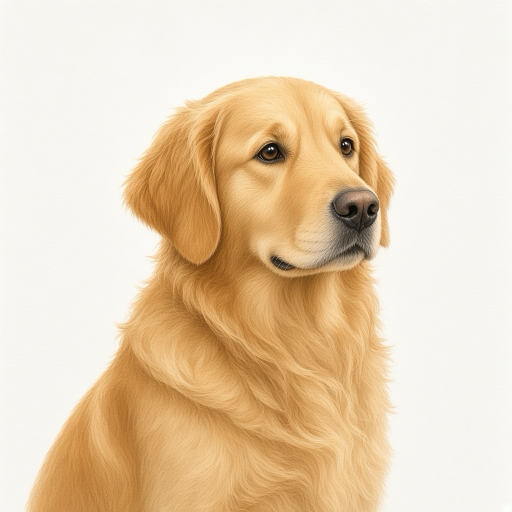
A dog is a furry, four-legged animal that lives with people as a pet, helper, or guard. Every dog in the world, from a tiny Chihuahua to a giant Great Dane, came from wolves. Scientists believe wolves and people started living near each other at least 15,000 years ago, which makes the dog the very first animal humans ever turned into a pet.
Why dogs are full of surprises
Dogs surprise people because they can do things our bodies cannot. A dog can hear quiet, high-pitched sounds you would miss, and a dog can smell things you would never notice, like the difference between two people who have walked across the same floor. A dog’s nose is covered in a pattern of bumps and lines, and scientists have used close-up photos of that pattern to tell one dog from another.
Key facts about dogs
Dogs came from wolves, not foxes. All pet dogs alive today share an ancestor with the gray wolf. Foxes are cousins, not parents.
Dogs were tamed at least 15,000 years ago. That makes them the oldest tame animal on Earth, even older than sheep, cows, or horses.
A dog’s nose has a pattern of ridges and bumps. Researchers have built computer systems that identify individual dogs from photos of their noses. One system tested in 2021 matched the right dog about 99 percent of the time across 302 dogs.
Dogs can hear sounds up to about 45,000 Hz. Humans top out around 20,000 Hz. That is why dogs notice high-pitched sounds people cannot hear at all.
The fastest dog breed, the Greyhound, runs about 43 to 45 miles per hour (69 to 72 km/h). Cheetahs are faster, but Greyhounds beat almost every other land animal over short distances.
A healthy dog’s body temperature is 101 to 102.5 °F (38.3 to 39.2 °C), several degrees warmer than the human normal of 98.6 °F (37 °C).
A dog’s tail is part of its backbone. Most dogs carry about 20 to 23 small bones in the tail alone. An adult human has 206 bones in the whole body and no tail at all.
Most dogs see colors, but only blues and yellows. They have trouble telling red and green apart, so a red toy on green grass can be hard for a dog to spot.
Chow Chows and Shar-Peis have blue-black tongues. Every other breed has a pink tongue.
Dalmatian puppies are born without spots. Their black spots start to show up at about two weeks old and keep coming in for months after that.
Common dog myths
Myth: Dogs only see in black and white. Dogs do see colors, just not as many as people. They see blues and yellows well, but reds and greens look mostly the same to them.
Myth: Dogs sweat through their tongues. Dogs cool down by panting, which lets heat escape from their tongue, mouth, and lungs. They do have a few sweat glands on their paw pads, but those play only a small role.
Myth: A wagging tail always means a happy dog. A wagging tail can mean happy, excited, scared, or even angry. The speed, height, and direction of the wag all matter. A stiff, fast wag held high can be a warning sign.
Myth: A dog’s mouth is cleaner than a human’s. Dog and human mouths both carry lots of bacteria, just different kinds. Dog saliva is not a disinfectant, and a lick on a cut can add germs instead of killing them.
Myth: Saint Bernards carried brandy barrels in the Alps. Real Saint Bernards searched for travelers lost in the snow, but they never carried alcohol. The little wooden barrel comes from a painting the English artist Edwin Landseer finished in 1820, and the picture was popular enough that people took the barrel for fact.
Myth: Puppies are born with their eyes open. Puppies are born with their eyes shut. They do not open them until they are about two weeks old, and their vision keeps developing for weeks after that.
Frequently asked questions about dogs
Where did dogs come from?
Dogs came from gray wolves. Long ago, some wolves were less afraid of people than others, and they hung around human camps to scavenge food. Over thousands of years, those friendlier wolves slowly changed into dogs. DNA evidence shows the change happened at least 15,000 years ago, and possibly as long as 40,000 years ago, in more than one part of the world.
How well can a dog smell?
A dog’s sense of smell is far sharper than a human’s. Scientists test it by finding the faintest scent a dog can still notice. The size of the gap changes a lot depending on which scent is used, so there is no single number that fits every case. The popular “one million times” figure does not come from any study.
Why do dogs wag their tails?
Dogs use their tails to send signals. Scientists found that dogs wag more to the right side when they see something they like, such as their owner, and more to the left when they see something that worries them, like a strange dog. Other dogs notice the direction too, so the tail is part of how dogs talk to each other.
Did a dog really go to space?
Yes. A small Soviet dog named Laika was launched into orbit on November 3, 1957, aboard a spacecraft called Sputnik 2. She was the first living animal to circle Earth from space. Sadly, Laika did not survive the trip, but her flight proved that animals could survive launch and weightlessness, which helped open the way for human astronauts.
How long do dogs live?
Most dogs live 10 to 15 years. Small breeds like Chihuahuas often reach 15 years or more. Giant breeds like Great Danes usually live only 7 to 10 years. Scientists are still trying to figure out exactly why bigger dogs age faster.
A dog (Canis familiaris) is a tame member of the same animal family as wolves, foxes, coyotes, and jackals. Every dog alive today, no matter how short or shaggy, descends from gray wolves that started living near humans at least 15,000 years ago. That long shared history is why dogs are unusually good at reading human faces, voices, and gestures, and why they sometimes seem to understand us better than other pets do.
Why dogs are tricky to study
Dogs look familiar. People have lived with them for so long that we tend to assume we already know how they work. A lot of common ideas about dogs turn out to be off, though, including the famous claim that they only see in black and white, the line about how a wet nose means a healthy dog, or the rule that a wagging tail always means a friendly dog.
Two things make dog research harder than it looks. First, dogs are bred into hundreds of varieties that differ wildly in size, shape, and behavior. A scent test that fits a Beagle does not fit a Pug. Second, dogs evolved alongside humans, so their senses and social behavior are tuned partly to us. They do things in front of people that they would not do alone in the wild, such as making long eye contact or asking for help when stuck.
Scientists now use brain scans, eye-tracking cameras, and DNA sequencing to study dogs. Those tools have shown that the picture of a dog as “just a tame wolf” is too simple. Dogs are their own animal, with their own quirks and their own way of relating to people.
Key dog facts
Dogs are descended from gray wolves, not from foxes or coyotes. DNA studies trace the split to between 15,000 and 40,000 years ago, with domestication probably happening more than once in different regions.
The Greyhound is the fastest dog breed, reaching about 43 to 45 miles per hour (69 to 72 km/h). The cheetah tops out near 70 mph (113 km/h), so the line “dogs faster than cheetahs” is wrong.
Dogs hear up to about 45,000 Hz, more than twice as high in pitch as the 20,000 Hz human limit.
A dog’s sense of smell far outperforms a human’s, though the exact multiplier depends on the scent being tested. A widely cited 2006 study put dogs at 10,000 to 100,000 times more sensitive to one test scent, while an earlier study using that same scent found a gap closer to a few hundred times. The “one million times” figure repeated online does not come from any study.
Dogs see in color, but with a smaller range than people. They have two kinds of color-detecting cells in their eyes, while humans have three. Blues and yellows look bright to a dog, but reds and greens look mostly alike.
A healthy dog’s body temperature is 101 to 102.5 °F (38.3 to 39.2 °C). That is several degrees warmer than the human normal of 98.6 °F (37 °C).
Dogs have more bones in the spine than people do. A dog has 13 vertebrae in the chest and 7 in the lower back, where a human has 12 and 5, and then a tail of about 20 to 23 more. An adult human skeleton has 206 bones in total.
The Chow Chow and Shar-Pei have blue-black tongues as a fixed breed trait. No one knows exactly why, but the trait has been in those breeds for thousands of years.
Dogs were the first animal humans tamed. Sheep, goats, cattle, pigs, and horses all came thousands of years later.
The first living being to orbit Earth was a dog. Laika, a stray from Moscow, was launched on Sputnik 2 on November 3, 1957, more than three years before Yuri Gagarin became the first human in orbit on April 12, 1961.
Common dog myths
Myth: Dogs see only in black and white. Dogs are not color-blind. They are red-green color-blind in the same way some humans are. Their world has plenty of color, just less of it.
Myth: Dogs sweat through their tongues. Dogs cool down mainly by panting, which moves heat-carrying water out through the breath. The tongue is part of that system, but it is not a sweat gland. Dogs do have small sweat glands on their paw pads, but those handle only a tiny share of the cooling.
Myth: A wagging tail always means a friendly dog. Tail wagging is more like a mood meter than a smile. A relaxed loose wag low to the ground often means a happy or curious dog. A stiff, high, fast wag can mean a warning. A 2007 study in the journal Current Biology showed that dogs even wag more to the right when they see their owner and more to the left when they see a threatening animal.
Myth: Dog saliva heals wounds. Dog saliva contains some bacteria-fighting molecules, but it also contains plenty of bacteria. Letting a dog lick an open cut can introduce germs that cause infection. The “antibacterial dog mouth” idea has been around since ancient Egypt, but modern science does not support it.
Myth: A dry nose means a sick dog. Dog noses get drier or wetter throughout the day depending on activity, temperature, and how recently the dog drank water. A short dry spell does not mean illness. Real warning signs are loss of appetite, low energy, and a fever above 103 °F (39.4 °C).
Myth: Old dogs cannot learn new things. Adult and senior dogs can learn new commands and tricks. Older dogs may take a few extra repetitions to memorize a cue, but their long-term memory and reasoning often stay sharp into the last years of life.
Frequently asked questions about dogs
How were dogs domesticated?
The leading theory is “self-domestication.” Wolves that were less afraid of humans began scavenging near human camps, where there were easy meals from leftovers. Wolves that tolerated people were better fed and produced more pups. Over many generations, that one trait pulled along a long list of other changes: floppier ears, shorter snouts, friendlier behavior, and a slower-aging brain. The story closely matches a famous experiment in 1959 in which Russian scientists bred silver foxes for tameness and watched dog-like traits appear within a few decades.
Why are dogs so much better at “reading” people than wolves are?
Dogs evolved alongside humans for thousands of years, and the dogs that paid attention to human signals lived longer and had more puppies. Today, dogs are unusually good at following a pointed finger or a glance toward a hidden object. Hand-raised wolves can learn to do this as adults, but dogs do it without training and from puppyhood. Researchers think paying attention to people is the trait we accidentally bred into dogs the most strongly.
Do dogs dream?
Yes. Brain recordings of sleeping dogs show the same pattern of brain waves seen in dreaming humans. Dogs in REM (rapid eye movement) sleep often twitch, kick their legs, and make small noises. Scientists cannot read the content of a dog’s dream, despite the popular claim. The current best guess is that dogs dream about ordinary dog days: chasing, walking, and being around their people.
Can dogs detect illnesses?
Some dogs can. Trained “medical alert” dogs warn their owners minutes before a seizure begins, possibly by smelling a chemical change in sweat or breath. Other dogs are trained to detect low blood sugar in people with diabetes, or even some cancers in laboratory tests. The ability is real, but it has to be carefully trained, and even the best dogs are not perfect.
Why do dogs tilt their heads when you talk to them?
Researchers think the head tilt has two purposes. It changes the angle of the ears so the dog can pinpoint a sound more precisely. It also seems to help dogs see your face past their own muzzle, which matters most for breeds with longer snouts. A 2021 study suggested that dogs that often tilt their heads tend to be the ones that learn the names of toys most easily.
The domestic dog (Canis familiaris) is a subspecies of gray wolf that has lived alongside humans for at least 15,000 years, making it the first species ever domesticated. Today there are roughly 700 to 900 million dogs in the world. Most are not pets but free-roaming village dogs in Asia, Africa, and Latin America. The dogs people in wealthy countries know best, the registered breeds with documented pedigrees, are a small minority of the global dog population and a young one: most modern breed standards were written in the late nineteenth or early twentieth century.
Why dogs are unusual among domestic animals
Dogs occupy a position no other animal does. They were tamed thousands of years before agriculture, before any plant was farmed, and before sheep, goats, cattle, or horses were brought under human control. They are also the only domestic animal that can read human social cues without training. Adult dogs that have never met a person before will follow a pointed finger to find hidden food. Wolf pups raised in human homes struggle with the same task at an age when puppies succeed, though well-socialized adult wolves can learn it. Something about dog cognition was reshaped by the relationship.
The breeds people see at dog shows are also younger than they appear. Most modern breed standards were written in the late nineteenth century, when British and American kennel clubs began registering specific bloodlines and writing down “ideal” body shapes. Genetic studies show that many breeds that look ancient, including the German Shepherd and the Doberman, are barely a century old. A handful of breeds, including the Saluki, the Tibetan Mastiff, and the Basenji, have older roots, but the deep history of dogs is mostly a history of working animals selected for specific tasks rather than for show-ring looks.
A third surprise: dog senses are not better than human senses across the board. Dogs see less detail than humans, see fewer colors, and have worse close-up vision. They rely on smell and hearing in ways people rely on vision, which is why a dog can find a buried treat by smell in seconds while missing a still object two feet (60 cm) away.
Key dog facts
Origin and timing. Dogs share a common ancestor with the modern gray wolf. Genetic and archaeological evidence places domestication between 15,000 and 40,000 years ago. The oldest universally accepted dog burial is the Bonn-Oberkassel dog, found in western Germany and dated to about 14,200 years ago.
Population and breeds. There are roughly 700 to 900 million dogs worldwide. The American Kennel Club recognizes about 200 breeds; the World Canine Organization (FCI) recognizes about 360. Most dogs in the world belong to no registered breed at all.
Sense of smell. A dog has roughly 220 to 300 million olfactory receptors lining its nasal passages, compared to about 5 to 6 million in a human. The brain area devoted to smell is proportionally far larger: in a study of five brains per species, the olfactory bulb made up 0.31 percent of brain volume in dogs against 0.01 percent in humans. Measured sensitivity ratios depend heavily on the odorant and the method. A widely cited 2006 study put dogs at 10,000 to 100,000 times more sensitive for one test compound, while a 1984 study of the same compound found a difference closer to 300-fold.
Hearing. Dogs hear sounds up to about 45,000 Hz. Humans top out near 20,000 Hz, and the human range narrows further with age.
Vision. Dogs are dichromats: they have two color-sensing cones in the retina, tuned to blue and yellow-green wavelengths. They cannot reliably distinguish red from green. Their visual acuity is roughly 20/75 in human terms, meaning they need to be at 20 feet (6 m) to see what a person sees clearly at 75 feet (23 m). They make up for it with a reflective layer behind the retina, the tapetum lucidum, that markedly improves sensitivity in low light.
Body temperature. A healthy dog runs at 101 to 102.5 °F (38.3 to 39.2 °C), about three to four degrees Fahrenheit above the human normal of 98.6 °F (37 °C).
Skeleton. The canine vertebral formula is 7 cervical, 13 thoracic, 7 lumbar, and 3 sacral vertebrae, followed by a tail of about 20 to 23 caudal vertebrae. A human column runs 7, 12, 5, and 5 fused sacral vertebrae with no tail, and the adult human skeleton totals 206 bones. Dogs also have 42 adult teeth, ten more than the human total of 32.
Top speed. The Greyhound is the fastest dog breed, with measured sprints of 43 to 45 mph (69 to 72 km/h). The cheetah, the fastest land animal, sprints at about 70 mph (113 km/h), so the popular line about dogs outrunning cheetahs is wrong.
Coat and color. Dalmatian puppies are born white and unspotted. Their black or liver spots begin to appear within the first few weeks of life and continue to develop for months afterward. The Chow Chow breed standard requires a blue-black tongue, and the Shar-Pei standard prefers one in all coat colors except the dilutes, where solid lavender is accepted.
Lifespan and size. Small breeds typically live 12 to 16 years, while giant breeds live 7 to 10 years. The relationship is unusual: in most species, larger animals live longer, but dogs run the opposite direction within their own species.
Spaceflight. A Soviet stray named Laika became the first living being to orbit Earth aboard Sputnik 2 on November 3, 1957. She did not survive the mission, but the flight proved that biological life could endure launch and weightlessness.
Common dog myths
Myth: Dogs see only in black and white. Dogs are not monochromats. The retina contains two cone types instead of three, giving roughly the color experience of a human with red-green color blindness. They see blues and yellows clearly and greens, reds, and oranges as muddled tones along the same axis.
Myth: Dogs sweat through their tongues. Dogs cool primarily by panting, which evaporates water from the surfaces of the mouth, tongue, and upper airway. They have eccrine sweat glands on the paw pads and a few other locations, but the heat-removal contribution from sweating is small. Heatstroke risk in dogs is much higher than in humans for this reason; brachycephalic breeds such as Pugs and English Bulldogs are especially vulnerable.
Myth: A wagging tail is always a friendly signal. The geometry of the wag matters as much as the fact of it. A loose, low, full-body wag tends to signal a relaxed dog. A stiff, high, narrow wag often signals arousal that may turn into aggression. Studies in the journal Current Biology found that the direction of asymmetric wagging is itself a signal: dogs wag more to the right side when they see something they want to approach, and more to the left when they see something they want to avoid. Other dogs reliably react differently to the two patterns, which is strong evidence that the asymmetry functions as communication.
Myth: Dog saliva is antibacterial and helps wounds heal. Dog saliva contains some peptides with mild antibacterial properties, but it also contains a normal oral microbiome that includes Pasteurella, Staphylococcus, and Capnocytophaga. Bites and licked wounds are a recognized infection risk, especially in immunocompromised people. The folk belief, which dates at least to ancient Egypt, does not match modern microbiology.
Myth: A dog’s mouth is cleaner than a human’s. Both species carry hundreds of bacterial species in the mouth. The communities are different, not cleaner or dirtier. Dogs and humans share roughly 16 percent of their oral microbes.
Myth: All Saint Bernards carried brandy barrels through the Alps. The barrel is artistic invention. The painting “Alpine Mastiffs Reanimating a Distressed Traveler” was completed by the English artist Edwin Landseer in 1820, and the barrel he added stuck in the public mind. Real Saint Bernards bred at the Great St Bernard Hospice in the Swiss Alps were search-and-rescue dogs that located lost travelers in snow. They carried no liquor, and modern avalanche dogs still do not.
Myth: Dogs can be told apart by behavior of breed alone. A 2022 paper in Science analyzed 2,155 dogs across 78 breeds and found that breed accounts for only about 9 percent of behavioral variation between individuals. Most of how a specific dog behaves is shaped by training, environment, and the individual dog. Saying “Border Collies are obedient” or “Pit Bulls are aggressive” describes population averages at best, and even those averages are weaker than people assume.
Frequently asked questions about dogs
How were dogs domesticated?
The dominant model is self-domestication. Wolves with a higher tolerance for human presence began scavenging at the edges of human camps, where the calorie return was higher than from hunting. Tamer wolves bred more successfully in that niche, and over many generations the population shifted morphologically and behaviorally. The same pattern was reproduced experimentally beginning in 1959 by the Russian geneticist Dmitri Belyaev, who selected silver foxes for tameness alone and observed within fewer than 20 generations the appearance of dog-like traits, including floppy ears, piebald coats, shortened muzzles, and tail-wagging. Recent DNA work suggests that dog domestication may have happened more than once, with East Asian and Western Eurasian dog populations later mixing.
Why are dogs so good at reading human signals?
A dog will often follow a pointing finger or a glance toward a hidden treat from a young age, without training. Wolves raised by humans typically cannot do this; chimpanzees raised by humans usually cannot either. The leading hypothesis is that selection during domestication favored dogs that paid attention to humans, and that this single behavioral trait pulled along a broad cluster of social and cognitive abilities. Brain imaging shows that dogs process human speech in a way that distinguishes both word identity and tone, with reward responses tied to the combination, as published by the Hungarian researcher Attila Andics and colleagues in 2016.
Do dogs experience emotions like guilt and jealousy?
Dogs clearly experience the basic affective states observed across mammals: fear, joy, surprise, anger, distress, and affection. Whether they experience the more complex social emotions, including guilt, shame, and embarrassment, is contested. Studies of “the guilty look,” in which owners scold dogs for misdeeds, suggest that the look correlates with the owner’s anger rather than with the dog’s actual misbehavior. Jealousy-like behavior, however, has been demonstrated experimentally; dogs whose owners pet a stuffed dog respond more aggressively than when the same owner pets a book.
How accurate is the figure of “dog years equal seven human years”?
It is a rough oversimplification. A 2020 paper in Cell Systems using DNA methylation patterns found that dog aging is non-linear: dogs reach the equivalent of human adolescence within their first year, then age much more slowly afterward. A more accurate one-line approximation is human age = 16 × ln(dog age) + 31, which gives a 1-year-old dog the rough equivalent of 31 human years and an 8-year-old dog the rough equivalent of 64. Aging also depends strongly on size, with giant breeds aging fastest.
Which dog was the first to orbit Earth?
A small mixed-breed stray named Laika was launched aboard Sputnik 2 on November 3, 1957. She made multiple orbits before life support failed. The Soviet Union initially gave misleading public statements about her fate, but documents released decades later confirmed that she died from overheating within hours of launch. Laika’s flight remains the first orbital spaceflight by any living being.
Why do small dogs live longer than big ones?
The pattern is one of the most reliable findings in canine biology, even though the underlying cause remains contested. Larger breeds appear to grow too fast, accumulate more cellular damage during the growth phase, and develop age-related diseases earlier, especially cancer. Smaller dogs reach adult size more slowly, repair tissue better, and end up with a much lower lifetime cancer burden. The Great Dane median lifespan is about 7 to 8 years; a Toy Poodle median is 14 to 16.
The domestic dog (Canis lupus familiaris) is a subspecies of the gray wolf, Canis lupus. It is the earliest known domesticated species, with whole-genome and archaeological evidence placing the divergence between dog and modern wolf populations between roughly 15,000 and 40,000 years ago and the most generally accepted dog burial, the Bonn-Oberkassel specimen from the German Rhineland, at about 14,200 years ago. The reference dog genome, CanFam, was first published by Lindblad-Toh and colleagues in Nature in 2005 and has since served as the model genome for canine biology and as one of the most heavily annotated mammalian genomes outside of the primates and the laboratory mouse.
Two features make dogs unusual among mammals studied in modern biology. First, the species sits at an extreme of artificial selection: a Great Dane and a Chihuahua differ in body mass by roughly 40-fold and yet remain a single biological species capable of producing fertile offspring. Second, dogs cohabit with humans more closely than any other large mammal, providing a uniquely long natural experiment in cross-species cognition.
Why canine biology resists tidy summary
Three properties of the species complicate generalization.
The first is the breadth of phenotypic variation. Modern dog morphology covers a body-size range comparable to that of the entire family Canidae and a coat-and-skull range that no other domestic mammal approaches. Insulin-like growth factor 1 (IGF1) explains a large fraction of body-size variation across breeds; a single haplotype variant separates most small breeds from most large breeds. FGF4 is associated with the short-legged chondrodysplasia of breeds such as the dachshund and MSRB3 with ear carriage, while RSPO2, FGF5, and KRT71 govern coat furnishings, length, and curl respectively. Roughly two dozen loci account for most of the visible diversity.
The second is the depth of the genetic bottleneck. Most modern breeds were established within the past 200 years from small founder populations, and AKC-style closed studbooks prevent gene flow once a breed is registered. Effective population sizes for many recognized breeds are well below 100, with consequences that include high rates of breed-specific Mendelian disease, identifiable founder mutations, and elevated levels of inbreeding even relative to small natural populations. The 2017 Cell Reports paper by Parker and colleagues mapped 161 breeds onto a phylogenetic tree of 23 clades and showed that hybridization, migration, and recent reformation are the rule rather than the exception.
The third is the entanglement of dog cognition with human behavior. Dogs raised in human households are exposed to communicative gestures, ostensive eye contact, named objects, and routine schedules. Disentangling the genetic and the developmental contributions to dog social cognition has required cross-fostered studies of wolves and dogs raised under matched conditions, including those at the Wolf Science Center in Austria, where adult wolves and dogs share comparable rearing histories.
Key facts at expert level
Phylogeny.Canis lupus familiaris is conventionally treated as a subspecies of the gray wolf, but the relationship is messier than the binomial suggests. Whole-genome work indicates that all modern dogs share a common ancestor with one or more now-extinct Pleistocene wolf populations, not with any single living gray wolf population. The dog-wolf split predates the diversification of modern wolf clades.
Olfactory biology. Dogs carry roughly 220 to 300 million olfactory sensory neurons distributed across an ethmoid turbinate surface area that published surveys put anywhere from about 3 to 23 square inches (18 to 150 cm²) depending on breed and method, compared with about 5 to 6 million neurons across roughly 0.5 to 1 square inch (3 to 6 cm²) in humans. Kavoi and Jameela measured the olfactory bulb at 0.31 percent of brain volume in dogs against 0.01 percent in humans, and the bulb, tract, and stria together at 1.95 percent against 0.03 percent, in five brains per species. The dog olfactory receptor (OR) gene repertoire contains roughly 800 functional receptors versus about 400 in humans, and the vomeronasal organ remains functional, supporting pheromone reception that humans largely lack.
Hearing. Canine auditory range extends from approximately 67 Hz to 45,000 Hz in some references and up to about 65,000 Hz in others, against the human range of 20 Hz to 20,000 Hz that itself narrows with age. Auditory localization in dogs is comparable to humans for similar pinna geometries; breeds with prick ears (German Shepherd) outperform those with heavy drop ears (Basset Hound) for high-frequency localization.
Vision. Dogs are dichromats expressing two opsin classes, with peak sensitivities near 429 nm (blue) and 555 nm (yellow-green). They are functionally red-green color blind. Visual acuity is approximately 20/75 by Snellen equivalent. The retinal tapetum lucidum substantially increases scotopic sensitivity, contributing to the characteristic eyeshine. The flicker fusion frequency is around 70 to 80 Hz, well above the 60 Hz refresh of standard NTSC television, which dogs perceive as flickering.
Cardiopulmonary baseline. Healthy adult dogs run a rectal temperature of 101 to 102.5 °F (38.3 to 39.2 °C). Resting heart rate scales inversely with body mass: about 60 to 100 beats per minute in large breeds and 100 to 140 in small breeds. Respiratory rate at rest is 10 to 30 breaths per minute, climbing dramatically during panting-mediated thermoregulation.
Skeletal anatomy. The canine vertebral formula is 7 cervical, 13 thoracic, 7 lumbar, and 3 sacral vertebrae, with a caudal count normally given as 20 to 23 and reduced in bobtailed and docked breeds. The dental formula is 2(I 3/3, C 1/1, P 4/4, M 2/3) for a total of 42 permanent teeth.
Top speed.Canis familiaris sprint records under racing conditions place Greyhounds at sustained speeds of 43 to 45 mph (69 to 72 km/h). The fastest land mammal, Acinonyx jubatus (cheetah), reaches roughly 70 mph (113 km/h) over 200 to 300 yards (180 to 275 m).
Lifespan and aging. Median lifespan inversely scales with adult body mass within the species, the opposite of the mass-lifespan relationship across mammals more generally. The 2020 Cell Systems paper by Wang and colleagues used CpG methylation patterns to derive a non-linear translation between dog and human age, approximated by human equivalent = 16 × ln(dog years) + 31. The methylome-derived clock validates the empirical observation that dog adolescence is compressed into the first year.
Domestication signatures. Selection for tameness reproduces a recurring suite of morphological and behavioral changes (the “domestication syndrome”), including reduced cranial capacity, depigmentation patches, floppy ears, shortened rostrum, polyestrous reproduction, and retained juvenile behaviors. The Belyaev silver-fox experiment, started at the Institute of Cytology and Genetics in Novosibirsk in 1959 under Dmitri Belyaev and continued by Lyudmila Trut, recapitulated several of these traits within roughly 20 generations of selection on tameness alone.
Working roles. Dogs serve documented, scientifically validated roles in detection of explosives, narcotics, currency, accelerants, agricultural pests, and disease, including some cancers and SARS-CoV-2 in trained operational programs at airports. Diabetes-alert and seizure-alert dogs have measurable accuracy above chance in published studies, although individual variation remains substantial.
Common misconceptions at expert level
Misconception: Dogs descended from a specific living wolf population. Mitochondrial and whole-genome analyses converge on a basal split between dogs and modern Canis lupus clades. The progenitor population was a Pleistocene wolf lineage that does not persist as a recognizable population today. Calling dogs “tame gray wolves” is a useful shorthand and a misleading phylogenetic claim.
Misconception: Dog domestication occurred at a single time and place. Multiple independent papers (Frantz et al. 2016; Wang et al. 2016) have argued for either dual or geographically dispersed origins, with subsequent admixture among regional dog populations. The single-origin hypothesis is no longer the consensus, although the precise number of independent domestication events is unsettled.
Misconception: Breed differences in behavior are large and reliable. Morrill and colleagues, Science, 2022, analyzed survey behavior data and genome-wide associations across 2,155 dogs from 78 breeds. Breed accounted for about 9 percent of behavioral variation; individual variation within breeds dominated. Behavioral stereotypes such as “Labradors are friendly” hold as weak population averages and fail at the level of any specific dog.
Misconception: Dogs experience guilt. The human-readable “guilty look” correlates with owner cues, including raised voice and confrontational posture, rather than with whether the dog committed the alleged misdeed. Horowitz, Behavioural Processes, 2009, documented dogs giving the look most reliably when scolded irrespective of any actual misbehavior. This does not rule out guilt as a private experience, but the visible behavior people read as guilt is a response to the human, not evidence of self-attribution.
Misconception: All Saint Bernards carried barrels of brandy in the Alps. The barrel motif originates with Edwin Landseer’s 1820 painting Alpine Mastiffs Reanimating a Distressed Traveler. The dogs bred at the Great St Bernard Hospice were trained for snow rescue from the late 1600s onward and carried no liquor at any documented point in their working history.
Misconception: The mouth of a dog is sterile or antibacterial. The canine oral microbiome contains roughly 600 species, with overlap with humans near 16 percent. Bite wounds and saliva-contaminated wounds are documented vectors for Pasteurella multocida, Capnocytophaga canimorsus, Staphylococcus pseudintermedius, and various anaerobes. Lysozyme and trace antimicrobial peptides do not offset the bacterial load.
Frequently asked questions about dogs
Why does the inverse mass-lifespan relationship within dogs run opposite to the cross-species pattern?
Across mammals, body mass and lifespan correlate positively, with whales, elephants, and humans living far longer than mice. Within Canis familiaris, the relationship reverses. Multiple mechanisms have been proposed. Larger breeds reach adult size faster, accumulating more cell divisions and more replicative damage during the growth phase; the resulting elevated cancer incidence dominates lifespan statistics. IGF1 haplotypes associated with large size are also associated with shorter lifespan in dogs and in mice, suggesting a shared growth-aging tradeoff. Cardiac strain in giant breeds, particularly dilated cardiomyopathy, contributes additionally.
What did the Belyaev fox experiment actually show?
Beginning in 1959, Belyaev’s group at the Institute of Cytology and Genetics in Novosibirsk selected silver foxes (Vulpes vulpes) on a single behavioral criterion: their willingness to approach a human hand without aggression or fear. By approximately the tenth generation, a substantial fraction of the population displayed dog-like traits not selected for, including floppy ears, piebald coats, curled tails, shortened rostra, increased breeding outside the typical seasonal window, and tail-wagging. The result is the strongest empirical evidence that domestication syndrome can emerge as a correlated response to selection for tameness alone. The experiment continues today under Lyudmila Trut.
How does a dog actually distinguish between people by scent?
Each human carries a stable individual odor profile dominated by volatile fatty acids and other compounds in skin emanations and apocrine sweat. The components are influenced by genotype (most strongly HLA / MHC variation), diet, microbiome, hormones, and disease state. A dog’s olfactory cortex projects to the entorhinal cortex and hippocampus, which support odor learning and recognition over long time intervals. Trained scent dogs can match an individual’s body odor across changes in clothing, soap use, and environment with reliable accuracy in laboratory and operational tests.
What did the Andics 2016 Science paper find about dog speech processing?
Andics and colleagues at Eötvös Loránd University trained 13 awake, unrestrained dogs to lie still in an MRI scanner. They presented familiar praise words spoken with both praising and neutral intonation, plus neutral words with both intonations. The study reported a hemispheric division of labor, with one side responding to lexical content (whether the word was a familiar reward word) and the other to intonation, and the reward circuit, including the caudate nucleus, activating only when lexical content and intonation both matched the praise condition. The original 2016 report identified the word-processing bias as left-hemisphere, matching the human pattern. Science published an erratum on April 7, 2017 stating that left and right had been inadvertently switched in reporting the results from the dogs’ brains, caused by an error in interpreting the coordinates of MRI images while accounting for the different body positions of humans and dogs in the scanner. The corrected abstract reports a hemispheric bias for meaningful words without naming a side, and the erratum states that the error does not affect the main conclusions of the paper. The authors concluded that mechanisms to separately analyze and integrate word meaning and intonation can evolve in the absence of language, and described lateralized lexical processing as an older function rather than one that follows from the emergence of speech.
What is the dog with the largest documented vocabulary?
A border collie named Chaser, trained from puppyhood by the psychologist John Pilley at Wofford College in South Carolina, learned the proper-noun names of 1,022 individual objects and demonstrated correct retrieval on test trials. Chaser also exhibited inferential reasoning by exclusion: when shown a familiar object alongside a novel object and given a novel name, she would select the novel object, indicating that she had inferred a new label for an unfamiliar referent. The result was published in Behavioural Processes in 2011.
Was Laika ever expected to return alive?
No. Sputnik 2 was assembled in approximately three weeks following Nikita Khrushchev’s request to mark the 40th anniversary of the October Revolution and carried no return capability. Soviet officials knew at launch that Laika would not survive the mission. Documents released after the Cold War indicated that she died from overheating within hours of launch on November 3, 1957, rather than the longer survival originally announced.