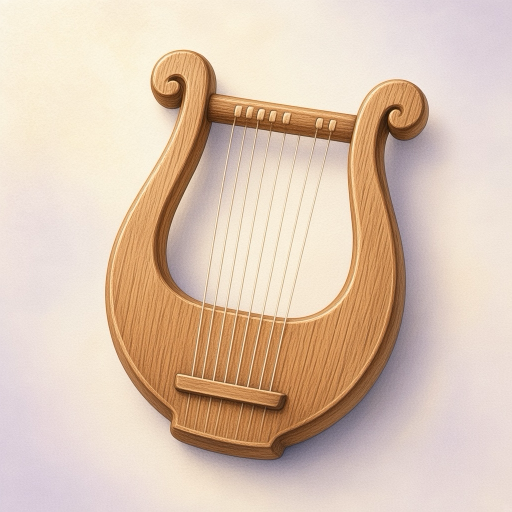
A musical instrument is any tool a person plays to make music on purpose. Some instruments are more than 35,000 years old, and some are less than 100 years old. People all over the world have made instruments out of bone, wood, metal, animal skin, gourds, oil drums, and even glass. A few instruments have a named inventor or a well-documented starting place, but many developed through the work of generations of makers.
Why instrument origins are tricky to understand
Many instruments did not pop up all at once. They grew over hundreds of years, with each maker changing the last person’s design a little. The violin, for example, was not invented in one afternoon. It came together slowly in northern Italy in the 1500s. Other instruments do have a clear inventor, like the saxophone or the piano, but those are the exceptions.
Old instruments are also hard to find. Wood and animal skin rot away, so the oldest pieces we still have are usually made of bone. The world’s oldest instruments include flutes carved from bird bone and mammoth ivory, found in caves in Germany. They are more than 35,000 calendar years old. People were already making music before there was any writing, any cities, or any farming.
Some instruments are very new. The steelpan developed in Trinidad around 1939 and during the 1940s as musicians experimented with metal containers and then 55-gallon oil drums. It became a major new acoustic instrument of the 20th century.
Key facts about musical instruments
The oldest known instruments include flutes, carved from vulture bone and mammoth ivory in caves in southwestern Germany. They are more than 35,000 calendar years old.
The piano was invented around 1700 by Bartolomeo Cristofori, who worked in Florence. Early writers described it as a “gravicembalo col piano e forte,” Italian for “harpsichord with soft and loud.”
The saxophone was invented in the 1840s by Adolphe Sax, a Belgian instrument maker. He patented the design in Paris in 1846.
The first water organ was built around 250 BCE by an Alexandrian inventor named Ctesibius. It used water to keep the air pressure steady.
The steelpan was developed in Trinidad around 1939 and during the 1940s. Early musicians tested many metal containers, and the 55-gallon oil drum became the standard material. It is the national instrument of Trinidad and Tobago.
The ukulele was born in Hawaii in the late 1800s. Portuguese settlers from Madeira brought a small guitar called the braguinha to Hawaii in 1879, and Hawaiian makers turned it into the ukulele.
The theremin is one of the oldest electronic instruments. The player never touches it; hands move near two metal antennas to control the sound. Russian inventor Leon Theremin developed it around 1919 and 1920.
Two trumpets from Tutankhamun’s tomb are about 3,300 years old, from around 1325 BCE.
Benjamin Franklin invented the glass armonica in 1761. It is played by rubbing wet fingers on spinning glass bowls. Mozart and Beethoven wrote music for it.
Common myths about instrument origins
Myth: All instruments were invented thousands of years ago. Some are very new. The saxophone is from the 1840s, the steelpan took shape around 1939 and during the 1940s, and Robert Moog began developing his influential modular synthesizer in 1964.
Myth: The piano was invented by Mozart or Beethoven. Both composers wrote music for the piano, but neither invented it. Bartolomeo Cristofori built the first piano around 1700, decades before Mozart was born.
Myth: Drums are the oldest instruments. We cannot prove which kind came first. Bone and ivory flutes are among the oldest unambiguous instruments archaeologists have recovered. Older drums may have existed, but their wood and skin would have been much less likely to survive.
Myth: The saxophone is American. Adolphe Sax was a Belgian instrument maker who lived in Paris. Jazz, which made the saxophone famous, did grow up in the United States, but the instrument itself was invented in Europe.
Frequently asked questions about instrument origins
What is the oldest musical instrument ever found?
A flute carved from a hollow vulture bone, found in Hohle Fels Cave in southwestern Germany. Scientists have dated it to more than 35,000 calendar years old. Other flutes from the same area, made from mammoth ivory, are about the same age.
Who invented the piano?
Bartolomeo Cristofori, working for the Medici family in Florence around the year 1700. He had been a harpsichord maker and figured out a way to let the player control how loud or soft each note sounded by hitting strings with little hammers.
Why is it called a saxophone?
It is named after the man who invented it, Adolphe Sax.
What is the steelpan made of?
A steel surface shaped into a concave bowl with separate notes tuned into different areas. Early makers in Trinidad experimented with many metal containers around 1939 and during the 1940s, and the 55-gallon oil drum became standard material.
Did one person invent the violin?
No. The violin came together slowly in northern Italy, in the cities of Brescia and Cremona, during the 1500s. Andrea Amati of Cremona is often called the founder of the most famous violin-making school. Later Cremonese makers, including Antonio Stradivari, built violins that are still played today.
A musical instrument is an object used to produce sound under a player’s control. Some instruments are tens of thousands of years old; others are barely older than your grandparents. Instrument traditions developed in societies around the world, and most instruments have been changed many times by many builders. A few have a single named inventor, like the saxophone or the piano, but most grew slowly across centuries of small redesigns.
Why instrument origins are tricky to understand
Instrument history is mostly a story of gradual change. The violin took recognizable form in northern Italy during the 1500s, and Andrea Amati of Cremona was among its most important early makers.
The piano has a more specific origin: Bartolomeo Cristofori built early examples around 1700 with a hammer action that let players control loud and soft. Even then, later makers continued changing the piano before it became the dominant European keyboard instrument.
The oldest instruments are also harder to find than the oldest pottery or stone tools. Wood, bamboo, gut strings, and animal skin rot away, while bone and ivory preserve much better. The oldest unambiguous examples include flutes from Hohle Fels and Vogelherd caves in southwestern Germany, more than 35,000 calendar years old. They are made from vulture bone and from mammoth ivory split, hollowed, and joined back together. People were already making music in the Ice Age.
A few instruments are very recent. The saxophone was patented in 1846. The theremin, developed around 1919 and 1920, was one of the first electronic instruments. The steelpan took shape around 1939 and during the 1940s in Trinidad as musicians turned metal containers and 55-gallon oil drums into tuned instruments. Robert Moog began developing his influential modular synthesizer in 1964.
Key facts about musical instruments
The world’s oldest known instruments include bone flutes from Hohle Fels and Vogelherd caves in Germany, dated to more than 35,000 calendar years ago. They are made from vulture wing bone and from mammoth ivory.
Bartolomeo Cristofori invented the piano around 1700 in Florence while working for the Medici court. Early writers called it a “gravicembalo col piano e forte,” meaning “harpsichord with soft and loud.” The name was shortened to “pianoforte,” and then to “piano.”
The saxophone was invented in the early 1840s by Adolphe Sax, a Belgian instrument maker working in Paris. He patented it in 1846. French military bands adopted it early, while classical orchestras used it only occasionally.
The hydraulis, or water organ, was built around 250 BCE in Alexandria by the inventor Ctesibius. Water regulated the air pressure pumped by bellows. It is regarded as the earliest keyboard instrument.
The violin emerged in the 16th century in Brescia and Cremona, in northern Italy. Andrea Amati of Cremona founded the most famous violin-making school. His descendants and later Antonio Stradivari shaped the instrument into the form still played today.
The ukulele developed in Hawaii after 1879, when Portuguese settlers from the island of Madeira arrived with a small guitar called the braguinha. Hawaiian and Portuguese makers turned it into the ukulele.
The accordion was patented in 1829 by Cyrill Demian in Vienna. Many diatonic button accordions are bisonoric: each button gives one note when you push the bellows and a different note when you pull.
The steelpan emerged in Trinidad around 1939 and during the 1940s. Players experimented with metal containers and learned to tune separate notes into a concave steel surface; the 55-gallon oil drum became standard material. Trinidad and Tobago declared the steelpan the national instrument in 2024.
The theremin was developed around 1919 and 1920 by the Russian engineer Leon Theremin (Lev Termen). It grew out of electrical experiments that also produced a proximity alarm. He demonstrated the instrument to Lenin in 1922.
Two trumpets from Tutankhamun’s tomb date to roughly 1325 BCE. One is silver and the other is copper or bronze. At least the silver trumpet was sounded during a live BBC broadcast in 1939.
Common myths about instrument origins
Myth: Drums are the oldest instruments. They could be older than the surviving flutes, but the archaeological record cannot prove it. Wood, gourd, and animal skin rot away. The oldest unambiguous instruments recovered include bone and ivory flutes from caves in Germany, more than 35,000 calendar years old.
Myth: The piano was invented by Mozart or Beethoven. Both composed for the piano, but it had been around for decades before they were born. Bartolomeo Cristofori built the first one around 1700.
Myth: The saxophone is American. Adolphe Sax was Belgian and worked in Paris. He patented the saxophone in France in 1846. American jazz players made it world-famous later, but the instrument itself was invented in Europe.
Myth: The synthesizer was invented by Robert Moog. Moog began developing one of the most influential modular synthesizers in 1964, but earlier electronic instruments existed: the theremin, the 1928 Ondes Martenot, and the RCA Mark II of the 1950s all came first.
Myth: The clarinet’s register key produces an octave. It helps the instrument jump by a twelfth, an octave plus a fifth. Johann Christoph Denner is traditionally credited with developing the clarinet from the older single-reed chalumeau around 1700, although the change was part of an evolving workshop tradition.
Frequently asked questions about instrument origins
What is the oldest known musical instrument?
A flute carved from a vulture wing bone, found in Hohle Fels Cave in southwestern Germany, dated to more than 35,000 calendar years old. Other flutes from nearby Vogelherd Cave were carved from mammoth ivory and are about the same age. The makers were anatomically modern humans living in Ice Age Europe.
Who invented the piano, and why is it called a piano?
Bartolomeo Cristofori, an Italian instrument maker employed by the Medici court in Florence, built the first piano around 1700. Early writers called it “gravicembalo col piano e forte,” which means “harpsichord with soft and loud.” That captured what made it new: pressing the keys harder made the notes louder. The Italian name was shortened to “pianoforte” and then to “piano.”
Where does the saxophone come from?
The saxophone was invented by Adolphe Sax, a Belgian instrument maker working in Paris, in the early 1840s. He patented it in 1846. He pictured it as a powerful voice for military bands and orchestras; classical conductors were slow to take it up, and only later did jazz make it world famous.
What is the steelpan, and why is it associated with Trinidad?
The steelpan is a tuned percussion instrument with notes shaped into a concave steel surface. It grew up in Trinidad around 1939 and during the 1940s, when bands experimented with biscuit tins, paint cans, and finally 55-gallon oil drums. Trinidad and Tobago has named it the country’s national instrument.
Are there really electronic instruments from the 1920s?
Yes. The theremin, developed around 1919 and 1920 by Russian engineer Leon Theremin, is played without physical contact: the performer’s hands move near two antennas, and changes in capacitance control pitch and volume. The Ondes Martenot followed in 1928.
Did Benjamin Franklin really invent a musical instrument?
He did. In 1761, Franklin developed the glass armonica, a series of nested glass bowls mounted on a horizontal spindle and rotated by a foot pedal. The player touches the rims of the spinning bowls with wet fingers to make them ring. Mozart and Beethoven both wrote pieces for it.
A musical instrument is an object used to produce controlled sound under a player’s command, and the recoverable record of human instrument-making stretches back more than 35,000 calendar years. Instrument traditions span societies around the world and every level of technology, from a hollowed bone to a modular synthesizer. Some have a single named inventor and a clear patent history, like the saxophone or piano. Most evolved gradually across centuries of incremental redesign by many makers; the violin and lute are useful examples. Reading the history requires balancing both modes.
What is often misunderstood about instrument origins
The piano was not invented by Mozart, Beethoven, or any composer. Bartolomeo Cristofori, a harpsichord builder in the Medici court at Florence, built the first piano around 1700. Early writers called the instrument “gravicembalo col piano e forte” (harpsichord with soft and loud), a name that captured the innovation that mattered: a hammer-and-escapement action that gave players dynamic control over each note. Three of his pianos survive, including a 1720 instrument at The Metropolitan Museum of Art in New York.
The saxophone is not American. Adolphe Sax, a Belgian instrument maker working in Paris, patented the saxophone in 1846 after several years of development. Sax intended the family for powerful outdoor ensembles, and it gained a durable place in military and civil bands. Concert-orchestra adoption remained limited, while jazz later gave the instrument another major international role.
The steelpan is genuinely 20th century. It emerged in Trinidad around 1939 and during the 1940s as neighborhood pannists experimented first with biscuit tins, paint cans, and other metal containers. The 55-gallon oil drum became standard material as makers learned to shape a concave surface into distinct pitches. Trinidad and Tobago formally declared the steelpan the national instrument in 2024.
Bone and ivory preserve much better than skin, wood, and plant fiber, so the surviving record of very early instruments is strongly biased toward durable materials. Drums, harps, and reed pipes from the deep past could have disappeared without a trace. Among the oldest unambiguous instruments recovered are flutes from Hohle Fels and Vogelherd caves in southwestern Germany, carved from vulture wing bone and mammoth ivory and dated to more than 35,000 calendar years ago.
Key facts about musical instruments
Oldest known instruments. Bone and ivory flutes from Hohle Fels and Vogelherd caves in southwestern Germany, dated to more than 35,000 calendar years ago. The Hohle Fels flute is carved from a single griffon-vulture wing bone; the Vogelherd flutes are split, hollowed, and rejoined sections of mammoth ivory.
First keyboard instrument. The hydraulis, a water-regulated pipe organ, was built by Ctesibius of Alexandria around 250 BCE. Bellows pumped air; a column of water held a steady pressure regardless of how many pipes were sounding.
Tutankhamun’s trumpets. Two trumpets, one silver and one copper or bronze, were recovered from Tutankhamun’s tomb. They date to around 1325 BCE. At least the silver trumpet was sounded for a live BBC broadcast in April 1939.
The violin. The modern violin emerged in early-16th-century northern Italy, in Brescia and Cremona. Andrea Amati of Cremona founded the most famous violin-making school. Antonio Stradivari (about 1644 to 1737) made roughly 1,100 instruments; about 650 survive.
The piano.Bartolomeo Cristofori built the first piano around 1700 in Florence. The hammer-and-escapement action let the player vary loudness by touch, the central feature distinguishing the piano from the harpsichord.
The clarinet.Johann Christoph Denner is traditionally credited with developing the clarinet around 1700 in Nuremberg from the chalumeau, an older single-reed instrument. The modern clarinet’s register vent helps it jump by a twelfth (an octave plus a fifth), not an octave, which shapes its distinctive fingering.
The accordion. Patented in Vienna in 1829 by Cyrill Demian. Many diatonic button accordions are bisonoric: each button produces one pitch on push and another on pull.
The tuba. Wilhelm Wieprecht and Johann Moritz developed the bass tuba of 1835. The sousaphone was developed for John Philip Sousa near the end of the 19th century, but accounts disagree about the first maker and date. A surviving J.W. Pepper example in the Smithsonian dates to about 1898 to 1902.
The saxophone. Patented in Paris in 1846 by Adolphe Sax, a Belgian instrument maker. Initial use was in French military bands; classical adoption was slow.
The ukulele. Developed in Hawaii after 1879, when Portuguese settlers from Madeira arrived with a small guitar called the braguinha.
The theremin. Developed around 1919 and 1920 by Leon Theremin (Lev Termen) in Russia during electrical experiments that also produced a proximity alarm. The instrument is played without physical contact; capacitance changes from the player’s hands near two antennas control pitch and volume.
The Moog synthesizer.Robert Moog began developing his commercial modular synthesizer in 1964. Earlier electronic instruments included the theremin, the Ondes Martenot (1928), and the RCA Mark II of the 1950s.
The steelpan. Emerged in Trinidad around 1939 and during the 1940s. Makers shaped metal containers and later 55-gallon oil drums into tuned concave surfaces. Trinidad and Tobago declared it the national instrument in 2024.
The sitar. The modern North Indian instrument has roots in both Persian setar and Indian vina traditions. Configurations vary; a common modern form has six playing strings and thirteen sympathetic strings called taraf.
The koto. The traditional Japanese koto has 13 strings and is plucked with picks worn on the right hand.
Common myths about instrument origins
Myth: The piano was invented in the 1800s by a famous composer. It was invented around 1700 by Bartolomeo Cristofori, decades before Mozart was born. The composers who made the piano famous were already working with an existing instrument that had taken about a century to mature.
Myth: The saxophone is American. Adolphe Sax was Belgian, lived in Paris, and patented the saxophone in 1846 in France. American jazz musicians popularized the instrument in the 20th century, but its design and patent were European.
Myth: The steelpan is much older than 100 years. The steelpan took shape in Trinidad around 1939 and during the 1940s. Its development is unusually recent for a globally influential acoustic instrument family.
Myth: The clarinet was invented at the same moment as the piano. Both took recognizable form around 1700, but the Denner workshop in Nuremberg and Cristofori in Florence worked independently from different existing traditions: the chalumeau on one side, the harpsichord on the other. The clarinet attribution is also less exact than the documented Cristofori history.
Myth: The synthesizer was invented by Robert Moog. Moog began developing one of the most influential modular synthesizers in 1964, but earlier electronic instruments existed: the theremin, the Ondes Martenot (1928), and the RCA Mark II, installed at Columbia-Princeton in 1959.
Myth: The hammered dulcimer and the Appalachian dulcimer share a lineage. They share a name and not much else. The hammered dulcimer is a struck zither with Middle Eastern and Asian roots, related to the Persian santur. The Appalachian dulcimer is a 19th-century American folk instrument, plucked or strummed, with roots in northern European fretted zithers.
Myth: The ukulele appeared without outside influence in Hawaii. The ukulele was built and named in Hawaii, but an important model was the braguinha, a small guitar brought to Honolulu in 1879 by Portuguese settlers from Madeira. Hawaiian and Portuguese makers adapted the design to local musical tastes.
Frequently asked questions about instrument origins
What is the oldest musical instrument ever found?
A flute carved from a single hollow griffon-vulture wing bone, recovered from Hohle Fels Cave in southwestern Germany. The archaeological context places it more than 35,000 calendar years ago. Mammoth-ivory flutes from Vogelherd Cave nearby are roughly the same age. They are among the oldest unambiguous musical instruments in the archaeological record.
Who invented the piano, and why is it called that?
Bartolomeo Cristofori, working at the Medici court in Florence around 1700. He had spent his career building harpsichords. His invention’s distinguishing feature was a hammer mechanism that struck the strings under player control: pressing the keys harder produced louder notes. Early writers called it “gravicembalo col piano e forte” (harpsichord with soft and loud); the Italian phrase was shortened to “pianoforte,” and finally to “piano.”
Where did the saxophone come from?
Adolphe Sax, a Belgian instrument maker living in Paris, developed the saxophone family in the early 1840s and patented it in 1846. He combined a single-reed mouthpiece (clarinet-style) with a conical brass body, designed for power and projection in military bands. Adoption in classical music was slow. The saxophone’s global prominence came through American jazz in the 20th century.
What is the hydraulis?
The hydraulis is a water-regulated pipe organ built by Ctesibius of Alexandria around 250 BCE. Bellows pumped air; a column of water in a chamber kept the pressure constant as different pipes opened and closed. It is the earliest known keyboard instrument. The Roman engineer Vitruvius described it in detail in the 1st century BCE.
How old are the trumpets in Tutankhamun’s tomb?
About 3,300 years old, dating to roughly 1325 BCE. One is silver; the other is copper or bronze. They were recovered from Tutankhamun’s tomb after its 1922 discovery. At least the silver trumpet was sounded during a live BBC broadcast in April 1939.
Who really invented the synthesizer?
There is no single inventor. The instrument category took shape across the 20th century. The theremin, developed by Leon Theremin around 1919 and 1920, is a fully electronic instrument played without touch. The Ondes Martenot followed in 1928. The RCA Mark II was installed at the Columbia-Princeton Electronic Music Center in 1959 as a room-sized programmable synthesizer. Beginning in 1964, Robert Moog’s modular system packaged voltage-controlled oscillators, filters, and amplifiers into a more practical studio instrument.
Why is the steelpan unusual?
It is acoustic, percussive, and tuned across multiple octaves, yet it developed in the 20th century. The steelpan emerged in Trinidad around 1939 and during the 1940s after pannists progressed from biscuit tins and paint cans to 55-gallon oil drums. Trinidad and Tobago formally declared the steelpan the national instrument in 2024.
A musical instrument is an object used to produce ordered sound under a player’s control, and the discipline that studies how such objects originate, classify, and transform across cultures is organology. The recoverable archaeological record extends beyond 35,000 calendar years ago in the Aurignacian flutes of Hohle Fels and Vogelherd, but instrument history more often progresses by gradual, distributed redesign than by a single act of invention. Erich von Hornbostel and Curt Sachs’s 1914 classification sorted instruments by primary sounding mechanism into four top-level groups: idiophones (1), membranophones (2), chordophones (3), and aerophones (4). Sachs later added electrophones (5), and museum consortia have continued refining the hierarchy for newer instruments.
Why instrument-history scholarship is non-intuitive
Instrument origins disobey two intuitions that lay narratives commonly impose. The first is the inventor narrative: the assumption that every instrument has a named originator and a single invention date. A handful come close to this standard. Bartolomeo Cristofori built the first piano around 1700 in Florence; Adolphe Sax patented the saxophone family in Paris in 1846; Cyrill Demian patented an early accordion in Vienna in 1829; and Wilhelm Wieprecht and Johann Moritz patented a bass tuba in Prussia in 1835. Robert Moog began developing his commercial modular synthesizer in 1964. Most instrument histories are less concentrated. The violin emerged during the 16th century in northern Italian workshops, with Andrea Amati establishing an influential Cremonese form after earlier bowed instruments. The lute, guitar, harp, and orchestral reed families likewise reflect distributed development rather than one documented moment.
The second is the recency illusion: some instruments routinely treated as ancient traditions acquired their modern form much later.
The bouzouki belongs to long-necked lute traditions and became central to Greek rebetiko.
The Appalachian dulcimer developed in 19th-century Appalachia from European fretted-zither antecedents.
The steelpan emerged in Trinidad during the 1930s and 1940s.
The theremin dates from around 1919 and 1920.
Robert Moog began developing a commercial modular voltage-controlled synthesizer in 1964.
A further wrinkle is preservation bias. Bone, antler, ivory, and stone survive in Pleistocene deposits much better than wood, gut, sinew, skin, and plant fiber. The Hohle Fels and Vogelherd flutes, dated to more than 35,000 calendar years ago, are among the oldest unambiguous direct evidence for musical instruments. Their survival cannot establish that aerophones came before drums, stringed instruments, or other instruments made from perishable materials.
Key facts
Hornbostel-Sachs classification. Erich von Hornbostel and Curt Sachs published the system in 1914 in the Zeitschrift für Ethnologie, building on earlier classifications by Victor-Charles Mahillon. The original top-level categories were idiophones (self-sounding solids), membranophones (stretched membrane), chordophones (vibrating string), and aerophones (vibrating air). Sachs later added electrophones, and modern museum revisions subdivide that fifth branch. The hierarchy uses decimal numbering; a frame drum, for example, falls within 211.3, where the leading 2 marks membranophone.
Hohle Fels flute. A multi-hole flute carved from a single griffon-vulture wing bone (Gyps fulvus), recovered from Hohle Fels Cave in southwestern Germany and dated to more than 35,000 calendar years before present. Mammoth-ivory flutes from Vogelherd Cave are similar in age. Both are associated with anatomically modern human (not Neanderthal) Aurignacian occupations.
Hydraulis. Built by Ctesibius of Alexandria around 250 BCE. Bellows produced compressed air; a column of water in a closed chamber buffered the pressure to remain constant as different pipes opened. It is the first known keyboard instrument and was described by later Greek and Roman writers, including Vitruvius and Hero of Alexandria.
Tutankhamun’s trumpets. Two short trumpets recovered from Tutankhamun’s tomb date to about 1325 BCE. One is silver and the other copper or bronze. At least the silver trumpet was sounded during a live BBC broadcast in April 1939; retellings differ about the handling and sounding of the second instrument.
Cremonese violin school. Andrea Amati of Cremona (about 1520 to about 1578) is generally credited as the founding maker. His sons, Antonio and Hieronymus, developed the form further, and Andrea’s grandson Niccolò Amati shaped the next generation of Cremonese making. Antonio Stradivari (about 1644 to 1737) made roughly 1,100 instruments across his career; about 650 survive, including violins, violas, cellos, harps, and guitars.
Cristofori piano (about 1700). Bartolomeo Cristofori, employed by Prince Ferdinando de’ Medici in Florence, designed a hammer-and-escapement action that gave players touch-sensitive dynamic control. The 1700 Medici household inventory describes the instrument as an arpicembalo… che fa il piano e il forte (a harpsichord that plays soft and loud); it later became known as the gravicembalo col piano e forte, then pianoforte, then piano. Three Cristofori pianos survive: one each at the Metropolitan Museum of Art (1720), the Museo Strumenti Musicali in Rome (1722), and the Musikinstrumenten-Museum in Leipzig (1726).
Denner and the clarinet (about 1700). Johann Christoph Denner of Nuremberg is traditionally credited with developing the clarinet from the chalumeau, although the exact sequence of workshop changes is not fully documented. A modern clarinet’s register vent weakens the fundamental resonance and helps the air column sound near its next strong resonance, about three times the fundamental. The resulting interval is a twelfth, an octave plus a fifth, rather than the octave typical of conical-bore oboes, bassoons, and saxophones.
Accordion (1829). Cyrill Demian patented an early Accordion in Vienna in May 1829. Many diatonic button accordions are bisonoric: each button gives one pitch on push and another on pull. Chromatic and piano accordions developed later in the 19th century.
Tuba (1835). Wilhelm Wieprecht and Johann Moritz developed the bass tuba of 1835, part of a broader wave of valved low-brass experiments in Germany and Austria.
Saxophone (1846). Adolphe Sax, a Belgian maker working in Paris, patented the saxophone family in 1846. He conceived a coordinated family with consistent design and fingering and expected it to serve powerful outdoor ensembles. The instruments gained an early foothold in French military bands, while full integration into the concert orchestra never followed.
Sousaphone (late 19th century). The large circular bass instrument was developed for bandleader John Philip Sousa, but accounts disagree about the first maker and date. A surviving J.W. Pepper sousaphone in the Smithsonian is dated to about 1898 to 1902. Later makers popularized the forward-facing bell familiar in marching bands. The instrument was named for Sousa.
Theremin (about 1919 to 1920). Leon Theremin (Lev Sergeyevich Termen) developed the instrument in Russia during experiments that also yielded a proximity alarm. Changes in capacitance near two antennas control pitch and volume without physical contact. Theremin demonstrated the instrument to Lenin in Moscow in 1922.
Moog modular synthesizer (from 1964). Robert Moog began developing his commercial voltage-controlled modular system in 1964 and refined it over the next several years. Earlier electronic instruments included the Ondes Martenot (Maurice Martenot, 1928) and the RCA Mark II Sound Synthesizer, installed at the Columbia-Princeton Electronic Music Center in 1959.
Steelpan (about 1939 and the 1940s). Developed in Trinidad as pannists progressed from biscuit tins, paint cans, and other metal containers to 55-gallon oil drums. Makers learned to shape and tune separate note areas in a concave steel surface. Trinidad and Tobago designated the steelpan the national instrument by act of parliament in 2024.
Sitar. The modern North Indian lute has roots in both the Persian setar and Indian vina traditions. Configurations vary; a common modern form described by The Metropolitan Museum of Art has six playing strings and thirteen sympathetic taraf strings. The instrument uses movable arched frets, and Ravi Shankar was central to its wider international recognition in the 20th century.
Koto. A traditional Japanese long zither with 13 strings. Koto music entered Japan through continental court culture during the Nara period. Players use picks (tsume) on the right hand, while the left hand can bend pitch by pressing strings beyond the movable bridges.
Glass armonica. Invented by Benjamin Franklin in 1761 from earlier “musical glasses” played by rubbing wet fingers around tuned drinking glasses. Franklin’s instrument arranged graduated glass bowls on a horizontal spindle rotated by foot pedal. Mozart’s Adagio and Rondo for Glass Harmonica, Flute, Oboe, Viola, and Cello, K. 617 (1791) and Beethoven’s Melodrama from Leonore Prohaska (1815) both call for the instrument.
Common misconceptions at expert level
Misconception: Hornbostel-Sachs is a fixed five-category system. The published 1914 system is a four-category hierarchical decimal classification (idiophones, membranophones, chordophones, aerophones). Curt Sachs subsequently added a fifth top-level category, electrophones, to accommodate instruments using electric or electronic generation; this fifth category is widely accepted today but was not in the original paper. The MIMO consortium revision (2011) refines the electrophone branch and adds new sub-classes for instruments invented since 1914.
Misconception: The piano replaced the harpsichord because of Cristofori. The piano did not displace the harpsichord during Cristofori’s lifetime or immediately afterward. Only three Cristofori pianos survive, dated 1720, 1722, and 1726, and his design spread gradually through other 18th-century makers. The piano became dominant only after generations of further changes increased its range, volume, durability, and sustaining tone.
Misconception: The clarinet’s register key produces an octave. It helps produce a twelfth, an octave plus a perfect fifth. An idealized closed cylindrical tube favors resonances at odd multiples of its fundamental, so the next strong resonance is near three times the fundamental. Real clarinets also produce even partials. Conical-bore oboes and saxophones normally overblow at the octave instead.
Misconception: Stradivari was the only great Cremonese maker. His long career and roughly 650 surviving instruments are exceptional, but the Amati and Guarneri families also shaped the tradition. Nicolò Amati trained or influenced the next generation of makers, and surviving Guarneri del Gesù violins are also prized by leading players. That does not mean those workshops matched Stradivari’s documented output.
Misconception: Adolphe Sax’s saxophone was widely accepted from the start. Sax patented the family in 1846, but orchestral adoption remained limited. The instrument gained a durable place in military and civil bands, then became important in jazz and other forms of popular music.
Misconception: The hammered dulcimer and Appalachian dulcimer share a direct lineage. Both are zithers, but they differ in form, playing technique, and development. The hammered dulcimer is struck and has a long history across the Near East and Europe. The Appalachian or mountain dulcimer is a fretted plucked zither that developed in North America within the last few centuries. Their shared English name does not make one a direct descendant of the other.
Misconception: The first synthesizer was the Moog. Electronic instruments and synthesizers predated Moog, including the theremin, Ondes Martenot, and RCA Mark II Sound Synthesizer. Robert Moog’s important contribution was a practical modular system built around voltage-controlled components and a familiar keyboard interface. The later Minimoog packaged that approach into a more portable instrument.
Frequently asked questions
Why are bone flutes the oldest known instruments rather than drums?
Preservation bias is the strongest explanation. Bone, antler, and ivory can survive across tens of thousands of years in favorable cave deposits; wood, hide, plant fiber, and gut usually do not. Drums and stringed instruments from the deep Paleolithic, if they existed, might leave no recognizable direct remains. The Hohle Fels and Vogelherd flutes survived because their materials and depositional settings favored preservation, so they cannot establish the full range of instruments then in use.
Why is the clarinet’s register interval a twelfth rather than an octave?
The clarinet’s bore is approximately cylindrical and behaves acoustically like a pipe closed near the reed and open near the first open tone hole or bell. At the reed end, acoustic pressure is near an antinode while air motion is near a node. The idealized closed-open tube has resonances near odd multiples of its fundamental, so the next strong resonance is close to three times the fundamental, a twelfth higher. The register vent helps suppress the lowest resonance and reach that register. Real clarinets are not perfect cylinders and their spectra do contain even partials; conical-bore oboes, bassoons, and saxophones normally overblow at the octave.
Why did Sax patent a family of saxophones rather than one instrument?
Sax envisaged a coordinated family across a broad pitch range, with consistent design and fingering. The Musical Instruments Museum Brussels describes the original family as eight instruments and notes that Sax’s 1846 patent emphasized an outdoor ensemble role. Military and civil bands became the family’s most durable early setting. Soprano, alto, tenor, and baritone saxophones are the most familiar members today, but other sizes and tunings have also been built and used.
Why is the steelpan called the only major acoustic instrument invented in the 20th century?
It is acoustic, percussive, and tunable chromatically across a steelband’s combined range, yet its modern form developed in Trinidad around 1939 and during the 1940s. Makers transformed available metal containers and eventually 55-gallon oil drums by shaping separate tuned areas into a concave surface. Its history is a clear counterexample to the idea that no important acoustic instrument family developed after 1900.
How is Hornbostel-Sachs used today?
It is a standard taxonomy for museum cataloging, ethnomusicology, and organological writing. Its hierarchy classifies instruments by their primary sound-producing mechanism rather than by the player’s interface: a hurdy-gurdy and a piano are chordophones because strings vibrate, while a steelpan is an idiophone because its own metal body vibrates. Museum consortia have revised and extended the system for contemporary collections.
What is the relationship between the bouzouki and earlier Ottoman instruments?
The Greek bouzouki belongs to the long-necked lute traditions of the eastern Mediterranean and Anatolia and is related to instruments such as the Turkish saz and tambur. It became a central voice of rebetiko, the Greek urban popular style that developed strongly in the early 20th century. Modern bouzoukis commonly use either three paired courses or four paired courses of strings.