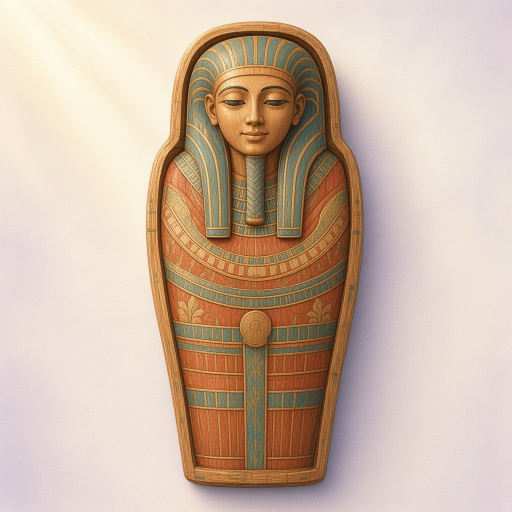
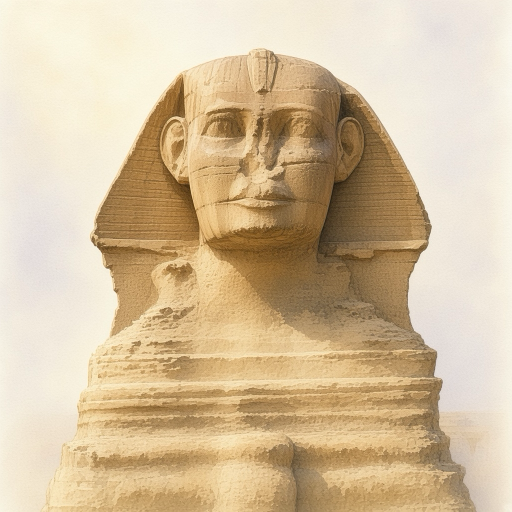
A mummy is a body that has been preserved after death, so the skin and other parts do not break down the way they normally would. Some mummies were made on purpose by ancient people, like the famous mummies of Egypt. Others happened by accident, when a body dried out in the desert, froze in ice, or sank into a soft, mossy swamp called a peat bog. Mummies have been found all over the world, and some are more than 7,000 years old.
What makes mummies so interesting
Mummies are time machines. A normal body breaks down quickly, leaving only bones. A mummy can keep skin, hair, clothes, and even a person’s last meal for thousands of years. Scientists can learn what someone looked like, how old they were, what they ate, and what diseases they had, all from a single ancient body.
The most famous mummies come from ancient Egypt. Egyptians believed a person needed their body in the afterlife, so they took huge care to preserve it. The Chinchorro people of Chile and Peru were making mummies even before the Egyptians. People in Japan, Italy, China, and the Andes Mountains all made mummies in their own ways, and nature has made some mummies too.
Cool mummy facts
The Chinchorro people of Chile and Peru were making mummies on purpose more than 7,000 years ago, long before the Egyptians did.
Egyptian mummification took 70 days from start to finish.
Embalmers used a salt called natron to dry out the body for about 40 days.
The body was wrapped in linen, a cloth made from the flax plant.
4 organs (lungs, liver, stomach, intestines) were placed in pots called canopic jars.
Egyptians thought the heart, not the brain, did the thinking, so the heart was kept inside the body.
The brain was removed through the nose and thrown out.
King Tutankhamun’s tomb was found in November 1922 by Howard Carter in Egypt’s Valley of the Kings.
Tutankhamun’s gold death mask weighs about 22 pounds (10 kg).
Egyptians made about 70 million animal mummies, including cats, dogs, falcons, ibis birds, and crocodiles.
Otzi the Iceman, a 5,300-year-old frozen mummy, was found by hikers in the Alps between Italy and Austria in 1991.
A paint color called mummy brown was made by grinding up Egyptian mummies. The last factory tube was made in 1964.
Cleopatra’s tomb has never been found, despite more than 100 years of searching.
Some Buddhist monks in Japan mummified themselves on purpose, sealing themselves in a tomb to meditate.
Things people often get wrong about mummies
Myth: All mummies come from Egypt. Lots of mummies come from places that are not Egypt. There are mummies from China, Chile, Peru, Denmark, Italy, Russia, Japan, and even the icy Alps in Europe. Mummies have been made by both people and nature.
Myth: Mummies in Egypt have a real curse on them. The famous “mummy’s curse” was made up by newspapers in the 1920s, after the very rich Lord Carnarvon died from an infected mosquito bite a few months after he helped open Tutankhamun’s tomb. There is no real curse written inside the tomb. Most of the people who entered the tomb went on to live long, normal lives, including Howard Carter himself.
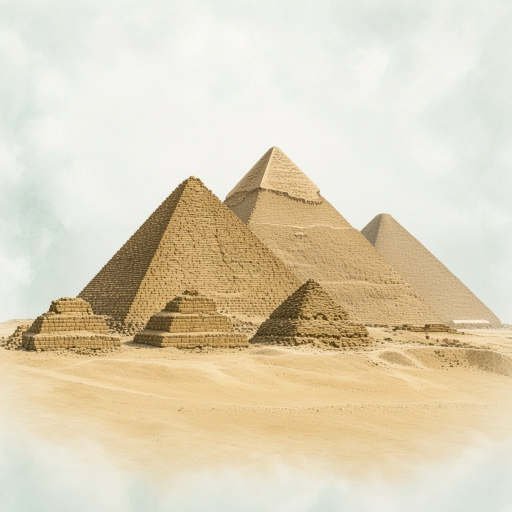
Myth: The pyramids were built by enslaved workers in chains. Archaeologists have dug up the workers’ town next to the pyramids of Giza. The workers were paid Egyptian crews, with bakeries to feed them and even doctors to fix broken bones, not slaves in chains.
Myth: Mummies can come back to life and walk around. That is a movie idea, not real. A mummy is a preserved body, but it is still a body. It cannot wake up.
Mummy questions kids ask
Why did the Egyptians make mummies?
The Egyptians believed each person had a soul that needed a body to return to in the afterlife. If the body fell apart, the soul had no place to go. Making a mummy preserved the body so the soul could keep using it.
Why did they take out the brain but leave the heart?
The Egyptians thought thinking happened in the heart, not the brain. They threw the brain away. The heart had to stay in the body so it could be weighed against a feather in the afterlife. A heart as light as the feather meant the person could go to a paradise called the Field of Reeds.
Who was King Tut?
Tutankhamun, often called King Tut, became pharaoh at about age 9 and died at about age 19. He is famous because almost no one had touched his tomb for more than 3,000 years. When Howard Carter opened it in 1922, it held more than 5,000 objects, including the gold mask that fits over Tut’s mummy.
Are mummies real or made up?
Real mummies are real. You can see them at the National Museum of Egyptian Civilization in Cairo, which displays 20 royal mummies, the British Museum in London, where the Gebelein Man has been on show for more than a century, and the South Tyrol Museum of Archaeology in Italy, where Otzi the Iceman is on display. The mummies in scary movies, on the other hand, are not real.
What is the oldest mummy in the world?
The oldest mummies made on purpose are the Chinchorro mummies of Chile and Peru, from about 7,000 years ago. Some natural mummies, like Otzi, are also very old. In 2025, scientists reported evidence that people in Southeast Asia may have made mummies more than 12,000 years ago.
Where these facts come from
Most of these facts come from large reference encyclopedias and the websites of major museums, including the Australian Museum, the British Museum, and the Smithsonian, plus the Wikipedia articles on Mummies, Otzi, and the Discovery of the tomb of Tutankhamun. Kids who want to see real mummies can visit the British Museum in London, the Penn Museum in Philadelphia, or the Metropolitan Museum of Art in New York City. Cairo has two big museums to choose from: the National Museum of Egyptian Civilization, whose Mummies Hall holds 20 royal mummies, and the Grand Egyptian Museum near the pyramids, which fully opened in November 2025 and is the largest museum in the world devoted to one civilization.
A mummy is a body that has been preserved long after the time when normal decay would have destroyed it. Some mummies were made on purpose by ancient embalmers using salt, oils, and bandages. Others happened naturally, when a body was protected by hot dry sand, glacier ice, or the cold acidic water of a peat bog. Mummies have been found on every inhabited continent and in cultures as different as ancient Egypt, the Pacific coast of South America, the Andes, the Tarim Basin in western China, the Alps, and northern Europe.
Why mummies are more interesting than the movies suggest
The pop-culture version of a mummy is a wrapped figure shuffling out of an Egyptian tomb. Real mummies are far more useful. Each one is a biological diary. Scanning a mummy with modern medical machines reveals what the person ate, how they grew up, what diseases they had, and what tools they carried. Some mummies still have stomach contents from their final day; others have tattoos, hair, and fingerprints.
The first known mummies on purpose are not Egyptian. The Chinchorro people, who lived along the Pacific coast of what is now Chile and Peru, were making complex mummies about 7,000 years ago, roughly 2,000 years before Egyptian mummification became standard. The earliest Egyptian mummies were not deliberate at all. Hot, salty desert sand pulled water out of bodies buried in shallow graves, leaving them dried and preserved. Later Egyptians may have copied this natural process when they invented their more detailed embalming method.
Key mummy facts
Process length. Egyptian mummification took about 70 days. The first 40 were spent drying the body in natron, a natural salt that pulls water out of tissue. The rest of the time was for oiling, packing, and wrapping.
Linen wrappings. The body was wrapped in long strips of linen, made from the flax plant. Small charms called amulets were tucked between layers.
The heart and the brain. Egyptians believed the heart was the seat of intelligence and left it inside the body. The brain was removed through the nose and thrown away.
Canopic jars. The lungs, liver, stomach, and intestines were each placed in their own jar, called a canopic jar. Each jar was protected by 1 of the 4 sons of Horus: Imsety (human-headed) for the liver, Hapy (baboon-headed) for the lungs, Duamutef (jackal-headed) for the stomach, and Qebehsenuef (falcon-headed) for the intestines.
The weighing of the heart. In the afterlife, the dead person’s heart was weighed against the feather of Maat, goddess of truth and order. A heart lighter than the feather meant entry into a paradise called the Field of Reeds.
Tutankhamun. King Tut became pharaoh at about age 9 and died at about age 19. His tomb (KV62) was found in November 1922 by Howard Carter, with more than 5,000 objects inside, including a gold death mask that weighs about 22 pounds (10 kg).
Mummy DNA. A 2010 study identified Tutankhamun’s father as a mummy from tomb KV55, generally accepted as Akhenaten, and his mother as a mummy known only as the “Younger Lady.” The 2 were full siblings, both children of King Amenhotep III and Queen Tiye.
Animal mummies. Egyptians produced an estimated 70 million animal mummies. The dog catacombs at Saqqara hold roughly 8 million dog mummies; the ibis catacombs at Tuna el-Gebel further south hold about 4 million. Cats were sacred to the goddess Bastet.
Otzi the Iceman. Found in 1991 on a glacier in the Otztal Alps on the Italy-Austria border. He lived around 3300 BC, was about 45 years old, and was 5 feet 3 inches (160 cm) tall. He was killed by an arrow shot into his shoulder.
Bog bodies. Hundreds of bodies have been pulled from peat bogs in Denmark, Germany, Ireland, and the UK. The cold acidic water and lack of oxygen preserve skin and hair. Tollund Man, found near Silkeborg in 1950, lived around 400 BC.
Word origin. The English word “mummy” comes from Persian (mum, “wax”) by way of Arabic (mūmiyā, a bitumen-based medicine), because Arab travelers thought the dark coating on Egyptian mummies was the same substance.
Cleopatra’s tomb. No one has found Cleopatra VII’s tomb. Ancient writers say she was buried with Mark Antony in Alexandria, but the part of that city most often linked to the tomb sank into the Mediterranean during a 4th-century earthquake.
Common myths about mummies
Myth: All mummies come from Egypt. Mummies have been found on every inhabited continent. The earliest deliberate mummies are the Chinchorro mummies of South America. Bog bodies from northern Europe, Inca-era child mummies from the Andes, Tarim Basin desert mummies from western China, and self-mummified Buddhist monks in Japan are all well-documented examples.
Myth: Tutankhamun’s tomb had a real curse. No “curse” inscription has been confirmed in the tomb. Lord Carnarvon, the patron of the dig, died of blood poisoning on April 5, 1923 after an infected mosquito bite. Newspapers blamed an ancient curse, partly because the Times of London held an exclusive on the dig. Of the 58 people present when the tomb was opened, only 8 had died within 12 years.
Myth: Egyptians put the brain in a special canopic jar. The brain was thrown out. The 4 canopic jars held the lungs, liver, stomach, and intestines.
Myth: The pyramids were built by enslaved workers in chains. Excavations at Giza found a workers’ village with bakeries, breweries, dormitories, and graves of workers who had received medical care for broken bones. Builders were paid Egyptian crews, not foreign slaves.
Myth: Mummy brown paint is a legend. Mummy brown was a real pigment, made by grinding up Egyptian mummies. The last factory tube was made in 1964.
Myth: Mummies can come back to life. This is a movie idea. CT scans, DNA testing, and chemistry are how scientists actually study mummies.
Frequently asked questions about mummies
Why was Egyptian mummification so important?
The Egyptians believed each person had several spiritual parts that needed a recognizable physical body to return to in the afterlife. If the body decayed, the soul had nothing to come back to. Mummification was the entry ticket to eternal life. Wealthier people got the full 70-day procedure, while poorer Egyptians received simpler treatments.
How are mummies studied today?
The main tool is the medical CT (computed tomography) scanner, the same machine used in hospitals. A mummy is rolled through the scanner, and the 3D images show every bone, organ cavity, and embalming detail without damaging the wrappings. Scientists also use X-rays, infrared photography (which can reveal hidden tattoos), and tiny tissue samples for DNA and radiocarbon testing.
Who were the Chinchorro people?
The Chinchorro lived on the dry Pacific coast of what is now northern Chile and southern Peru between roughly 7000 and 1500 BC. They were a fishing and hunting culture. Their mummies, the oldest known artificial mummies in the world, were built up step by step. Bones were reinforced with sticks, the body was packed with clay and grass, and the surface was painted black or red. UNESCO listed Chinchorro mummification sites as a World Heritage Site in 2021.
Why is Cleopatra’s tomb still missing?
Cleopatra VII died in 30 BC, just after Roman forces under Octavian defeated her and Mark Antony. Roman writers say Octavian let them be buried together, in a tomb in Alexandria, but no precise location was recorded. Most of ancient Alexandria’s royal quarter sank into the harbor during a major earthquake in 365 AD, and the tomb may now be underwater. Searches at the temple of Taposiris Magna west of Alexandria have not confirmed a royal burial of Cleopatra.
What is the strangest mummy ever found?
There are several candidates. Otzi the Iceman, frozen in an Alpine glacier for 5,300 years, came complete with clothes, copper axe, and stomach contents from his last meal. Lyuba, a 42,000-year-old baby woolly mammoth from the Yamal Peninsula in Russia, was so well preserved that traces of her mother’s milk survived in her stomach. The Capuchin Catacombs of Palermo in Sicily hold thousands of preserved bodies arranged in corridors.
A mummy is a deceased body whose soft tissue, especially skin, has been preserved well past the point at which normal decay would have destroyed it. Preservation may be deliberate, as in the 70-day Egyptian embalming process or the artificial Chinchorro mummies of South America, or natural, as in bodies dried by hot desert sand, frozen in glaciers, or chemically tanned in cold acidic peat bogs. The English word mummy comes from the Persian mum (wax) by way of Arabic mūmiyā (a kind of bitumen used as medicine), reflecting the dark resinous coating that medieval Arab travelers observed on Egyptian bodies.
Why mummies range further than people expect
Public imagination of the topic is dominated by Egypt, but the global archaeological record shows that mummification, deliberate or accidental, has occurred on every inhabited continent. The earliest known artificial mummies are not Egyptian. The Chinchorro mummies of the Pacific coast of Chile and Peru begin around 5050 BC, roughly 2,000 years before standardized Egyptian mummification took shape during the Old Kingdom, and a 2025 study reports deliberate smoke-drying of the dead in southern China and Southeast Asia several thousand years earlier still. The earliest Egyptian mummies, in turn, were not deliberate works of embalmers, but bodies preserved naturally by hot dry sand in Predynastic graves. The Gebelein bodies in the British Museum, dating to about 3400 BC, are the best-known example.
Beyond Egypt, the catalog includes the Tarim Basin desert mummies of western China (about 2000 BC and later), bog bodies preserved by sphagnum acid in northern Europe (most famously Tollund Man, about 400 BC), the high-altitude Andean capacocha mummies of the Inca era, the Capuchin Catacombs of Palermo (1599 to 1920), self-mummified Buddhist monks in northern Japan (the sokushinbutsu tradition), the Ice Age woolly mammoth Lyuba (about 42,000 years old), and the modern political preservation of Vladimir Lenin’s body in Moscow since 1924. Each illustrates a different combination of intent and chemistry that produces a recognizable mummy.
Key mummy facts
Egyptian process duration. Standardized Egyptian mummification took about 70 days. The body was cleansed, the lungs, liver, stomach, and intestines were removed and embalmed separately, and the cavity and skin were dried with natron, a naturally occurring mix of sodium carbonate and sodium bicarbonate, for roughly 40 days. The body was then anointed with oils, packed with linen, and wrapped in long strips of linen with amulets tucked between the layers.
Brain removal (excerebration). From the Middle Kingdom onward, Egyptian embalmers commonly removed the brain through the nose by piercing the ethmoid bone behind the nasal passage. Herodotus described a hooked iron rod; modern CT scans show that organic sticks and whisk-like tools were also used to liquefy and drain the brain, which was then discarded as having no role in the afterlife.
Heart preserved in place. The heart (ib) was treated as the seat of personality, memory, and moral judgment, and was usually left inside the mummy. Spell 30B of the Book of the Dead asks the heart not to testify against its owner during the weighing of the heart against the feather of Maat.
Canopic jars and the four sons of Horus. The lungs, liver, stomach, and intestines were placed in 4 canopic jars, each protected by one of the 4 sons of Horus: Imsety (human-headed, liver), Hapy (baboon-headed, lungs), Duamutef (jackal-headed, stomach), and Qebehsenuef (falcon-headed, intestines). Earlier jars showed all 4 figures as human; the distinctive animal heads became standard during the New Kingdom (about 1550 to 1070 BC).
Tutankhamun. Howard Carter’s team began clearing tomb KV62 in the Valley of the Kings on 4 November 1922, with formal opening on 26 to 29 November. The tomb yielded more than 5,000 objects. The famous gold death mask weighs about 22 lb (10 kg) and is mostly 23-karat gold alloyed with copper.
DNA paternity. A 2010 study in the Journal of the American Medical Association, led by Zahi Hawass, identified Tutankhamun’s father as the mummy in tomb KV55 (widely accepted as Akhenaten) and his mother as the Younger Lady in KV35. The 2 were full siblings, both children of Amenhotep III and Queen Tiye.
The Royal Cache (TT320, formerly DB320). Around the 11th century BC, priests gathered more than 50 royal mummies whose tombs had been disturbed and reburied them in a single hidden cliff tomb near Deir el-Bahri. It was found in 1881 and contained the mummies of Seti I, Ramses II, Ramses III, Thutmose III, Ahmose I, and many others. The cache was cleared in 2 days and shipped to Cairo by steamboat.
Animal mummies. Egyptians produced an estimated 70 million animal mummies as offerings to gods. The dog catacombs at Saqqara hold roughly 8 million dog mummies; the ibis catacombs at Tuna el-Gebel further south hold about 4 million. Bastet received cat mummies at Bubastis. Most were votive offerings purchased by pilgrims at temple sites.
Otzi the Iceman. Found by hikers on a glacier in the Otztal Alps on the Italy-Austria border in September 1991. He lived around 3300 BC, was about 45 years old at death, and was about 5 ft 3 in (160 cm) tall. CT scans revealed a flint arrowhead in his left shoulder. He carried a copper axe, a flint dagger, leather garments, and grass cape.
Chinchorro mummies. Coastal South American culture beginning around 5050 BC. The black mummy variant required removing soft tissue, reinforcing the skeleton with sticks, packing the body with clay and reeds, and painting the surface. UNESCO inscribed Chinchorro sites in Arica and Parinacota as a World Heritage Site in 2021.
Bog bodies. Sphagnum moss releases sphagnan, a polysaccharide that binds bacterial enzymes and starves microbes of nutrients. Combined with low oxygen, low temperature, and a pH of about 3 to 5, the result is preservation of skin, hair, fingernails, and stomach contents while bones partly dissolve. Tollund Man, found near Silkeborg, Denmark, in 1950, dates to about 405 to 380 BC.
Capuchin Catacombs of Palermo. Begun in 1599 with brother Silvestro of Gubbio. The corridors hold thousands of preserved bodies, divided by profession, age, and sex. Among the last interments, in 1920, was 2-year-old Rosalia Lombardo, preserved with formalin, glycerin, and zinc salts by Alfredo Salafia; the catacombs continued accepting bodies through 1939.
Lenin. Vladimir Lenin’s body has been on near-continuous public display in Red Square, Moscow, since 1924. The body is re-embalmed roughly every 18 months by a specialist team, originally led by Boris Zbarsky and Vladimir Vorobiev, using a glycerol-and-potassium-acetate solution.
Word origin.Mummy derives via Latin mumia from Arabic mūmiyā, originally a Persian bituminous remedy, and was applied to Egyptian bodies because of their dark resinous coating.
Common myths about mummies
Myth: Mummies are an exclusively Egyptian phenomenon. Egyptian mummies are by far the most studied, but artificial mummification predates Egypt by about 2,000 years (Chinchorro), and natural mummification has occurred everywhere from the Atacama Desert to Siberian permafrost to peat bogs in Ireland.
Myth: The brain was the most carefully preserved organ. Egyptian embalmers discarded the brain. The heart, treated as the seat of intellect and moral judgment, was the carefully preserved organ and was usually left inside the body. Lungs, liver, stomach, and intestines were preserved separately in canopic jars.
Myth: Tutankhamun’s tomb was protected by an inscribed pharaohs’ curse. No curse inscription has ever been documented inside KV62. The popular curse was largely manufactured by sensationalist newspaper coverage after Lord Carnarvon’s death from blood poisoning on 5 April 1923. A study of the 58 people present at the opening of the tomb found that only 8 had died within 12 years, statistically unremarkable.
Myth: Egyptian pyramids were built by enslaved foreign labor. Excavations led by Mark Lehner and Zahi Hawass at Giza uncovered the workers’ town, with bakeries, breweries, dormitories, and graves showing evidence of medical care. Builders were organized into named crews of paid Egyptian laborers, not foreign slaves.
Myth: Cleopatra’s mummy is on display somewhere. Cleopatra VII’s tomb has never been found. Ancient sources place her burial alongside Mark Antony in Alexandria, but the part of the city most often associated with the tomb sank during a 4th-century AD earthquake, and the Alexandrian harbor floor is now a major focus of underwater archaeology.
Myth: Bog bodies are skeletons. Bog bodies are typically the inverse of skeletons. Skin, hair, fingernails, and stomach contents are usually well preserved, while bones may be softened or dissolved by the acidic peat water.
Frequently asked questions about mummies
Why did Egyptians invest so much effort in mummification?
Egyptian afterlife belief required the survival of a recognizable physical body, the khat, which served as the ground for the survival of multiple soul-aspects, including the ka (life force) and the ba (personality). If the body decayed, the soul-aspects had no anchor in the world, and offerings left at the tomb could not reach the deceased. Mummification was therefore not optional for those who wanted access to the afterlife. The expense and complexity scaled with social class, from minimal preservation for the poor to the elaborate 70-day royal procedure.
How do scientists study mummies today without damaging them?
The dominant tool is medical CT (computed tomography), which produces 3D images of internal anatomy without unwrapping. CT shows skeletal injuries, dental wear, the presence or absence of internal organs, and the routes embalmers used to remove tissue. Other non-destructive techniques include X-ray, infrared imaging (used to locate Gebelein Man’s tattoos), and microsampling of skin or hair for DNA, isotope, and radiocarbon analysis. The Egyptian Mummy Project (Hawass et al.) and the British Museum’s Virtual Autopsy interface are well-known examples of this approach.
What is the difference between Egyptian and Chinchorro mummification?
Egyptian mummification preserved the body intact through desiccation: organs were removed, the body was dried in natron, and the surface was coated with resin and wrapped in linen. Chinchorro mummification rebuilt the body. Soft tissue was scraped from the skeleton, the bones were reinforced with reeds and sticks, the cavity was packed with clay and grass, and the surface was painted (black mummies in earlier periods, red mummies later). Egyptian results look like preserved individuals; Chinchorro results look more like sculptural representations of the dead.
Why have so few pharaohs’ tombs survived intact?
Egyptian royal tombs were systematically robbed in antiquity, often within decades of burial. Robbers stripped the metal coffins and the embedded jewelry. Tutankhamun’s tomb is celebrated precisely because it was the rare Valley of the Kings tomb that remained largely intact at discovery in 1922. Many royal mummies survived only because 21st-Dynasty priests gathered them and reburied them in caches such as DB320, accepting the loss of the burial goods to preserve the bodies.
Are mummies dangerous to handle?
The popular dramatic association of mummies with disease and supernatural risk is largely fiction. The bigger real concern is fungal contamination: stored mummies and tomb air can carry mold spores, and a few cases of Aspergillus exposure have been documented among archaeologists. Modern excavation and museum protocols use proper ventilation, gloves, and masks. The supernatural curse tradition is a 19th- and 20th-century literary motif rather than an Egyptian or scientific reality.
You can test these facts on the Mummies trivia quiz, a 10-question true-or-bluff round at the Sharp reading level.
A mummy is a deceased body whose soft tissue, especially skin, has been preserved beyond the time at which ordinary microbial and autolytic decay would have destroyed it. Preservation may be deliberate (Egyptian, Chinchorro, Guanajuato, Sokushinbutsu, Soviet political embalming) or natural (Predynastic Egyptian sand burials, Andean and Atacama desiccation, Tarim Basin and Atacama desert burials, Alpine glacial entrapment, Siberian permafrost, northern European peat bogs). The English word mummy derives via Latin mumia from medieval Arabic mūmiyā, originally a Persian bituminous remedy, and was extended to Egyptian bodies because of the dark resinous coating medieval observers misidentified as bitumen.
Why mummies define a distinct genre of evidence
Skeletal remains are the standard fossil of bioarchaeology. Mummies preserve, in addition, the soft tissues that disappear from skeletons within decades: skin and skin pigmentation, gut contents, parasites, hair (with stable-isotope and cortisol records), tattoos, fingerprints, and intracellular material that yields ancient DNA. They therefore answer questions that ossuary collections cannot: dietary breakdown over the last weeks of life (gastric residue analysis), pathogen burden (paleomicrobiology of Plasmodium falciparum DNA in Tutankhamun, Mycobacterium tuberculosis in Chinchorro and pre-Columbian Andean specimens), kinship at the level of individual relationships (the 2010 Tutankhamun Family Project), and even occupational hand wear and ornamental practice (Otzi’s hand calluses; the Gebelein and Otzi tattoos).
This expanded evidentiary horizon is why mummy specimens carry disproportionate weight in current paleopathology, paleogenomics, and isotope-based mobility studies. The cost is methodological: mummies are uneven, fragile, and often legally and ethically constrained in ways skeletal collections are not. The discipline has therefore moved toward strict non-destructive imaging (medical CT, micro-CT, infrared and UV imaging), microsampling protocols for DNA and isotope work, and explicit ethical frameworks (the British Museum’s policy after the Human Tissue Act 2004 is a representative case).
Periodization of Egyptian mummification
Predynastic (Badarian and Naqada cultures, about 4400 to 3100 BC). Pit-grave inhumation in hot dry sand. Natural desiccation produces preserved bodies, exemplified by the Gebelein bodies (about 3400 BC, British Museum EA 32751 to EA 32756), buried in shallow graves and dried by the heat, salinity, and aridity of the desert.
Early Dynastic (about 3100 to 2686 BC). Experimental treatments. Resin-soaked linen wrappings appear; organ removal is not yet standardized.
Old Kingdom (about 2686 to 2181 BC). Internal organs begin to be removed. Cavity packing and resin treatments mature alongside large-scale royal pyramid burial. Imhotep’s career and the Step Pyramid of Djoser fall in this period.
Middle Kingdom (about 2055 to 1650 BC). Standardization of the canopic jar set; consolidation of the Coffin Texts, the predecessor of the Book of the Dead.
New Kingdom (about 1550 to 1070 BC). Peak of royal mummification practice. Excerebration via the nose becomes routine. The 4 sons of Horus take their distinctive animal-headed iconography (Imsety human-headed; Hapy baboon; Duamutef jackal; Qebehsenuef falcon). Most royal mummies surviving today are from this period or its 21st-Dynasty cache reburials. The Valley of the Kings is in active use.
Third Intermediate Period (about 1070 to 664 BC). 21st-Dynasty priests reburied disturbed royal mummies in caches, most famously TT320 (formerly DB320) at Deir el-Bahri and KV35 in the Valley of the Kings. Discovered in 1881 and 1898 respectively, these caches preserved most of the surviving New Kingdom royal corpus.
Late Period and Ptolemaic (664 to 30 BC). Boom in animal mummification (Bastet at Bubastis, the Saqqara dog and ibis catacombs; an estimated 70 million animal mummies in total). Excerebration becomes near-universal. Cartonnage and elaborate wrappings dominate the late-period record.
Roman period (30 BC onward). Hybrid Greco-Roman-Egyptian practices. The Faiyum mummy portraits are the canonical artifact: encaustic wax panels of the deceased mounted on the wrappings.
Key mummy facts
The 70-day Egyptian process. Cleansing and evisceration (typically through a left-flank incision); separate embalming of the lungs, liver, stomach, and intestines for canopic interment; 40 days of natron desiccation (Wadi Natrun being the principal historical source); anointing with oils (cedar, juniper, cinnamon resins); cavity packing with resin-soaked linen, sawdust, lichen, or natron pouches; surface treatment with resin; wrapping in long bands of linen with embedded amulets; placement of a portrait mask; sealing in coffins.
Excerebration. Herodotus (II.86) records that embalmers first drew part of the brain out through the nostrils with an iron hook. Skull perforations are infrequent in Old Kingdom remains, and the transnasal route through the ethmoid bone is the primary one in New Kingdom skulls. From the Third Intermediate Period onward the embalmers more often took a posterior route through the sphenoid bone instead. CT-guided endoscopy recovered a monocotyledon plant stem from the cranial cavity of a Late Period mummy, most probably a tool for breaking up brain tissue so that it could drain. The procedure was widespread but was not applied to every body: a 2024 CT survey of 21 Egyptian child mummies, most of them Late Period to Roman, found excerebration in 14 of them (67%), performed through the ethmoid bone in 13 of those 14, with excerebrated and non-excerebrated individuals present in the same periods.
The heart and the ib. Egyptian funerary religion identified the heart (ib) as the seat of personality, memory, and moral life. Spell 30B of the Book of the Dead asks the heart not to bear witness against its owner during the weighing-of-the-heart judgment scene (Spell 125), with the feather of Maat (truth and order) on the opposing pan and Ammit (the “devourer”) waiting to consume the unworthy.
The Royal Cache (TT320). Identified by the Abd el-Rassul family of Qurna by 1871; revealed to authorities in 1881 after a family dispute. Cleared in 2 days under Émile Brugsch. Contained more than 50 mummies including Seti I, Ramses II, Ramses III, Thutmose III, Ahmose I, and Ahmose-Nefertari, plus nearly 6,000 funerary objects. A second royal cache, KV35, was identified in 1898 by Victor Loret.
Tutankhamun. KV62 entered by Carter on 26 to 29 November 1922. Five-thousand-plus objects cataloged. The death mask weighs about 22 lb (10 kg) and is 21 in (54 cm) tall, of 23-karat gold alloyed with copper (X-ray crystallography, 2007). The mask, the roughly 240 lb (110 kg) innermost gold coffin, and the full grave goods inventory are now displayed at the Grand Egyptian Museum (formal opening 1 November 2025).
The 2010 DNA study. Hawass et al., JAMA 2010 (Tutankhamun Family Project): KV55 = Tutankhamun’s father (genetically; widely accepted as Akhenaten); KV35YL (“Younger Lady”) = his mother. KV55 and KV35YL are full siblings, both children of Amenhotep III and Tiye. The study also found Plasmodium falciparum DNA in Tutankhamun, consistent with malaria, and skeletal indicators of Kohler disease in his foot. The identification of KV55 with Akhenaten remains debated by some Egyptologists; the kinship relationships are widely accepted.
Hatshepsut. KV60-A, identified by Zahi Hawass in 2007 by matching a molar in a labeled wooden box (a djed-pillar canopic-style chest) to the empty socket in the mummy’s jaw, with corroborating CT and DNA evidence. The identification remains characterized as tentative by some specialists (notably Salima Ikram).
Chinchorro typology. Beginning around 5050 BC at sites in the Camarones Valley (Chile) and continuing to about 1500 BC. Two main artificial types are distinguished: black mummies (about 5000 to 3000 BC; tissue removed, skeleton reinforced with sticks and reeds, body cavity packed, surface coated with manganese paste) and red mummies (about 2500 to 2000 BC; less invasive, painted with iron oxide). UNESCO World Heritage inscription as “Settlement and Artificial Mummification of the Chinchorro Culture in the Arica and Parinacota Region” (2021).
Otzi (the Tyrolean Iceman). Discovered 19 September 1991 at 10,530 ft (3,210 m) on the Tisenjoch pass, Otztal Alps, Italy-Austria border, by Erika and Helmut Simon. Lifespan about 3350 to 3105 BC; about 45 years old at death; 5 ft 3 in (160 cm); blood type O positive. CT scans found a flint arrowhead lodged in his left subclavian region. He carried a copper axe (about 99% Cu), flint dagger, copper-headed bow stave, birch-bark containers, and a grass cape. He bears 61 carbon-soot tattoos along stress points consistent with possible therapeutic use.
Bog body chemistry. Sphagnum moss releases sphagnan, a polysaccharide that immobilizes calcium and nitrogen, binds bacterial enzymes, and acidifies pore water to pH about 3 to 5. Combined with anoxia below the bog surface and low temperatures, the result is preferential preservation of skin, hair, fingernails, and stomach contents while bones may be partly demineralized. Tollund Man (Denmark, 1950 discovery; about 405 to 380 BC), Lindow Man (UK, 1984; about 2 BC to 119 AD), and Grauballe Man (Denmark, 1952; about 290 BC) are canonical specimens.
Capuchin Catacombs of Palermo. First interment Brother Silvestro of Gubbio, 1599. Bodies dehydrated on ceramic-pipe racks (colatoi), washed in vinegar, dressed, and exhibited. Among the latest interments was Rosalia Lombardo, a 2-year-old preserved in 1920 by Alfredo Salafia using formalin, alcohol, glycerin, salicylic acid, and zinc sulfate-and-chloride salts; the catacombs continued accepting bodies through 1939, with Giovanni Licata di Baucina that year as the final interment.
Sokushinbutsu. Self-mummification practice among Shingon Buddhist monks of northern Japan, especially Yamagata, between roughly the 11th and 19th centuries. The roughly 3,000-day protocol involved the mokujiki (tree-eating) diet of nuts, seeds, and resins; tea brewed from urushi (lacquer-tree) sap, an antimicrobial preservative; and final entombment with a breathing tube and a bell. Banned by Emperor Meiji in 1879.
Lyuba. Female woolly mammoth calf (Mammuthus primigenius), about 42,000 years old, discovered by Yuri Khudi on the Yuribey River in the Yamal Peninsula in May 2007. Died at about 30 to 35 days of age, probably by mud aspiration. Lactic-acid bacterial pickling preceded permafrost freezing and produced the most complete mammoth specimen recovered to date (later joined by Yuka). CT analysis was performed at Jikei University in Tokyo and at GE Healthcare in Wisconsin.
Mummia and the European market. Persian mūmiyā was a real bituminous medicinal substance. As supplies ran short in the 12th century, the term was extended to dark resinous material scraped from Egyptian mummies, and then, by substitution, to powdered whole mummies. Mummia was a fixture of European apothecary catalogs into the 18th century. After Egypt restricted shipment in the 16th century, fraudulent substitutes prepared from contemporary corpses entered the trade. Mummy-derived pigment (mummy brown) was sold by Roberson & Co. into the 20th century, with the last tube produced in 1964.
Common myths about mummies
Myth: Egyptian mummification was monolithic across 3,000 years. It evolved continuously: Predynastic natural desiccation, gradual Old Kingdom evisceration, Middle Kingdom canopic standardization, New Kingdom peak elaboration, Third Intermediate cache reburials, Late Period mass animal mummification, Roman-era portrait mummies. Treating “Egyptian mummification” as a single procedure obscures the dynastic history.
Myth: The brain was preserved in a fifth canopic jar. There were 4 canopic jars, holding the lungs, liver, stomach, and intestines. The brain was removed and discarded.
Myth: The Tutankhamun curse killed those who entered the tomb. No curse inscription has been documented in KV62. Lord Carnarvon died on 5 April 1923 from blood poisoning following an infected mosquito bite. A study of the 58 people present at the opening of the burial chamber found that only 8 had died within 12 years, and the cohort’s median lifespan was unremarkable. The curse is a 1920s journalistic construction, amplified by the Times of London exclusive that left rival newspapers without fresh content.
Myth: The pyramids were built by enslaved foreign labor. Excavations led by Mark Lehner and Zahi Hawass at the Giza workers’ town (Heit el-Ghurab) uncovered bakeries, breweries, dormitories, butchery facilities, and organized burials of workers with evidence of medical care for fractures. Builders were organized Egyptian crews, paid in rations, not chattel slaves.
Myth: Mummification halts after the New Kingdom. Volume actually increased in the Late and Ptolemaic periods, both for humans and (massively) for votive animal mummies. Quality of human mummification often declined while elaboration of cartonnage and surface decoration grew.
Myth: The Chinchorro and Egyptian traditions are related. They are independent. Chinchorro mummification is older, geographically and culturally distinct, and uses an entirely different process (skeletal armature, body packing with clay and reeds, painted surface) without any natron equivalent. The two are convergent solutions to the problem of preserving a recognizable body.
Myth: Bog bodies are skeletons. They are typically the inverse: skin, hair, fingernails, stomach contents, and clothing are preserved, while bones are partly demineralized by the bog acid. The Tollund Man’s facial features survived in such detail that 1950 finders briefly mistook him for a recent fatality.
Frequently asked questions about mummies
Why is the heart preserved while the brain is discarded?
Egyptian funerary religion treated the heart (ib) as the seat of personality, memory, and moral life, and required it to remain in the body for the weighing-of-the-heart judgment scene (Book of the Dead, Spell 125). The brain had no comparable role in the system. Modern CT confirms the asymmetry: hearts are routinely preserved in situ, while excerebrated cranial cavities are typically empty or filled with resin.
How is paleogenetic work on mummies organized today?
Standard practice involves micro-coring of dense bone (especially the petrous portion of the temporal bone, which preserves DNA exceptionally well) under clean-room conditions, library preparation in dedicated ancient-DNA facilities with strict contamination controls, and replication in independent labs. The 2010 Tutankhamun Family Project ran identification through 2 separate ancient-DNA facilities; later studies have refined or contested specific identifications, particularly the assignment of KV55 to Akhenaten, but the kinship structure (KV55 male and KV35YL as full siblings, parents of Tutankhamun) is widely accepted.
What is the relationship between mummia (the medicine) and mummy brown (the pigment)?
Both are downstream of the same medieval European confusion. Mummia in early Islamic and Persian medicine was a real bituminous substance. As Persian supplies became scarce, traders substituted resinous material scraped from Egyptian mummies, then powdered whole mummies. The pigment trade exploited the same supply network: ground mummy material mixed with white pitch and myrrh produced the warm, transparent brown favored by Pre-Raphaelite painters, including Burne-Jones (who reportedly buried his tube in the garden after Lawrence Alma-Tadema confirmed its origin). Roberson & Co. of London listed mummy brown into the 1930s; the last tube was made in 1964.
Why is so much of the surviving New Kingdom royal corpus preserved in only 2 caches?
Tomb robbery during the political instability of the late New Kingdom and Third Intermediate Period was systematic. By the 21st Dynasty, royal tombs in the Valley of the Kings had been broken into and stripped of their grave goods. Theban priests, especially under the high priests of Amun, gathered the surviving royal mummies and reburied them in concealed group tombs. TT320 and KV35 are the 2 large surviving caches; their priests favored protecting the bodies over preserving the original tomb assemblages. The cost was the loss of original burial context for nearly the entire 18th-Dynasty royal line.
Are there ethical issues in displaying mummies?
Yes, and they are increasingly explicit in museum policy. The British Museum’s framework after the Human Tissue Act 2004 retired informal nicknames such as “Ginger” for the Gebelein body and committed to handling human remains with the same standards as other recent or culturally sensitive material. Other museums have repatriated identifiable indigenous remains (Andean capacocha mummies, several North American collections) under national and international agreements. Display of human mummies remains educationally important but is now framed by explicit consent, provenance, and context standards.