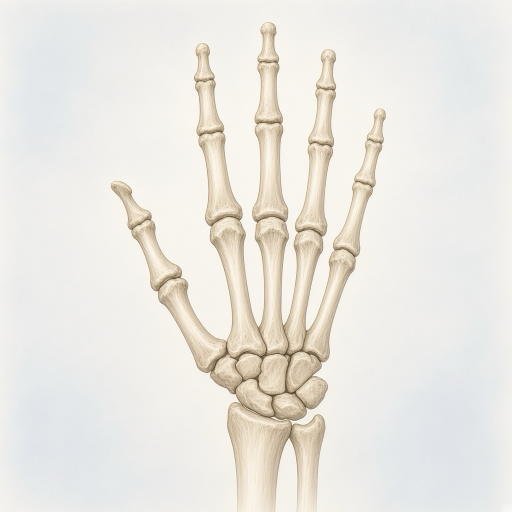
The skeleton is the set of bones inside your body that holds you up, helps you move, and keeps your soft parts safe. Anatomy books usually count 206 bones in a grown-up. A baby is often described as having about 270 bones and developing bone pieces, many of which later join together. Bones are alive. They have a blood supply, they grow, and they can repair a break.
Why bones are tricky to understand
Bones look hard and stiff, like rocks. They are not. A bone is a living part of your body. It is made of two things mixed together: a hard mineral that is full of calcium, and a stretchy protein called collagen. The mineral makes bone strong. The collagen lets bone bend a tiny bit so it does not snap every time you jump off the couch.
Bones change all the time. Tiny cells inside your skeleton are always at work. Some cells build new bone. Others take away old or damaged bone. Across the whole skeleton, most adult bone is replaced over roughly a decade, but some places change faster than others.
Babies are often said to have more bones than grown-ups. The number around 270 includes many separate bones and developing areas where cartilage will be replaced by bone. As a child grows, some pieces join to make larger bones. The standard adult count is 206, although the exact count can differ from person to person.
Key facts about bones
A typical adult skeleton is counted as 206 bones. A newborn is often described as having around 270 separate bones and developing bone areas because many have not joined up yet.
The longest bone is the femur, the thigh bone. Its size varies with a person’s body, and it carries large loads during standing and movement.
The smallest bone is the stapes, a tiny stirrup-shaped bone deep inside your ear. It is around 0.1 inches (3 mm) long.
Half of your bones are in your hands and feet. Each hand has 27 bones and each foot has 26, adding up to 106 of your 206 bones.
The hyoid is unusual because it has no bony joint with another bone. It is a small U-shaped bone in your neck, held in place by muscles and ligaments. It helps support the tongue and the muscles used for swallowing and speech.
The hardest tissue in your body is not bone. It is the enamel on your teeth. Enamel has more mineral packed inside it than bone does, but it cannot heal itself the way living bone can.
Bones make blood. Inside many bones is a soft red jelly called bone marrow that makes new red and white blood cells every day.
Astronauts can lose bone in space. During missions lasting four to six months, NASA reports average density losses of about 1 to 1.5 percent each month. Crew members use resistance exercise to reduce the loss, but it does not always prevent it.
Common myths about bones
Myth: Bones are dead. Bones are very much alive. They have blood vessels, nerves, and living cells. A dead bone in a museum looks dry because the soft parts are gone, but a real bone in a real person is wet and busy.
Myth: Drinking milk is the only way to support bone health. Dairy foods are one source of calcium, but some leafy greens, beans, and calcium-fortified foods provide it too. Vitamin D helps the body absorb calcium. It can come from certain foods or supplements, and skin can make it after ultraviolet light exposure, but sun protection is still important.
Myth: A broken bone is broken forever. Bones can repair themselves. The body grows a soft bridge called a callus across the gap, then replaces it with harder bone. Healing time depends on the bone, the type of break, the person’s age and health, and how well the pieces are stabilized.
Myth: Cracking your knuckles is known to cause arthritis. Imaging shows that the pop occurs as a gas-filled cavity rapidly forms when joint surfaces separate. Available observational studies have not shown that habitual knuckle cracking causes hand osteoarthritis, but that is not the same as proving that every kind of joint cracking is harmless.
Frequently asked questions about bones
Why do babies have more bones than grown-ups?
The often-quoted newborn count is around 270, including separate bones and developing bone areas in places such as the skull, spine, and hips. Skull sutures and soft fontanelles let the skull change shape during birth and leave room for rapid brain growth. Many skeletal pieces fuse as a child matures, producing the conventional adult count of 206, although timing and the final count vary.
What are bones made of?
Bones are made of a hard calcium-phosphate mineral mixed with a tough protein called collagen and with water. Mineral makes up roughly two-thirds of bone by dry weight, while collagen dominates the organic part. The mix helps make bone stiff without being as brittle as mineral alone.
How does a broken bone heal?
When a bone breaks, damaged blood vessels create a clot at the spot. Cells then build soft tissue across the break, followed by a harder callus of immature bone. Over months or years, that new bone can remodel toward its earlier shape. A cast, splint, or other treatment may keep the pieces stable, but the treatment and healing time depend on the fracture.
What is bone marrow?
Bone marrow is the soft tissue inside many of your bones. Red marrow makes new blood cells. Every day, adult marrow produces roughly 200 billion red blood cells, along with white blood cells and platelets, which are small cell fragments that help blood clot.
Why is the skeleton important?
Your skeleton does five big jobs. It holds you up so you can stand and walk. It protects soft parts like your brain, heart, and lungs. It works with your muscles to let you move. It stores calcium. And it makes new blood cells inside the marrow.
The skeleton is conventionally counted as 206 bones in a typical adult. It supports the body, protects organs like the brain and heart, and works with muscles to make movement possible. Bone is living tissue made from calcium-phosphate mineral, a collagen-rich organic matrix, and water. The skeleton is also a mineral storehouse and a site of blood-cell production.
Why the skeleton is more interesting than it looks
The skeleton in a science classroom is dry, brittle, and motionless. A real living skeleton is none of those things. Bones contain blood vessels, nerves, and living cells. They flex slightly under load, repair themselves after a break, and reshape over time in response to how a person moves.
Bones are not all the same kind of tissue. The outside of most bones is cortical bone, also called compact bone, a dense layer that gives the skeleton its strength. Inside many bones is trabecular bone, also called spongy bone, a network of thin struts that looks a little like a kitchen sponge. The spongy structure keeps bones light without making them weak.
The number of separately counted bones changes during life. A newborn is often described as having roughly 270 bones and developing bone areas, many with cartilage that has not yet been replaced by bone. During childhood and adolescence, these areas ossify and many pieces fuse. A baby’s skull has soft gaps called fontanelles; the anterior fontanelle closes at widely varying ages, with a reported median near 14 months. Growth-plate closure also varies by bone and person. The conventional adult count is 206, but anatomical variation means it is not universal.
Key facts about bones
A typical adult skeleton is conventionally counted as 206 bones. That scheme splits into the axial skeleton of 80 bones (skull, spine, ribs, sternum, hyoid, and tiny ear bones) and the appendicular skeleton of 126 bones (arms, legs, shoulder girdle, and pelvis).
The vertebral column develops from about 33 vertebrae. The usual pattern is 7 cervical (neck), 12 thoracic (chest), 5 lumbar (lower back), 5 sacral, and 4 coccygeal elements. The sacral and coccygeal elements normally fuse, and coccygeal number varies.
The conventional skull count has 22 bones. Eight cranial bones protect the brain, and 14 facial bones build the face. The mandible, or lower jaw, is its freely movable bone; the auditory ossicles are counted separately and also move while transmitting sound.
The longest bone is the femur, the thigh bone. Its length varies with body size, and its shape and cortical shell let it carry substantial bending, compression, and torsional loads.
The smallest bone is the stapes, a stirrup-shaped bone in the middle ear. It is about 0.1 inches (3 mm) long and helps pass sound vibrations to the inner ear.
More than half of your bones are in your hands and feet. Each hand has 27 bones and each foot has 26, totaling 106 bones in the four limbs’ end pieces.
The hyoid is unusual because it has no bony articulation with another bone. It sits in the front of the neck, held in place by muscles and ligaments, and supports the tongue.
Tooth enamel is harder than bone. Enamel is about 96 percent mineral, while bone has a much larger organic and water fraction. Enamel cannot regenerate lost structure after eruption. Bone remodels and can heal fractures, while dentin has a more limited repair response.
Bone marrow makes about 500 billion blood cells per day. Red marrow inside bones like the pelvis, spine, ribs, sternum, and skull produces red and white blood cells and platelets.
The skeleton remodels throughout life. Cells called osteoclasts remove old bone and osteoblasts lay down new bone. An often-quoted decade is a rough whole-skeleton turnover timescale, not a schedule on which every bone is replaced at once.
Common myths about bones
Myth: Bones are dry and dead. Living bone is a wet, active tissue. It contains blood vessels, nerves, marrow, and three kinds of bone cells: osteoblasts (build), osteoclasts (resorb), and osteocytes (mature cells embedded in the matrix that sense load and signal the others).
Myth: Cracking your knuckles is known to cause arthritis. Observational studies have not found a higher rate of hand osteoarthritis in habitual knuckle crackers. Real-time MRI tied the pop to rapid formation of a gas-filled cavity as the joint surfaces separated.
Myth: Bones stop changing after you grow up. The skeleton remodels for the rest of your life. NASA reports average density losses of about 1 to 1.5 percent per month during four-to-six-month space missions because weight-bearing bones lose their usual load. Recovery varies, and some measures can remain below preflight values after a year back on Earth.
Myth: Every healed fracture remains a permanent weak spot. Successful healing can restore a bone’s structure and mechanical strength over time, but the outcome depends on the fracture, blood supply, alignment, stability, health, and complications. Delayed union and nonunion can occur, so recovery is not guaranteed.
Myth: Vertebrae form one straight stack. A typical adult spine has cervical and lumbar curves that arch forward and thoracic and sacral curves that arch backward. Together with the discs and surrounding tissues, these curves help distribute loads during movement.
Myth: The skeleton is just a frame. The skeleton supports and protects the body, enables movement with muscles and joints, stores minerals, and produces blood cells in marrow. Bone also releases signaling molecules: FGF23 has an established role in phosphate balance, while many proposed metabolic effects of osteocalcin are clearer in animal studies than in humans.
Frequently asked questions about bones
Why do babies have more bones than adults?
The often-quoted newborn count is around 270 and includes separate bones and developing bone areas, some of which are cartilaginous. Skull sutures and fontanelles permit deformation during birth and accommodate rapid brain growth. As children mature, skeletal areas ossify and many pieces fuse in the skull, pelvis, spine, and long bones. The usual adult teaching count is 206, although fusion timing and the final count vary.
What are bones made of?
Bones are a composite of mineral, protein, and water. On a dry-weight basis, mineral accounts for roughly two-thirds and organic matrix for roughly one-third; type I collagen dominates the organic part. Exact percentages depend on how a sample is measured. Mineral provides much of bone’s stiffness, while collagen and the layered structure help it resist cracks.
How does a broken bone heal?
A fracture that heals by the common secondary process passes through overlapping stages. First, blood at the break forms a hematoma. Granulation tissue and then a soft, cartilage-rich callus bridge the gap. A harder callus of immature woven bone follows, and remodeling can continue for months or years. The timing varies widely, and a cast, splint, or fixation device may be used to provide the stability that healing requires.
Why do bones get weaker as people age?
Bone mass usually peaks by early adulthood, then changes with age, hormones, health, medication, activity, and skeletal site. When resorption persistently exceeds formation, bone mass can fall. In some adults, especially after menopause, loss contributes to osteoporosis, a disorder of reduced bone strength and increased fracture risk. Exercise, adequate nutrition, avoiding smoking, fall prevention, and, when appropriate, medical treatment all matter.
What does bone marrow do?
Marrow is the soft tissue inside many bones. Red marrow makes red blood cells, white blood cells, and platelets. In adults, red marrow is mostly found in the axial skeleton: the pelvis, spine, sternum, ribs, skull, and the ends of long bones like the femur and humerus. The rest of the marrow space is yellow marrow, which stores fat and can convert back to red marrow if the body needs to make more blood cells.
How big are the smallest and largest bones?
The smallest bone in the body is the stapes, a stirrup-shaped bone about 3 mm long in the middle ear. The longest is the femur, or thigh bone, whose size varies with the person. The femur is built for high loads, but simple strength rankings depend on whether a test measures compression, bending, torsion, whole-bone geometry, or tissue properties.
Who was Lucy?
Lucy is the nickname for a partial fossil skeleton of Australopithecus afarensis found at Hadar in Ethiopia in 1974. The skeleton is about 3.2 million years old and unusually complete for an early hominin. Her short, broad pelvis and angled femur support efficient upright walking, while long arms and curved toe bones retain traits associated with climbing.
The skeleton is the connective-tissue framework conventionally counted as 206 bones in a typical adult. It supports the body, protects organs, anchors skeletal muscles, stores calcium and phosphate, and houses blood-cell production. On a dry-weight basis, bone tissue is roughly two-thirds inorganic mineral, mostly hydroxyapatite, and one-third organic matrix, predominantly type I collagen; living bone also contains substantial water. The standard partition has an axial skeleton of 80 bones and an appendicular skeleton of 126 bones.
What is often misunderstood about bones
Bones are not inert struts. Every bone in the body is a metabolically active organ with its own blood supply, nerve supply, marrow cavity, and three principal cell types: osteoblasts (matrix-secreting bone formers), osteoclasts (multinucleated cells that resorb bone), and osteocytes (mature, embedded osteoblasts that act as the skeleton’s mechanosensors). The familiar dry classroom skeleton is what is left after the soft tissues are removed; in life, bone is wet, vascular, and constantly remodeling.
The number of separately counted bones changes during development. A neonate is often described as having roughly 270 bones and ossification centers, but cartilage and an ossification center are not automatically separate named bones. Cranial sutures and fontanelles let the skull deform during delivery and accommodate brain growth; the anterior fontanelle has a reported median closure age near 14 months, with broad normal variation. Sacral elements fuse and long-bone growth plates close on different schedules. The conventional adult count is 206, but the final count and timing vary.
Bone is not a uniform material. Cortical (compact) bone forms the dense outer cortex of long-bone shafts and the surfaces of flat bones, accounting for roughly 80 percent of skeletal mass. Trabecular (cancellous, spongy) bone forms a porous network inside vertebral bodies, the ends of long bones, and flat bones. Its greater surface-to-volume ratio supports faster remodeling than cortical bone. Percentages sometimes reported near 80 to 90 for cortical bone and 15 to 25 for trabecular bone describe solid volume fraction or porosity conventions, not a simple difference in the mineral chemistry of their tissue.
The hardest tissue in the body is not bone. Tooth enamel, at about 96 percent mineral, is harder than bone. Enamel cannot regenerate lost structure after eruption because its ameloblasts are gone; bone, by contrast, remodels and can heal fractures throughout life.
Key facts about bones
Total count. An adult skeleton typically has 206 named bones. Counts can vary slightly when small sesamoid bones beyond the patellae are included, or when accessory ossicles such as occasional sutural (Wormian) bones in the cranium are present.
Axial vs. appendicular. The 80-bone axial skeleton comprises the skull (22), vertebral column (26 in the adult, with the sacrum and coccyx counted as single fused units), ribs (24), sternum (1), hyoid (1), and the six auditory ossicles (three per ear). The 126-bone appendicular skeleton comprises the shoulder girdle, pelvic girdle, and the bones of the four limbs, including 27 bones per hand and 26 per foot.
Vertebral column. 33 vertebrae in five regions: 7 cervical, 12 thoracic, 5 lumbar, 5 fused sacral, and 4 (variably 3 to 5) fused coccygeal.
Rib cage. 12 pairs of ribs. Pairs 1 to 7 are true ribs, attaching directly to the sternum via costal cartilages. Pairs 8 to 10 are false ribs, attaching indirectly via the cartilage of the rib above. Pairs 11 and 12 are floating ribs, ending in the abdominal wall musculature without an anterior bony attachment.
Femur. The longest and usually heaviest bone in the body. Its length varies with body size, while whole-bone strength depends on geometry, loading direction, age, and bone quality rather than on a single material-strength number.
Stapes. The smallest bone, located in the middle ear. Length is approximately 0.1 inches (3 mm). It transmits sound vibrations from the incus to the oval window of the cochlea.
Hyoid. Unusual because it does not form a bony articulation with another bone. It is suspended by muscles and ligaments in the anterior neck and supports the tongue and pharyngeal musculature.
Bone composition. By dry weight, bone is roughly two-thirds inorganic mineral, chiefly carbonated hydroxyapatite, and one-third organic matrix, predominantly type I collagen; living bone also contains substantial water. Exact percentages change with whether a source reports dry, wet, volume, or ash fractions. The combination explains why bone is stiff yet less brittle than mineral alone.
Marrow output. Adult marrow produces about 500 billion blood cells per day, including roughly 200 billion erythrocytes. In adults, hematopoietic red marrow is concentrated in the axial skeleton and proximal femur and humerus, while yellow, fatty marrow occupies much of the long-bone shafts.
Skeletal turnover. Rough whole-skeleton averages are often expressed as about 10 percent per year or a decade-long turnover timescale, but rates vary greatly by site and trabecular bone turns over faster than cortical bone.
Spaceflight bone loss. Astronauts on long-duration missions lose approximately 1 to 1.5 percent of bone mineral density per month, predominantly from weight-bearing bones such as the proximal femur and lumbar spine, even with rigorous exercise countermeasures.
Common myths about bones
Myth: Adults have exactly 206 bones under every counting rule. The 206 figure is the standard teaching count, but authors have used different conventions for paired, fused, sesamoid, and accessory bones. Teeth are not bones and should not be added to the skeletal count. Individual anatomical variation and continued fusion with age also prevent one universal total.
Myth: Cracking knuckles is known to cause arthritis. Observational studies have not demonstrated an association between habitual knuckle cracking and hand osteoarthritis. Real-time MRI showed the audible event occurring with rapid cavity formation, consistent with tribonucleation, rather than the collapse of a pre-existing bubble.
Myth: Calcium intake alone prevents osteoporosis. Bone health and fracture risk also reflect vitamin D status, mechanical loading, sex hormones, age, medication, smoking, alcohol exposure, falls, and medical conditions. Calcium supplements are not a substitute for assessing the full risk picture, and whether a supplement is appropriate depends on a person’s diet and medical circumstances.
Myth: Bones in space recover quickly when astronauts return. A 2022 Scientific Reports study of long-duration ISS crew members found incomplete recovery of distal-tibia bone strength and trabecular microarchitecture one year after return. Some astronauts regain most pre-flight density; others do not, particularly those who flew the longest missions.
Myth: Every healed fracture is permanently weaker. Successful remodeling can restore structure and mechanical strength toward the pre-injury state. An early callus is larger but consists of immature tissue, so width alone does not make it stronger than intact cortex. Outcome depends on the fracture pattern, blood supply, stability, alignment, health, and complications such as delayed union or nonunion.
Myth: The skeleton is purely structural. Bone also has endocrine functions. Osteocytes secrete fibroblast growth factor 23 (FGF23), which regulates renal phosphate handling and vitamin D metabolism. Osteoblasts produce osteocalcin; strong endocrine effects occur in animal models, while its causal roles in human glucose, reproductive, and exercise physiology remain under investigation.
Frequently asked questions about bones
Why do babies have more bones than adults?
The commonly quoted newborn figure of roughly 270 combines separate bones with developing skeletal elements and ossification centers, some still largely cartilaginous. These categories are not anatomically identical, which makes the exact total definition-dependent. Fontanelles and sutures allow the skull to deform during delivery and grow; later, many skeletal elements ossify or fuse. The conventional adult count is 206, although neither the timing nor the final number is universal.
What are bones made of?
Bone is a composite material. The mineral phase is hydroxyapatite, a calcium-phosphate crystal that gives bone its compressive stiffness. The organic phase is mostly type I collagen, arranged in fibrils that give bone tensile strength and a small amount of elasticity. Embedded throughout are proteoglycans, glycoproteins, growth factors, and water. Stripped of its mineral, a bone becomes rubbery; stripped of its collagen, it becomes brittle. The two together produce a tissue that behaves more like reinforced concrete than like either ingredient alone.
How does a broken bone heal?
Fracture healing classically proceeds in four overlapping phases. (1) Hematoma formation: within hours, blood pooling at the fracture forms a clot that delivers signaling molecules and inflammatory cells. (2) Soft callus: over roughly 1 to 3 weeks, mesenchymal stem cells differentiate into chondrocytes and fibroblasts that bridge the gap with cartilage and fibrous tissue. (3) Hard callus: between weeks 4 and 12, osteoblasts mineralize the soft callus into woven bone. (4) Remodeling: over months to years, osteoclasts and osteoblasts reshape the woven bone back to lamellar bone aligned with mechanical load, often without any external scar.
What is osteoporosis?
Osteoporosis is a skeletal disorder of reduced bone strength that increases fracture risk. The WHO international reference standard centers on a femoral-neck T-score of −2.5 or lower. ISCD positions allow diagnosis in postmenopausal women and men age 50 or older when a valid lumbar-spine, total-hip, or femoral-neck T-score is −2.5 or lower. A T-score compares measured density with a young-adult reference. Values between −1.0 and −2.5 are often described as low bone mass; fracture risk still depends on age, prior fractures, falls, medications, and other factors, not the score alone.
Why do astronauts lose bone in space?
In microgravity, weight-bearing bones no longer experience their normal loads, and resorption can outpace formation. NASA reports average density losses of about 1 to 1.5 percent per month during four-to-six-month missions, although loss varies by person and site. Resistance exercise on devices such as the Advanced Resistive Exercise Device on the ISS reduces but does not always eliminate it. The pattern illustrates the broader principle that bone adapts to its mechanical environment.
What is the difference between cortical and trabecular bone?
Cortical bone is dense, low-porosity tissue forming the outer cortex of bones and accounts for about 80 percent of skeletal mass. Trabecular bone is a porous network inside vertebrae, the pelvis, and the ends of long bones. It has more surface area per unit volume and generally turns over faster. Vertebrae, the proximal femur, and the distal radius are common osteoporotic-fracture sites, but osteoporosis affects both cortical and trabecular compartments.
Who was Lucy?
Lucy is the nickname for fossil specimen AL 288-1, a partial skeleton of Australopithecus afarensis found at Hadar in Ethiopia in 1974 and dated to about 3.2 million years ago. Her short, broad pelvis and angled femur support habitual bipedal walking, while long arms and curved toe bones retain traits useful for climbing. The combination makes Lucy especially informative about locomotion in early hominins.
The skeleton is a living organ system of 206 named bones in a typical adult, consisting of a hierarchically structured composite of carbonated hydroxyapatite (Ca₁₀(PO₄)₆(OH)₂) and predominantly type I collagen, organized into cortical and trabecular compartments and continuously remodeled by osteoclasts and osteoblasts under control of mechanosensitive osteocytes. It supports and protects the body, enables locomotion with muscle, regulates mineral balance, houses hematopoiesis, and secretes signaling molecules including FGF23 and osteocalcin. Turnover is often averaged near 10 percent a year across the skeleton, but rates differ sharply by site and tissue type, so no single decade-long replacement clock applies to every bone.
Why skeletal biology is non-intuitive
Three features of bone defy first-pass reasoning. First, bone is a composite whose mechanical behavior is set not by either constituent alone but by their coupling. Demineralized bone retains a flexible collagen framework, while removal of its organic matrix leaves brittle mineral. Intact bone resists fracture through mechanisms across several scales, including energy dissipation in collagen and crack deflection at interfaces. Its measured stiffness, strength, and toughness depend strongly on anatomical site, age, hydration, specimen preparation, loading direction, and test method, so a single material constant should not be presented as a property of every bone.
Second, bone formation and resorption are coupled, not simply opposing processes. At each active basic multicellular unit (BMU), osteoclast resorption is followed by reversal and osteoblast formation; the formation and mineralization phases last much longer than resorption. Reported phase lengths are approximate and vary by site and method. Coupling involves signals among osteoclast-lineage cells, osteoblast-lineage cells, and osteocytes. Osteocyte-secreted sclerostin, encoded by SOST, inhibits canonical Wnt signaling; loss-of-function variants cause high-bone-mass disorders including sclerosteosis.
Third, bone is mechanically responsive. The idea commonly summarized as Wolff’s law is that bone architecture and mass adapt to their loading environment, although modern mechanobiology is more nuanced than a single law. Osteocytes, embedded in lacunae and connected through canaliculi, participate in sensing strain and fluid movement and in regulating sclerostin, RANKL, and other signals. Dynamic loading can stimulate site-specific adaptation, whereas sustained unloading promotes loss, as seen with immobilization, paralysis, and microgravity.
A fourth point worth surfacing here: the hardest tissue in the body is not bone but enamel, a roughly 96 percent mineralized tissue whose ameloblasts disappear after eruption. Enamel cannot regenerate lost structure naturally, whereas living bone remodels and can heal fractures. Dentin can mount a limited repair response, so bone should not be called the only mineralized tissue capable of repair.
Key facts about bones and the skeleton
Bone count. The standard adult teaching count is 206. Other published totals reflect different treatment of fused, paired, sesamoid, and accessory bones. Wormian bones, an os trigonum, or an accessory navicular can also create individual variation.
Axial vs. appendicular partition. 80 axial bones (skull 22, vertebral column 26 in the adult with sacrum and coccyx counted as fused units, ribs 24, sternum 1, hyoid 1, auditory ossicles 6) and 126 appendicular bones (pectoral girdle 4, upper limbs 60, pelvic girdle 2, lower limbs 60).
Vertebral formula. 7 cervical, 12 thoracic, 5 lumbar, 5 sacral (fused), and typically 4 coccygeal (fused, range 3 to 5). Total developmental count 33; adult bone count 26.
Costal pattern. 12 rib pairs. Vertebrosternal (true) 1 to 7, vertebrochondral (false) 8 to 10, vertebral (floating) 11 to 12.
Cortical and trabecular fractions. Cortical bone contributes about 80 percent of skeletal mass. Trabecular bone contributes less mass but much more surface per unit volume, supporting faster remodeling. Their tissue mineral chemistry overlaps; much lower numerical percentages sometimes assigned to trabecular bone describe its solid volume fraction, not mineral percentage in the solid matrix.
Composition. On a dry-weight basis, mineral accounts for roughly two-thirds of bone and organic matrix for roughly one-third, with type I collagen dominating the organic fraction. Living bone also contains substantial water. Exact fractions depend on age, site, and whether measurements use wet, dry, volume, or ash bases.
Cell complement. Osteoblasts derive from mesenchymal stem cells, are matrix-secreting, and either become trapped osteocytes or quiescent bone-lining cells. Osteoclasts derive from the monocyte-macrophage lineage, fuse to form multinucleated cells, and secrete acid (via vacuolar H⁺-ATPase) and proteolytic enzymes (cathepsin K) to dissolve mineral and digest collagen at the ruffled border. Osteocytes are mature osteoblasts entombed in lacunae, the principal mechanosensors and regulators of phosphate metabolism via FGF23.
Bone density loss in spaceflight. NASA reports average losses of approximately 1 to 1.5 percent per month during four-to-six-month missions, with variation by site and person despite resistance exercise. A 2022 study of 17 astronauts documented incomplete group-level recovery of distal-tibia density, microarchitecture, and estimated strength one year after return.
Skeletal turnover. Whole-skeleton turnover is often averaged near 10 percent annually, but site-specific rates vary and trabecular bone generally turns over faster than cortical bone; this does not mean every part is replaced once per decade.
Marrow output. Adult marrow produces about 500 billion blood cells per day. Hematopoietic red marrow is concentrated in the axial skeleton and proximal femur and humerus, while much of the long-bone shaft marrow is fatty yellow marrow.
Endocrine outputs.FGF23 from osteocytes has an established role in renal phosphate handling and vitamin D metabolism. Osteocalcin has broad endocrine effects in animal models, but proposed causal effects on human insulin secretion, testosterone production, insulin sensitivity, and exercise metabolism remain unsettled.
Famous skeleton.Lucy (AL 288-1) is an Australopithecus afarensis partial skeleton from Hadar, Ethiopia, dated to about 3.2 million years ago and found in 1974. Her pelvic and femoral anatomy provides important evidence of habitual bipedalism, while upper-limb and toe anatomy retains climbing-related features.
Common myths about bones
Myth: The 206 figure is fixed. It is a standard teaching count, not a biologically universal constant. Published counts have differed because authors treat fused, paired, sesamoid, and accessory bones differently, and because fusion can continue with age. Teeth are not bones and should not be added to the skeletal count.
Myth: Bone is structural and otherwise inert. Bone is metabolically active and participates in endocrine signaling. Osteocyte-derived FGF23 has an established role in phosphate and vitamin D regulation. Osteocalcin has striking metabolic effects in animal models, while human studies largely show associations and have not established the same causal endocrine actions.
Myth: Trabecular bone is defective because it is porous. Its plates and rods provide a lightweight internal architecture whose orientation can adapt to loading. That does not make every trabecular network optimally aligned or intrinsically safe from failure. Loss of bone volume, plate-to-rod changes, perforation, and reduced connectivity all contribute to fragility at trabecular-rich sites.
Myth: Cracking knuckles is known to produce arthritis. Observational studies have not demonstrated an association between habitual knuckle cracking and hand osteoarthritis. Imaging supports rapid cavity formation during the audible event, but the limited outcome literature does not justify the broader claim that cracking can never affect tissue.
Myth: Calcium intake alone protects against osteoporotic fracture. Calcium is necessary but not sufficient. Bone mass is also a function of vitamin D status, sex steroids (estrogen withdrawal at menopause is a dominant risk factor), mechanical loading, glucocorticoid exposure, smoking, alcohol intake, and several rarer secondary causes. Pharmacologic anti-resorptives (bisphosphonates, denosumab) and anabolics (teriparatide, abaloparatide, romosozumab) target specific cellular targets and reduce fracture risk independently of nutrition.
Myth: Astronauts return from space with normal bone. Long-duration crew members commonly show partial recovery of bone mineral density at the proximal femur and lumbar spine, but trabecular microarchitecture and bone strength at distal sites can remain reduced even at 12 months post-flight. The unloading model demonstrates the limits of current countermeasure regimens and informs terrestrial work on disuse osteoporosis.
Myth: A healed fracture always leaves a permanent weak spot. Successful secondary healing and remodeling can restore structure and mechanical strength toward baseline. An enlarged early callus is immature tissue and should not be assumed stronger merely because it is wider. Recovery depends on local mechanics, vascularity, fracture pattern, health, and complications, and nonunion or persistent deficits can occur.
Frequently asked questions about bones
What is bone made of, and why does the composite matter?
Bone is a hierarchical composite. Type I collagen molecules, built as a triple helix, assemble into staggered fibrils that become mineralized by nanoscale, chemically substituted apatite crystals. Mineralized fibrils organize into lamellar structures; cortical bone often arranges lamellae into osteons, while trabecular bone forms plates and rods. Mechanical behavior emerges across these levels: mineral supplies much of the stiffness, collagen and their interfaces dissipate energy, and lamellar and osteonal boundaries can deflect cracks. Dimensions and arrangements vary by tissue, so textbook nanocrystal measurements should be treated as representative rather than universal.
How does the bone remodeling cycle work in detail?
Remodeling proceeds through activation, resorption, reversal, formation, and termination within a BMU. Osteocyte and surface-cell signals help recruit osteoclast precursors. Mature osteoclasts attach through a sealing zone and excavate bone; reversal cells then prepare the surface. Osteoblasts deposit osteoid, which undergoes primary and slower secondary mineralization. Some osteoblasts become osteocytes or lining cells. Resorption is commonly measured in weeks, while formation and mineralization take months, but the timing varies by site, tissue, and method. RANKL, RANK, OPG, Wnt signaling, and sclerostin are among the pathways that coordinate the cycle.
What happens during fracture healing at the cellular level?
Indirect, or secondary, fracture healing is common when fixation permits controlled interfragmentary motion and includes aspects of endochondral ossification. A hematoma and inflammatory response are followed by granulation tissue and a soft callus. The cartilaginous bridge is mineralized and replaced with woven bone, and later remodeling replaces woven bone with lamellar bone over months to years. Primary healing can occur under high stability and very low strain, allowing direct osteonal remodeling with little visible callus. Timing and outcome depend on fracture pattern, vascularity, age, smoking, diabetes, nutrition, medications, and mechanical environment. Animal studies raise concern about some NSAID effects, but human evidence varies by drug, dose, duration, and fracture setting.
How is osteoporosis diagnosed and treated?
The WHO international reference standard defines osteoporosis by a femoral-neck DXA T-score of −2.5 or lower. ISCD positions permit diagnosis in postmenopausal women and men age 50 or older at a valid lumbar-spine, total-hip, or femoral-neck site. Z-scores, rather than WHO T-score categories, are generally preferred in premenopausal women and men younger than 50; pediatric interpretation requires age-appropriate criteria and does not diagnose osteoporosis from density alone. FRAX estimates 10-year fracture probability from clinical factors, with optional femoral-neck density, but intervention thresholds depend on the applicable national guideline. Treatment may include bisphosphonates, denosumab, selected estrogen-pathway therapies, or bone-forming agents such as teriparatide, abaloparatide, and romosozumab. Choice, sequence, duration, contraindications, and what follows discontinuation require individualized clinical management.
What does Wolff’s law actually predict?
Wolff’s nineteenth-century work connected trabecular architecture with mechanical loading. Modern mechanostat models describe ranges of strain history associated with disuse, maintenance, or modeling, but threshold values are not universal across species, skeletal sites, ages, or experimental methods. Dynamic loads generally produce stronger adaptive signals than static loads, and responses are site-specific. The framework helps explain bone loss during bed rest, immobilization, and microgravity and local skeletal differences associated with training, without implying that bone perfectly reconstructs a mathematical map of stress.
What endocrine functions does bone serve?
Beyond mineral storage, bone participates in endocrine signaling. FGF23, produced chiefly by osteocytes, acts through FGF receptors and α-Klotho in the kidney to reduce phosphate reabsorption and active vitamin D production. Excess FGF23 signaling causes hypophosphatemic disorders, while deficient signaling causes hyperphosphatemic disorders. Very high FGF23 in chronic kidney disease is associated with adverse outcomes, but association and assay-dependent risk estimates do not by themselves prove causality. Osteocalcin is an osteoblast-derived matrix protein and bone-formation marker. Undercarboxylated osteocalcin has metabolic effects in mice, but human evidence remains largely observational or inconclusive, so effects on insulin, testosterone, or exercise should not be stated as established human physiology.
Why do astronauts lose bone, and what does that imply on Earth?
Without normal weight-bearing strain, resorption can outpace formation. NASA reports average density losses of about 1 to 1.5 percent per month during four-to-six-month missions, although loss varies by person and site. Resistance exercise reduces but does not always prevent it. In a 2022 cohort of 17 astronauts, group median distal-tibia density, microarchitecture, and estimated strength remained below preflight values one year after return, with poorer recovery after missions longer than six months. Related unloading biology is relevant to prolonged bed rest, casting, paralysis, and other forms of disuse, but proposed drug or device countermeasures require setting-specific evidence.
Who was Lucy, in skeletal terms?
Specimen AL 288-1, recovered at Hadar, Ethiopia, in 1974, is a partial skeleton of Australopithecus afarensis dated to about 3.2 million years ago. Her short, broad pelvis and angled femur support habitual bipedal walking. Long arms and curved toe bones retain features consistent with climbing, supporting a locomotor repertoire that included both upright walking and time in trees. Claims about an anterior foramen magnum or a complete S-shaped vertebral column should not be assigned to Lucy herself because her recovered skeleton does not include a skull or a complete spine.