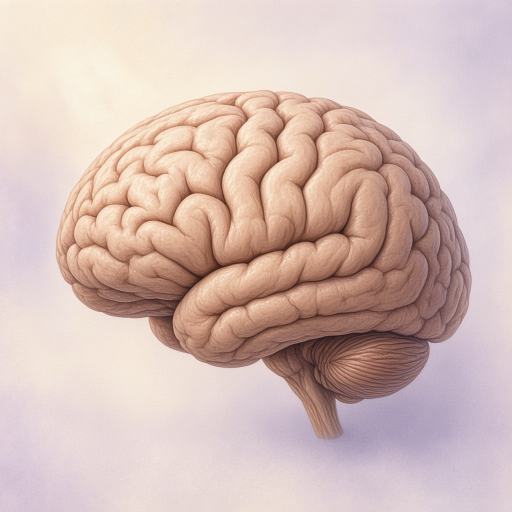
The brain is the soft, wrinkly organ inside your skull that controls everything you think, feel, and do. It runs your heartbeat, your breathing, your memory, your moods, and every move your body makes. An adult brain weighs about 3 pounds (1.4 kg) and is mostly water. It has about 86 billion tiny cells called neurons that send messages to each other using small electric signals.
Why the brain is tricky to understand
You cannot see your brain at work, and it does not feel like anything when it is busy. When you do math, ride a bike, or remember your best friend’s name, your brain is firing billions of signals between cells. You just feel the answer pop into your head.
The brain is also very soft. If you took one out of its skull, it would feel like firm jelly. Doctors keep brains safe inside the hard skull bone and inside three layers of covering and a cushion of fluid. That is why a hit to the head can hurt your brain even though the brain itself does not feel the punch.
The brain runs your whole body, but it does not feel pain in itself. The brain has no pain sensors. That is why doctors can sometimes do brain surgery while the patient is awake and talking. The patient feels the cut in the skin and the skull, but not the cut into the brain itself.
Key facts about the brain
An adult brain weighs about 3 pounds (1.4 kg). That is around 2 percent of your body weight, but it uses about 20 percent of the energy your body burns every day.
The brain has about 86 billion neurons. Neurons are the cells that send messages. Each neuron can connect to thousands of other neurons.
The brain is about 73 percent water. That is why drinking water helps you think clearly.
The brain has two halves. The left and right halves are called hemispheres. They are joined by a thick bundle of fibers called the corpus callosum that lets them talk to each other all the time.
The outside of the brain is wrinkly. The wrinkles let a lot of brain tissue fit inside a small skull. The wrinkly outer layer, called the cortex, is only about 0.08 to 0.16 inch (2 to 4 mm) thick.
The brain is connected to the body by the spinal cord. The spinal cord is a thick bundle of nerves that runs down inside your backbone. Together they are called the central nervous system.
Different parts of the brain do different jobs. The back part helps you see. A small part near the top helps you move. A part deep inside helps you remember.
Your brain keeps changing. Every time you learn something new, the connections between neurons change a little. Scientists call this neuroplasticity.
Common myths about the brain
Myth: People only use 10 percent of their brain. This is not true. Brain scans show that all parts of the brain do something, even when you are sleeping. There is no big unused section waiting to be unlocked.
Myth: You are either left-brained or right-brained. Both halves of the brain work together on almost everything. Math, art, music, and reading all use both sides. The idea that creative people use the right side and logical people use the left side is too simple to be true.
Myth: Your brain is gray. A living brain is pinkish with red blood vessels running through it. The “gray matter” name comes from how brains look after they have been preserved with chemicals. The fresh, working brain is not really gray.
Myth: Your brain cannot change after childhood. The brain can strengthen, weaken, and reorganize connections throughout life. Researchers still debate how many new neurons form in the adult human hippocampus, so lifelong plasticity should not be reduced to one unsettled cell-count claim.
Myth: Bigger brains mean smarter animals. A sperm whale brain weighs about 17 pounds (7.8 kg), much heavier than a human brain. Elephants also have heavier brains than humans. What matters more is the size of the brain compared to the body, plus how the brain is wired.
Myth: You can multitask. Your brain does not really do two thinking jobs at once. It switches very fast between them, and each switch costs you a little time and accuracy. You can walk and talk because walking is automatic, but you cannot read a book and write a different sentence at the same time.
Frequently asked questions about the brain
Why does the brain have wrinkles?
The wrinkles let a lot of brain surface fit inside a small skull. About two-thirds of the cortex is hidden inside the deep grooves. The folds and grooves let all that surface area squeeze inside your head.
Does the brain feel pain?
The brain itself has no pain sensors, so it cannot feel a needle or a cut in its own tissue. Headaches do not come from the brain. They come from the blood vessels, muscles, and nerves around the brain.
How fast can the brain send signals?
It depends on the type of nerve. Some nerves carry signals at over 250 miles per hour (400 km/h). These are the fastest nerves, the ones that move your muscles. Other nerves are slower. The fastest signals are wrapped in a fatty coat called myelin that helps the message zip along.
Do you really have a left brain and a right brain?
Yes, the brain has two halves, but they work together. The two sides are connected by a wide bridge of nerve fibers, the corpus callosum, that swaps messages back and forth all the time. There is no purely left-brained or right-brained person.
Why can’t you remember being a baby?
The hippocampus helps form new long-term memories, but memories are stored across wider brain networks. Most adults recall few events from before about age 3 or 4. Researchers link this infantile amnesia to several developing systems, including language, a sense of self, and memory circuits, rather than to one structure simply switching on.
Is your brain ever turned off?
No. Even when you are asleep, your brain is busy. During REM sleep, the stage when most dreaming happens, your brain is almost as active as when you are awake. Sleep is when the brain saves memories and clears out waste.
The brain is the organ inside your skull that runs your thoughts, memories, senses, emotions, and every movement your body makes. It contains about 86 billion neurons, the cells that carry electrical signals, plus a similar number of supporting cells called glia. An adult brain weighs about 3 pounds (1.4 kg), is about 73 percent water, and uses about 20 percent of your body’s energy even though it makes up only 2 percent of your weight. It runs on tiny voltages, not on electricity from a wall outlet, but the messages it sends are real electrical pulses moving along nerve cells at high speed.
Why the brain is tricky to understand
Almost everything you experience, from a song stuck in your head to the feeling of cold water, is built out of patterns of signals between brain cells. You never see those patterns directly. You only feel the result.
The brain also fools you about itself. Many people believe they use only 10 percent of their brain, that they are left-brained or right-brained, or that listening to Mozart will make a baby smarter. Brain scans, careful experiments, and decades of clinical research show that none of these are true.
The brain itself feels no pain. The skull and the layers around the brain do, and so do blood vessels in the head, but the brain has no nociceptors, the cells that report damage. Surgeons sometimes operate on a patient who is awake and talking, so they can map which spots control speech or movement before they cut.
Key facts about the brain
About 86 billion neurons. A 2009 study by Suzana Herculano-Houzel used a new method, the isotropic fractionator, to revise the long-quoted figure of 100 billion downward. The 86 billion number is now standard.
The cerebellum holds most of the neurons. The cerebellum, the small lobe at the back and bottom of the brain, takes up only about 10 percent of the brain’s volume but contains more than half of all its neurons. It tunes movement, posture, and balance.
The cortex is thin. The wrinkly outer layer, the cerebral cortex, is only about 0.08 to 0.16 inch (2 to 4 mm) thick. About two-thirds of its surface is folded down inside the grooves rather than exposed on the outside.
Adult brain power: about 12 to 25 watts. That is enough to dimly light an old-style filament bulb, but not enough to run a laptop, which usually draws 30 to 60 watts.
Signal speed varies a lot. The fastest signals, on heavily insulated motor nerves, travel at about 268 miles per hour (430 km/h). Some pain signals on thin, unwrapped fibers travel at less than 2 miles per hour (3 km/h).
The two halves are wired together. The left and right hemispheres are connected by the corpus callosum, a bundle of about 200 million nerve fibers that exchanges signals constantly. Almost no real-world task is purely left-brained or right-brained.
Brain volume grows rapidly in the first year. MRI estimates put newborn volume near one third of adult volume and 1-year-old volume near two thirds to three quarters. Different brain features continue changing on different timelines through adolescence, the twenties, and later life; there is no single age when the whole brain becomes “finished.”
The hippocampus helps consolidate new memories. The paired structures are important for forming new declarative memories, which are represented across wider networks. Patient H.M. had extensive bilateral medial-temporal surgery in 1953, not a clean removal of only the hippocampi, and developed profound difficulty forming new declarative memories.
Adult human neurogenesis remains debated. Studies disagree about whether and at what rate new dentate-gyrus neurons persist across adulthood, partly because tissue handling and cell markers differ.
Common myths about the brain
Myth: We use only 10 percent of our brain. Brain imaging shows activity throughout the brain across normal daily tasks. There is no large hidden region waiting to be activated. The 10 percent figure has no neuroscientific basis and probably began as a misquote of an early researcher.
Myth: People are left-brained or right-brained. A 2013 University of Utah study scanned over 1,000 people and found no evidence that individuals favor one whole hemisphere over the other. Specific tasks (like producing speech) tend to be handled more on one side, but everyone uses both.
Myth: The “Mozart effect” makes you smarter. A 1993 study found that college students who listened to Mozart did slightly better on a spatial reasoning task for about 15 minutes afterward. Later studies found similar small, short-term gains from any music or activity that improved mood and arousal. Listening to Mozart does not raise IQ.
Myth: Sugar makes kids hyper. Controlled studies in which neither parents nor children knew which child got sugar and which got a placebo found no behavioral difference. Expectation, not sugar, drives the perception.
Myth: Reading in dim light damages your eyes. Dim light may cause temporary eye strain, but no controlled studies show that it permanently damages the eyes.
Myth: A bigger brain means a smarter species. A sperm whale brain weighs about 17 pounds (7.8 kg), and elephant brains also outweigh the human brain. What matters more is the brain-to-body ratio, called encephalization quotient (EQ), and how the brain is wired. By that measure, humans are unusually large-brained for our body size.
Myth: You can really multitask. When two tasks both require focused thinking, the brain does not run them in parallel. It switches between them rapidly, and each switch costs time and accuracy. Even hands-free phone calls measurably slow driving reaction time.
Frequently asked questions about the brain
How do neurons actually talk to each other?
A neuron sends an electrical pulse called an action potential down a long fiber called an axon. When the pulse reaches the end, it triggers the release of chemical messengers called neurotransmitters into a tiny gap, the synapse, between the sending neuron and the next one. The neurotransmitters bind to the next cell and either encourage it to fire or quiet it down. The process is electrical and chemical, never light-based.
Why does the prefrontal cortex mature so late?
The prefrontal cortex, the front part of the brain that handles planning, weighing risks, and impulse control, finishes developing later than other regions, into the mid-20s. The slower wiring of judgment circuits is part of why teens often take more risks than adults. The NIMH calls this normal adolescent brain development.
Is the left side really the logical side and the right side the creative side?
No. Both sides handle math, language, music, and creativity. Specific narrow tasks (such as producing speech, which is usually centered in the left hemisphere) are slightly more on one side, but no whole personality trait or thinking style is one-sided.
What is neuroplasticity?
Neuroplasticity is the brain’s ability to change its connections in response to experience. Practice strengthens the synapses you use; ignored connections weaken. Neuroplasticity is why you can learn a new instrument, recover language after a stroke, or improve at a sport. It works at every age, although it is strongest in childhood.
How much energy does the brain use?
The adult brain uses about 20 percent of the body’s energy at rest, despite weighing only about 2 percent of body mass. Most of that energy keeps neurons ready to fire by pumping ions back across the cell membrane after each signal. Children’s brains use an even larger share during early development.
Does sleep matter for the brain?
Sleep supports memory consolidation, and insufficient sleep impairs attention, memory, and emotional regulation. A 2013 mouse study reported faster glymphatic waste clearance during sleep, but later animal work has challenged that direction of effect; its behavior in sleeping humans remains under study.
The brain is the central organ of the nervous system, a roughly 3-pound (1.4 kg) mass of neural tissue containing about 86 billion neurons and a similar number of glial cells, all encased within the skull and bathed in cerebrospinal fluid. It coordinates sensory input, motor output, autonomic regulation, memory, language, emotion, and conscious thought through patterns of electrochemical signaling. Neurons communicate by propagating action potentials down myelinated axons and releasing neurotransmitters across synaptic clefts. The cerebrum and its outer cortex sit on top of older structures (the cerebellum, brainstem, basal ganglia, thalamus, and hypothalamus) that together regulate everything from heart rate to the consolidation of yesterday’s experiences into long-term memory.
What is often misunderstood about the brain
The brain is not a uniform mass with one function per region. Most behaviors recruit distributed networks. Vision uses occipital and parietal cortex but also temporal and frontal regions for object recognition and attention. Memory is not stored in one structure; the hippocampus is essential for consolidating new declarative memories, but the memories themselves are gradually distributed across cortex.
The “10 percent of the brain” claim is not supported by any clinical or imaging evidence. Functional MRI, PET scanning, and lesion studies show activity throughout the brain across normal tasks, and damage to small areas can produce specific deficits, the opposite of what an underused organ would imply.
The “left-brain versus right-brain” personality model is also unsupported. A 2013 University of Utah study by Nielsen and colleagues used resting-state functional connectivity MRI on 1,011 people and found no evidence that individuals are dominantly left- or right-hemisphered. Lateralization is real for specific narrow functions, such as production of language in Broca’s area (typically left hemisphere) or processing of faces (more right-lateralized), but it is not a personality trait.
The brain is also not the highest-energy organ per unit mass; the heart and kidneys are. The brain stands out because it is energetically expensive at rest, consuming about 20 percent of the body’s energy at roughly 2 percent of body mass. Most of that consumption maintains the ion gradients across neuronal membranes that allow rapid signaling.
The “human brain has 100 billion neurons” figure quoted for decades was an estimate, not a measurement. In 2009, Azevedo and Herculano-Houzel published a count using the isotropic fractionator method, dissolving brains into a homogenous suspension and counting nuclei: about 86 billion neurons total, with the cerebellum holding more than half of them despite occupying only about 10 percent of the brain’s volume.
Key facts about the brain
Mass and composition. Adult brain mass averages about 3 pounds (1.4 kg). Tissue is roughly 73 percent water by weight, with the rest divided between fats (especially myelin), proteins, and trace ions. Cortical thickness is 0.08 to 0.16 inch (2 to 4 mm).
Cell counts. About 86 billion neurons and a comparable number of non-neuronal cells, putting the glia-to-neuron ratio near 1:1, not the older textbook figure of 10:1. Cerebellar neurons account for roughly 69 billion of the total; the cerebrum holds about 16 billion.
Energy use. The adult brain uses about 20 percent of the body’s metabolic energy. Children’s brains can exceed 40 percent during peak developmental periods. The brain produces roughly 12 to 25 watts of heat, far below the 30 to 60 watts a typical laptop draws.
Signal speed. Conduction velocity along myelinated motor axons reaches about 268 miles per hour (430 km/h). Unmyelinated C fibers carrying slow pain signals conduct at about 1 to 2 miles per hour (1.6 to 3 km/h). The differences arise from axon diameter and the presence or absence of the myelin sheath, with saltatory conduction jumping between Nodes of Ranvier on myelinated fibers.
Hemispheric connection. The two cerebral hemispheres are joined by the corpus callosum, a band of about 200 million axons. Severing it (a treatment used for severe epilepsy in the 1960s) produced the split-brain studies of Sperry and Gazzaniga.
Pain and the brain. Brain tissue itself contains no nociceptors. Awake craniotomies are used clinically to map eloquent cortex (motor, language) before tumor resection; the patient feels the scalp and skull but not the cortical tissue.
Adult neurogenesis. Many mammals generate new neurons in the dentate gyrus, but studies of adult humans disagree about persistence and rate. Sorrells et al. 2018 and Boldrini et al. 2018 reached different conclusions, leaving the human question unresolved.
Patient H.M. In 1953, surgeon William Beecher Scoville performed extensive bilateral medial-temporal surgery on Henry Molaison to treat severe epilepsy. The lesion included much of the hippocampal formation and adjacent structures. Molaison developed profound anterograde declarative-memory impairment while retaining short-term memory and some motor learning, revealing that memory depends on separable systems.
Brain volume growth. Newborn brain volume is about 25 percent of adult volume; the brain roughly doubles in the first year and reaches about 90 percent of adult volume by age 6. Final maturation, particularly prefrontal cortex myelination and synaptic pruning, continues into the mid-20s.
Sleep and memory. Sleep supports memory consolidation. A 2013 mouse study by Xie and colleagues reported expanded interstitial space and faster solute clearance during sleep, while later animal research reported reduced clearance, so the glymphatic effect and its relevance to humans remain debated.
Common myths about the brain
Myth: Humans use only 10 percent of their brain. Functional imaging shows activity across the brain in normal cognition, and clinical lesions to small regions produce specific, measurable deficits. The claim has no support in neuroscience.
Myth: People are left-brained or right-brained. Lateralization exists for narrow functions but not for personalities. The 2013 Nielsen et al. analysis of resting-state connectivity in 1,011 individuals found no evidence of whole-brain hemispheric dominance varying between people.
Myth: We know with certainty whether adult human brains make new neurons. Evidence for persistent dentate-gyrus neurogenesis conflicts across studies. Adult brains unquestionably remain plastic, but the rate and functional importance of new-neuron production in humans are unresolved.
Myth: The brain has 100 billion neurons.Azevedo et al. 2009 measured a mean of about 86 billion using the isotropic fractionator. The 100 billion figure was a round-number estimate not based on a direct count.
Myth: Listening to Mozart makes children smarter. The original 1993 Rauscher study found a small, temporary improvement on a spatial-reasoning task for about 15 minutes after listening to Mozart in college students. Replication studies attribute the effect to mood and arousal rather than to the music itself; no lasting IQ gain has been demonstrated.
Myth: Sugar causes hyperactivity in children. Multiple double-blind studies, including a 1995 JAMA meta-analysis, found no behavioral effect of dietary sugar on children. Parental expectation, not sugar, drives the perception.
Myth: Brain injury begins at one exact stopwatch reading without oxygen. When the heart stops pumping, loss of consciousness starts about 8 seconds after the last heartbeat, and the chance of recovery falls as each further minute passes without circulation. A registry study of 78,048 witnessed out-of-hospital cardiac arrests found a graded decline in both survival to hospital discharge and survival without severe neurological disability as bystander CPR was delayed. Body temperature changes the picture: among cardiac-arrest patients treated with extracorporeal CPR, those who arrived with a body temperature below 89.6 °F (32 °C) survived at a steady rate regardless of how long CPR had continued, while survival fell with longer CPR in patients who were not hypothermic. No single cutoff applies to every case.
Myth: General anesthesia turns the brain off. Under general anesthesia, the brain remains electrically active. EEG shows characteristic slow delta-wave patterns and burst suppression rather than a flat trace. The drugs disrupt thalamocortical communication and consciousness without abolishing all activity.
Frequently asked questions about the brain
What does the cerebellum actually do?
The cerebellum, sitting at the back and base of the brain, contains about 69 billion neurons (the majority of all neurons in the brain) in its dense granule layer. It coordinates the timing and precision of movement, supports motor learning, and contributes to certain cognitive and emotional functions including language, attention, and the ability to use feedback to refine behavior. Damage produces ataxia: imprecise, uncoordinated movements.
Why does the prefrontal cortex mature so late?
Myelination of long-range frontal axons and pruning of unused synapses continue into the mid-20s. The prefrontal cortex handles executive functions including planning, weighing future consequences, and impulse control. Its delayed maturation is part of the neurobiological substrate for adolescent risk-taking documented by NIH and reviewed in numerous developmental-neuroscience studies.
How does the blood-brain barrier work?
The blood-brain barrier is formed by tight junctions between endothelial cells lining brain capillaries, supported by astrocyte end-feet. It is selective rather than impenetrable. Lipid-soluble small molecules (including alcohol, caffeine, and many psychiatric medications) pass freely. Specific transporters carry glucose, amino acids, and other essential molecules. Many large or polar drugs cannot cross, which is why drug delivery to the central nervous system is difficult.
What does fMRI actually measure?
Functional MRI does not measure neural firing directly. It measures the BOLD signal (blood-oxygen-level-dependent contrast), which reflects local changes in deoxygenated hemoglobin caused by neurovascular coupling: when a region’s neurons increase activity, blood flow increases there a few seconds later. The BOLD signal is therefore an indirect, slow proxy for neural activity, with spatial resolution of millimeters and temporal resolution of seconds.
Is multitasking real?
Not for tasks that both require focused attention. The brain rapidly switches between tasks, and each switch incurs a cost in time and accuracy, documented in studies of dual-task performance going back to the 1990s. Skilled motor activities like walking can run alongside conversation because they are largely automatic. Two attention-demanding tasks (composing a text and listening to instructions) cannot run in parallel; reaction time and error rates rise.
What is sleepwalking?
Sleepwalking is an incomplete arousal from slow-wave (non-REM) sleep, primarily during the first third of the night. EEG shows a mixture of sleep and waking patterns rather than full waking. Motor and basic-navigation systems are active while the prefrontal cortex remains largely offline, which is why sleepwalkers can move around but make poor decisions and rarely remember the episode.
What was special about the H.M. case?
After bilateral removal of his medial temporal lobes in 1953, Henry Molaison (publicly identified after his death in 2008) lost the ability to form new long-term declarative memories while retaining IQ and short-term memory. Crucially, he could still acquire new motor skills, like mirror tracing, even though he had no memory of practicing them. The dissociation established that declarative and procedural memory rely on separate brain systems, and that the hippocampus is required for the former.
What is neuroplasticity?
Neuroplasticity is the brain’s capacity to change connections in response to experience. Long-term potentiation (LTP), described by Bliss and Lomo in 1973, is one cellular mechanism: repeated stimulation strengthens specific synapses. Pruning of weak connections, growth of new dendritic spines, and rewiring after injury all fall under neuroplasticity. It operates throughout life, although it is most rapid in early childhood.
Source notes
Anatomical, cellular, and energy-use figures are drawn from NIH NINDS’s Brain Basics and the Britannica entry on the human brain. The 86 billion neuron count and the cerebellum’s share are from Azevedo, Herculano-Houzel et al. 2009 in the Journal of Comparative Neurology. The left-brain / right-brain analysis is from Nielsen et al. 2013 in PLOS ONE. Glymphatic clearance during sleep is from Xie et al. 2013 in Science. The clinical history of Henry Molaison is documented in the published Scoville and Milner case literature.
The brain is the central organ of the vertebrate nervous system, a 3-pound (1.4 kg) organ of about 86 billion neurons and a comparable number of glia, suspended in cerebrospinal fluid within the skull and protected by the meninges. It generates behavior through electrochemical signaling: graded potentials sum at the axon hillock, all-or-nothing action potentials propagate along myelinated axons, and presynaptic terminals release neurotransmitters across 20 to 40 nm clefts onto postsynaptic receptors. Higher-order architecture organizes neurons into laminated cortex, deep nuclei, and white-matter tracts arranged into functional networks at scales from local microcircuits to whole-brain networks such as the default mode network. Brain function is encoded across these scales; no single neuron, region, or network alone explains memory, language, or consciousness.
Why neuroscience is non-intuitive
Two features of the brain disagree most sharply with naive intuition. The first is that cognition is distributed and dynamic rather than localized and modular. Classic phrenology and even the cleaner localizationism of the late 19th century imagined fixed regions corresponding to fixed faculties. Modern lesion data, electrophysiology, and functional imaging consistently show that complex behaviors recruit overlapping networks. Vision activates occipital, temporal, parietal, and frontal regions across distinct streams (the dorsal “where” pathway and the ventral “what” pathway, distinguished by Ungerleider and Mishkin in 1982). Memory is not warehoused in the hippocampus; the hippocampus is essential for consolidation of declarative memory, but the engram is gradually distributed across cortex and indexed by hippocampal-neocortical replay during sleep. A simple “this region does this task” mapping fails for almost every interesting capacity.
The second is that the brain spends most of its energy on activity that is not driven by external tasks. Marcus Raichle and colleagues in 2001 identified the default mode network (DMN), a set of midline and lateral cortical regions including the medial prefrontal cortex, posterior cingulate, precuneus, and angular gyrus that increases activity when the brain is not engaged in an external task and decreases activity during attention-demanding work. The DMN consumes a large share of resting brain metabolism, supports self-referential thought, autobiographical memory retrieval, and mind-wandering, and shows altered connectivity in Alzheimer’s disease, depression, and schizophrenia. The brain at rest is not idle.
The brain also disrupts intuitive ideas about pain and electrical activity. Brain tissue itself is anociceptive: it lacks nociceptors, and an awake patient under local scalp anesthesia feels nothing as the cortex is stimulated, which is why awake craniotomy is a standard tool for mapping eloquent cortex during tumor resection. General anesthesia, despite producing an unconscious patient, does not produce an electrically silent brain: EEG shows characteristic slow delta oscillations and burst-suppression patterns rather than a flat trace, reflecting suppression of thalamocortical communication rather than abolition of neural firing.
Finally, the famous “10 percent of your brain” claim has no scientific basis. Functional MRI shows distributed activity across the brain in routine tasks, and clinical lesions to small regions reliably produce specific deficits. An organ with 90 percent unused capacity would not show that pattern.
Key facts
Cell count and composition. Azevedo, Herculano-Houzel et al. 2009 used the isotropic fractionator to count nuclei after dissolving brain tissue into a homogenous suspension. Mean human totals: 86.1 ± 8.1 billion neurons and 84.6 ± 9.8 billion non-neuronal cells, putting the glia-to-neuron ratio near 1:1 rather than the older textbook 10:1. The cerebellum holds about 69 billion neurons (roughly 80 percent of the total) packed into densely wired granule-cell layers, while the cerebrum holds about 16 billion. The remainder occupies the brainstem and other subcortical structures.
Action potentials and conduction. Resting membrane potential of a typical neuron is approximately -70 mV. Depolarization past threshold (around -55 mV) triggers a regenerative voltage-gated sodium current and a millisecond-scale spike to about +30 mV, followed by repolarization through delayed rectifier potassium currents. Saltatory conduction along myelinated axons jumps action potentials between Nodes of Ranvier, raising conduction velocities to about 268 mph (430 km/h, or roughly 120 m/s) on the largest motor fibers. Unmyelinated C fibers carrying slow pain conduct at 1 to 2 mph (1.6 to 3 km/h).
Synapses and neurotransmitters. A typical cortical pyramidal neuron has roughly 7,000 synapses. Major neurotransmitters include glutamate (the principal excitatory transmitter), GABA (the principal inhibitory transmitter), acetylcholine, dopamine, serotonin, norepinephrine, and a long list of neuropeptides. Action potential arrival at the presynaptic terminal opens voltage-gated calcium channels; calcium triggers SNARE-mediated vesicle fusion within roughly 0.2 ms.
Long-term potentiation.Bliss and Lomo 1973 demonstrated that brief high-frequency stimulation of the perforant pathway produced sustained increases in synaptic efficacy in the dentate gyrus of anesthetized rabbits. NMDA-receptor-dependent LTP is a leading cellular substrate for Hebbian learning (“neurons that fire together wire together”) and for long-term memory.
Hippocampal consolidation and Patient H.M. Henry Molaison underwent bilateral medial temporal lobectomy by William Beecher Scoville in 1953 to treat intractable epilepsy. Reported by Scoville and Milner in 1957, H.M. exhibited dense anterograde amnesia for declarative memory, preserved short-term memory, and intact procedural learning (mirror-tracing improved without recollection of practice). The case established that declarative and procedural memory rely on dissociable neural systems and that the hippocampus is required for consolidation of new declarative memory.
Prefrontal maturation. White-matter myelination and synaptic pruning of frontal cortex continue into the mid-20s. NIH-funded longitudinal studies including the Adolescent Brain Cognitive Development (ABCD) and earlier NIMH-led MRI cohorts document the slow trajectory of executive-control maturation that underlies adolescent risk profiles.
Adult neurogenesis controversy.Sorrells et al. 2018 reported a sharp childhood decline with no detectable adult signal, while Boldrini et al. 2018 reported persistence through aging. Fixation, antibody specificity, disease, and postmortem interval complicate comparison. Whether meaningful hippocampal neurogenesis persists across normal adult human life remains unresolved.
Default mode network.Raichle et al. 2001 defined a baseline set of regions that deactivate during goal-directed tasks: medial prefrontal cortex, posterior cingulate, precuneus, angular gyrus, and parts of medial temporal cortex. The DMN supports self-referential cognition, autobiographical memory, theory of mind, and mind-wandering, and its connectivity is altered in Alzheimer’s disease, major depression, and schizophrenia.
EEG bands. Resting EEG decomposes into rhythms by frequency: delta (under 4 Hz, slow-wave sleep and pathology), theta (4 to 8 Hz, drowsiness, hippocampal-dependent memory tasks), alpha (8 to 13 Hz, eyes-closed relaxed wakefulness, dominant over occipital cortex), beta (13 to 30 Hz, active cognition), gamma (above 30 Hz, attention, perceptual binding). Each band reflects partly different neuronal-population dynamics; gamma in particular has been proposed as a mechanism for binding distributed feature representations.
Glymphatic clearance.Xie et al. 2013 reported expanded interstitial space and faster solute clearance during sleep in mice. Later animal work reported reduced clearance during sleep and anesthesia. The direction, mechanism, and relevance to sleeping humans therefore remain active questions.
Blood-brain barrier. Continuous endothelium with tight junctions (claudins and occludins) lines cerebral capillaries, surrounded by pericytes and astrocyte end-feet. Lipophilic small molecules (alcohol, caffeine, many CNS-active drugs) cross by passive diffusion; glucose enters through GLUT1; amino acids cross via specific transporters. The barrier breaks down focally in stroke, traumatic brain injury, multiple sclerosis, and certain tumors.
fMRI BOLD signal. Functional MRI does not measure neural firing directly. The BOLD (blood-oxygen-level-dependent) signal exploits paramagnetic deoxyhemoglobin: locally increased neural activity drives a several-second hemodynamic response that increases oxygenated blood flow beyond what consumption demands, decreasing local deoxyhemoglobin and raising T2* signal. Spatial resolution is on the order of millimeters; temporal resolution is limited by the hemodynamic response (about 4 to 6 seconds).
Common misconceptions at expert level
Misconception: Hemispheric specialization implies whole-brain dominance. Lateralization is well-established for narrow functions: language production typically left-lateralized in right-handed individuals (Broca’s and Wernicke’s areas), face processing more right-lateralized in fusiform face area, and so on. The popular extension to whole-brain personality types is unsupported. Nielsen et al. 2013 analyzed resting-state functional connectivity in 1,011 individuals and found no evidence that subjects favor one entire hemisphere over the other.
Misconception: The 10:1 glia-to-neuron ratio is a settled figure. The 10:1 ratio quoted in older textbooks was an estimate, not a count. The 2009 isotropic-fractionator data place the ratio near 1:1 in humans, with regional variation: white-matter regions are glia-rich, while the cerebellar granule layer is neuron-rich. The total numbers of neurons and glia are roughly equal.
Misconception: Adult neurogenesis is settled science in either direction. As of 2026 the literature remains divided. The Sorrells and Boldrini studies, both 2018 in high-impact journals, reached opposite conclusions using different antibodies and tissue-handling protocols. A pragmatic reading: at least some hippocampal neurogenesis persists in adult humans, but rates and functional significance are uncertain.
Misconception: fMRI shows brain activity directly. It shows the BOLD signal, an indirect proxy with several-second latency tied to neurovascular coupling. Studies that infer fast neural events from BOLD timing risk overinterpretation. Dead-salmon controls (the famous 2009 Bennett et al. poster, Neural correlates of interspecies perspective taking in the post-mortem Atlantic salmon) made the case for stringent multiple-comparisons correction.
Misconception: Sleep is a passive state. Sleep is metabolically and electrically active, with characteristic neural rhythms and neurochemical profiles, and it supports memory consolidation. Glymphatic clearance changes with sleep in animal studies, but conflicting results prevent treating increased clearance as a settled function in humans. Total sleep deprivation produces measurable cognitive deficits within 24 hours.
Misconception: General anesthesia equals an electrically silent brain. Surgical-plane anesthesia produces large-amplitude delta oscillations and, at higher concentrations, burst suppression: alternation between bursts of activity and isoelectric pauses. The brain remains electrically active; the disrupted process is integrated thalamocortical communication that supports conscious experience.
Misconception: Damage to the H.M. lesion zone reproduces all of his deficits. H.M.’s lesion was bilateral and substantial, including the hippocampus, amygdala, and parahippocampal cortex. Cleaner unilateral and milder bilateral lesions produce graded deficits that helped dissociate the contributions of subregions: the entorhinal cortex, perirhinal cortex, dentate gyrus, CA fields, and subiculum each contribute differently to mnemonic function.
Frequently asked questions
What is the cellular basis of long-term memory?
The leading answer combines synaptic and systems-level mechanisms. At synapses, NMDA-receptor-dependent long-term potentiation triggered by coincident pre- and post-synaptic activity raises AMPA-receptor density and strengthens transmission, with later phases requiring protein synthesis (CREB-dependent transcription) for persistence beyond about an hour. At the systems level, hippocampal-neocortical replay during slow-wave sleep gradually transfers initially hippocampus-dependent memories into distributed cortical engrams (the Marr 1971 / McClelland-McNaughton-O’Reilly 1995 complementary-learning-systems framework).
Why does the brain spend so much energy at rest?
Maintaining the ion gradients that support rapid signaling is expensive. The Na⁺/K⁺-ATPase pumps consume a large fraction of cerebral ATP simply to keep neurons ready to fire. Spontaneous and ongoing network activity (including the default mode network) accounts for further consumption, leaving task-evoked changes as small modulations of a high baseline. Functional imaging detects activity changes only because the resting baseline is so high.
What does the cerebellum contribute besides motor coordination?
Modern lesion and imaging studies extend cerebellar function beyond motor control to timing, error-based learning, language, and aspects of attention and emotion. The cerebellar cognitive affective syndrome described by Schmahmann and Sherman in 1998 documents executive, visuospatial, linguistic, and personality changes after cerebellar lesions sparing motor pathways. The cerebellum’s dense canonical microcircuit (granule cells, Purkinje cells, climbing fibers, mossy fibers) appears to implement a general-purpose learning mechanism applied across domains.
How is the BOLD signal related to neural activity?
Logothetis and colleagues (2001) recorded simultaneous fMRI and intracortical electrophysiology in macaques and found that BOLD correlates more strongly with local field potentials (synaptic input and processing) than with multi-unit spike output. The hemodynamic response peaks several seconds after neural activity and reflects oxygen-supply overshoot relative to consumption. fMRI is therefore best interpreted as a regional, slow, indirect measure of synaptic activity rather than as a direct readout of action potentials.
What is the evidence for adult human neurogenesis?
One influential line of evidence used atomic-bomb-fallout carbon-14 dating of hippocampal DNA (Spalding et al. 2013, Cell) and estimated about 700 new neurons per day. Sorrells 2018 reported no detectable adult neurogenesis with cell markers, while Boldrini 2018 reported persistence. Because the methods measure different signals and remain contested, no single rate or yes-or-no conclusion is secure.
Why is consciousness so hard to localize?
Consciousness does not appear to depend on a single region. Lesion studies, anesthesia neuroimaging, and sleep research implicate thalamocortical interaction and posterior cortical regions, while integrated information theory, global neuronal workspace, and other frameworks make competing predictions. No account has been established decisively, and localization and mechanism remain open problems.
What is the difference between gray and white matter?
Gray matter consists predominantly of neuronal cell bodies, dendrites, and unmyelinated axons; white matter consists predominantly of myelinated axons, with the white color caused by lipid-rich myelin sheaths. Cortex and deep nuclei are gray-matter structures; large interconnecting tracts (corpus callosum, internal capsule, corticospinal tract) are white-matter structures. Diffusion-tensor imaging (DTI) traces white-matter pathways by exploiting water-diffusion anisotropy along fiber bundles.
Why are headaches not actually pain in the brain?
The brain parenchyma lacks nociceptors. Headache pain arises from nociceptive innervation of meningeal blood vessels, dural sinuses, large cerebral arteries, and pericranial muscles, mediated largely by the trigeminal nerve. Migraine pathophysiology involves neurovascular dysregulation including CGRP signaling, the target of modern monoclonal-antibody preventives.
Source notes
Anatomical, energy-use, and clinical figures follow NIH NINDS’s Brain Basics. The 86-billion-neuron count and the 1:1 glia-to-neuron ratio derive from Azevedo, Herculano-Houzel et al. 2009 using the isotropic fractionator. The default mode network is from Raichle et al. 2001. Long-term potentiation was first described in Bliss and Lomo 1973. The H.M. case is documented in Scoville and Milner 1957 and the long line of follow-up reports by Brenda Milner and Suzanne Corkin. Glymphatic clearance during sleep is from Xie et al. 2013. The adult-neurogenesis dispute is captured by Sorrells et al. 2018 and Boldrini et al. 2018. The 2013 Nielsen et al. analysis of resting-state connectivity refuted whole-brain hemispheric dominance.