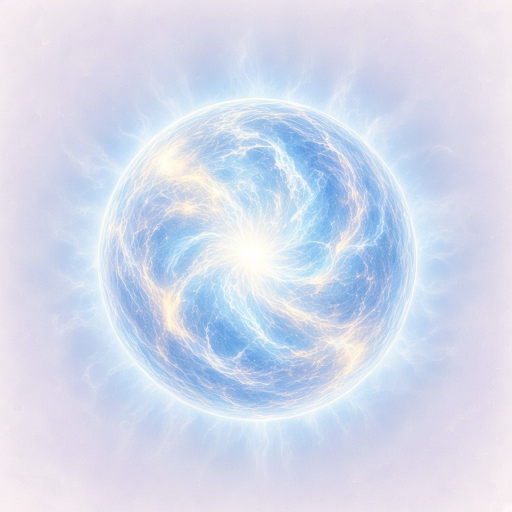
A star is a giant, glowing ball made mostly of extremely hot plasma. Deep inside an ordinary star, gravity produces temperatures and pressures high enough for hydrogen nuclei to join and eventually make helium. That nuclear fusion releases energy that works its way outward as light and heat. The Sun is a star and is by far the closest one to Earth. Other stars look tiny because they are much farther away.
Why stars are tricky to understand
Stars look like little sparkles in the sky, but even the smallest ordinary stars are much wider than Earth. Most stars are cool red dwarfs that are smaller and dimmer than the Sun. They look like points because they are far away. The closest star after the Sun is Proxima Centauri, and its light takes more than four years to reach us.
The Sun does not look like the other stars. It looks like a big bright disk, while the others look like dots to our eyes. That is because the Sun is much closer. If you flew far from the Sun, it would shrink to a dot; if you could travel close enough to another star, that star would look like a bright disk.
Stars are not on fire. Fire is a chemical reaction involving fuel and an oxidizer, while a star is an extremely hot plasma. Stars make their light a different way, by fusing hydrogen nuclei into helium. This is called fusion, and each kilogram of fuel can release millions of times more energy than chemical burning.
Key facts about stars
The Sun is a star. It is the only star that our unaided eyes see as a disk rather than a point.
A few thousand stars can be seen at one time by eye on a very clear, very dark night, away from city lights. Roughly twice that many are bright enough across the entire celestial sphere, and binoculars or a telescope show many more.
Stars come in different colors, and the color tells you how hot the star is. Blue stars are hottest, around 50,000 °F (30,000 K). White and yellow stars like the Sun are in the middle, around 10,000 °F (5,800 K). Red stars are the coolest, around 5,000 °F (3,000 K).
Stars are born inside giant clouds of gas and dust called nebulae. When part of a cloud is squeezed by gravity, it heats up. When the middle gets hot enough, about 18 million °F (10 million °C), fusion starts and a new star turns on.
Stars do not live forever. A star like the Sun lives for about 10 billion years. Big blue stars only live for a few million years. Tiny red stars can live for trillions of years.
The Sun is about 4.6 billion years old and has roughly 5 billion years of fuel left.
Many massive stars die in giant explosions called supernovae. A supernova can briefly rival the light of a galaxy.
Many atoms in your body came from older stars. Carbon, oxygen, calcium, and iron were built through stellar fusion and stellar explosions. Most hydrogen, however, dates to the early universe, and some heavy elements require events such as neutron-star mergers.
Common myths about stars
Myth: Shooting stars are stars. Shooting stars are not stars. They are pieces of rock or dust entering Earth’s air at very high speed. Air compressed in front of the object becomes hot, and material is stripped from its surface, producing the glowing meteor. Many visible meteors begin with particles around sand-grain size, though sizes vary.
Myth: Stars twinkle on their own. Some stars really do change brightness, but the rapid twinkle seen by eye from the ground usually comes from Earth’s air. Moving pockets of air bend and focus the incoming light in changing ways. Above most of the atmosphere, that scintillation disappears.
Myth: The Sun is simply a yellow star. Sunlight is a mixture of visible colors and appears white when viewed safely from above the atmosphere. From the ground, atmospheric scattering can make the solar disk look yellow, orange, or red, especially when the Sun is low. Never look directly at the Sun without proper eye protection.
Myth: All stars are the same size. Ordinary hydrogen-fusing stars range from red dwarfs smaller than the Sun to enormous supergiants. Compact objects about the size of Earth or a city are stellar remnants called white dwarfs and neutron stars, not ordinary stars still fusing hydrogen in their cores.
Myth: Stars burn like fire. Stars run on fusion, not chemical combustion. Their hot, dense cores fuse hydrogen nuclei into helium and release huge amounts of energy.
Frequently asked questions about stars
Why does the Sun look bigger than other stars?
The Sun is much closer to Earth than any other star, about 93 million miles (150 million km) away. The next closest star, Proxima Centauri, is more than 25 trillion miles (40 trillion km) away. That huge difference is why the Sun looks like a big bright disk while other stars look like dots.
Why do stars twinkle?
Earth’s air is always moving, with pockets of different temperature and density shifting around. Starlight has to pass through all of that to reach your eye. The moving air bends and focuses the light by changing amounts, making a point-like star appear to flicker. Above most of the atmosphere, this effect is absent.
Why are stars different colors?
Color tells you how hot a star is. The same thing happens with hot metal. A piece of iron heated up first glows red, then orange, then white, then bluish white as it gets hotter. Stars work the same way. Red stars are cool, white stars are warmer, and blue stars are the hottest.
Can stars die?
Yes. When core hydrogen is used up, a star changes and begins later stages of its life. Stars born with roughly eight times the Sun’s mass or less eventually shed outer layers and leave a white dwarf, about the size of Earth. Many more-massive stars undergo core collapse and a supernova, leaving a neutron star or black hole, although mass loss, composition, and binary companions affect the outcome.
What does it mean when people say we are “made of star stuff”?
It means that many elements in your body were assembled by stars and stellar explosions before the Sun formed. The early universe made mostly hydrogen and helium, plus traces of lithium. Stars and explosive events later produced carbon, oxygen, calcium, iron, and many other elements and spread them into space. Most of the hydrogen in your body, however, is much older than the stars.
Source notes
NASA’s overviews of stars, stellar types and life cycles, and the Sun support the stellar sizes, temperatures, ages, and endpoints described here. NASA’s meteor guide distinguishes meteors from stars. Values are rounded because stars form a continuous population and evolutionary outcomes depend on more than birth mass alone.
Each of this topic’s quiz questions cites a primary source for the specific fact tested. You can play at any level: Rookie, Curious, Sharp, or Expert.
A star is a self-gravitating ball of plasma whose core can sustain nuclear fusion. The Sun is the closest star to Earth, about 93 million miles (150 million km) away. Every star visible at night is much farther away. The bright stars our eyes notice are not a representative sample: most stars are faint red dwarfs smaller and dimmer than the Sun. Stars span many sizes, colors, ages, and companion arrangements.
Why stars are tricky to understand
Stars look like fixed pinpricks of light because their apparent disks are too small for unaided eyes to resolve. Many are smaller than the Sun, while evolved giants can be vastly larger. The light reaching your eyes from a faraway star started its journey years, sometimes thousands of years, ago. The closest star outside the solar system, Proxima Centauri, is about 4.2 light-years away, so even its light needs more than four years to reach Earth.
Stars also age, but on a scale that makes human history feel instant. The Sun has been fusing hydrogen for about 4.6 billion years and has roughly 5 billion years of main-sequence life left. A massive blue star might use its core fuel in only about 10 million years. The biggest stars die fastest, while the smallest, dimmest stars live longest. That is the opposite of what most people guess.
And stars are not actually on fire. Fire is a chemical reaction between a fuel and an oxidizer, while a star is a hot plasma. Stars run on fusion: forcing hydrogen nuclei together so they ultimately form helium and release energy. Each kilogram of fusion fuel can release millions of times more energy than chemical burning, which helps stars shine for millions to trillions of years depending on their mass.
Key facts about stars
The Sun is a G2V star. The G2 describes its spectrum and temperature, while V is the luminosity class used for hydrogen-fusing main-sequence stars. Its effective surface temperature is about 5,780 K (about 9,940 °F), and its combined visible light appears white outside Earth’s atmosphere.
Stars are sorted by the OBAFGKM system. O stars are the hottest, over 30,000 K, and look blue. M stars are the coolest, around 3,000 K, and look red. Astronomers used to memorize the order with the phrase “Oh Be A Fine Girl/Guy, Kiss Me.”
Most stars are red dwarfs. M-class red dwarfs are small, cool, and faint compared with the Sun. Their low luminosity makes them hard to see without a telescope even though they dominate the local stellar population.
Stars spend most of their active lives on the main sequence. This is the long phase when a star fuses hydrogen into helium in its core. The Sun is roughly halfway through its main-sequence lifetime.
Bigger stars die faster. A star with 10 times the Sun’s mass burns through its fuel in around 30 million years. A red dwarf with one tenth the Sun’s mass keeps going for trillions of years, longer than the current age of the universe.
The Sun’s core reaches about 15 million K. That is hot enough for hydrogen nuclei to fuse. The surface is much cooler, only about 5,772 K. The Sun’s outer atmosphere, called the corona, is hotter than the surface again, around 1 to 2 million K, and scientists are still working out why.
Sunlight’s journey has two very different stages. Energy can take many thousands to more than 100,000 years to move from the core through the dense solar interior, depending on what is being modeled. Once light leaves the surface, it reaches Earth in about 8 minutes 20 seconds.
Many stars have companions. Surveys find that roughly half of Sun-like stars belong to binary systems (two stars orbiting each other) or larger groupings, and the fraction climbs higher for hotter, more massive stars. The bright star Sirius, for example, has a hidden white-dwarf companion.
Common myths about stars
Myth: The Sun has one simple yellow color. The Sun emits light across the visible spectrum, and the combined light appears white above Earth’s atmosphere. Scattering along the path through the atmosphere can make the disk look yellow, orange, or red, especially near the horizon.
Myth: Shooting stars are stars. Shooting stars are meteors, flashes produced when pieces of rock or dust enter Earth’s air at roughly 7 to 45 miles per second (11 to 72 km/s). Compression and shock-heating of the air, together with material stripped from the object, produce the glow. Many visible meteors start with tiny particles, but sizes vary.
Myth: The Sun will explode as a supernova. The Sun is not massive enough to undergo iron-core collapse. In about 5 billion years it will swell into a red giant, lose its outer layers, and leave a hot white dwarf about the size of Earth. Stars born above roughly eight solar masses can reach core collapse, but the exact outcome depends on mass loss, composition, rotation, and companions.
Myth: All dying stars become black holes. Sun-like stars leave white dwarfs. Core-collapse events can leave neutron stars or black holes, but there is no universal birth-mass cutoff separating the two outcomes. Winds, chemical composition, rotation, binary mass transfer, and the structure of the final core all matter.
Myth: The North Star is the brightest star. Polaris, the North Star, is only about the 50th brightest star in the night sky. It is famous because it sits almost directly over Earth’s North Pole, so it appears nearly fixed while other stars wheel around it. The brightest star in the night sky is actually Sirius.
Frequently asked questions about stars
Why are some stars blue and others red?
A star’s color is a thermometer for its surface. Hotter stars glow blue or white; cooler stars glow yellow, orange, or red. The same thing happens to a piece of metal heating up in a forge: it turns red first, then orange, yellow, white, and finally bluish-white as it gets hotter.
How can the Sun keep going for billions of years?
Fusion is incredibly efficient. Every second, the Sun converts about 4.4 million tons (4 million metric tons) of mass into pure energy, but it has so much hydrogen to begin with that it can keep this up for about 10 billion years. We are about halfway through that supply now.
What happens to the Sun when it runs out of hydrogen?
In about 5 billion years, the Sun will start to run out of core hydrogen and swell into a red giant, engulfing Mercury and Venus and perhaps Earth. Later it will shed its outer layers, creating a glowing planetary nebula. The leftover core becomes a white dwarf: hot, dense, and slowly cooling over an immense span of time.
Why do astronomers say we are “made of star stuff”?
The early universe produced mostly hydrogen and helium, plus traces of lithium. Stars later made much of the carbon, oxygen, calcium, and iron in living things. Explosions and stellar outflows spread those elements into space. Some of the heaviest nuclei form through rapid neutron capture in events including neutron-star mergers, like GW170817, while other rare explosions may contribute too. The slogan is useful, but it does not mean every atom was forged inside a star.
How do astronomers measure how far away a star is?
For nearby stars, astronomers use parallax: the tiny shift in apparent position as Earth moves around the Sun. At greater distances, pulsating Cepheid variables help extend the distance ladder because their pulsation period is related to luminosity. In 1924, Edwin Hubble’s Cepheid measurements showed that Andromeda lies beyond the Milky Way. Cepheid-calibrated galaxy distances also became part of the evidence connecting distance with cosmic expansion.
You can play this topic at any level: Rookie, Curious, Sharp, or Expert. Each quiz set cites a primary source for the specific fact tested.
A star is a self-gravitating ball of plasma hot enough at its center to sustain nuclear fusion. The Sun fuses about 1.3 trillion pounds (600 billion kg) of hydrogen each second and converts roughly 4.4 million tons (4 million metric tons) of mass into energy per second. Low-mass red dwarfs are predicted to fuse hydrogen for trillions of years, while the most massive stars exhaust core fuel in only a few million. Lower-mass stars never undergo core collapse and end as white dwarfs; stars that do collapse can leave neutron stars or black holes, with the outcome controlled by final core structure and evolutionary history rather than one simple birth-mass rule.
What is often misunderstood about stars
Integrated sunlight appears white above Earth’s atmosphere. From the ground, wavelength-dependent scattering can make the solar disk appear yellow, orange, or red, particularly when it is low and its light crosses a longer atmospheric path. This same general scattering physics helps make a clear daytime sky look blue.
The rapid twinkle seen by eye is usually atmospheric scintillation: moving air with changing refractive properties alters light from a point-like star. Some stars also vary intrinsically over longer or measurable timescales, so it is inaccurate to say all stellar light is perfectly constant.
Polaris, often called the North Star, ranks roughly 50th in apparent brightness. The closest individual star to the Sun is Proxima Centauri at 4.246 light-years, part of the Alpha Centauri triple-star system.
More massive main-sequence stars generally have shorter lives even though they contain more fuel, because their luminosity increases much faster than their mass. A ten-solar-mass star lasts only tens of millions of years, while models give the smallest hydrogen-fusing red dwarfs lifetimes of trillions of years. A familiar power law such as L proportional to M³·⁵ is only an approximation over part of the main sequence; modern empirical work uses different relations in different mass intervals.
The longest-lived hydrogen-fusing stars are therefore low-mass red dwarfs. Their predicted lifetimes exceed the universe’s present age, so none should yet have exhausted core hydrogen through ordinary isolated evolution.
Key facts about stars
Sun’s core temperature: about 15 million K. Hydrogen fusion requires roughly 10 million K to begin.
Sun’s spectral classification: G2V, with an effective surface temperature near 5,780 K. The Sun is about 4.6 billion years old and roughly halfway through its hydrogen-fusing main-sequence lifetime.
Energy transport time: estimates for energy to move from the core through the dense solar interior range from many thousands to more than 100,000 years, depending on the model and what is being tracked. Light leaving the photosphere crosses the Sun-Earth distance in about 8 minutes 20 seconds.
Spectral classification sequence: stars are grouped on the OBAFGKM scale, hottest to coolest. Class O stars exceed 30,000 K and appear blue. Class M stars are roughly 3,000 K and appear red.
Minimum mass for sustained hydrogen fusion: approximately 0.075 to 0.08 solar masses, with composition affecting the boundary. Lower-mass brown dwarfs can briefly fuse deuterium if massive enough but do not sustain ordinary hydrogen fusion like stars.
Neutron-star scale: a typical neutron star places more mass than the Sun inside an object only about city-sized. Radius and density vary with mass and the still-uncertain equation of state, so teaspoon comparisons are illustrations rather than measurements of one uniform material.
First pulsar: Jocelyn Bell Burnell discovered the first pulsating radio source in 1967 as a graduate student working with Antony Hewish. The 1974 physics prize recognized Hewish and Martin Ryle, with the pulsar discovery named in Hewish’s citation; Bell Burnell was not a laureate.
Total stars in the observable universe: estimates require assumptions about galaxy populations and faint stars that cannot be counted individually. A defensible order-of-magnitude range is roughly 10²² to 10²⁴ stars, not a precise census.
Common myths about stars
Myth: The Sun is intrinsically a simple yellow disk. Its visible wavelengths combine to white, while the atmosphere can shift its apparent color toward yellow or red. Scientific solar images are also often assigned false colors to show wavelengths our eyes cannot see.
Myth: A star’s rapid naked-eye twinkle is an intrinsic pulse. That effect, called scintillation, is caused by Earth’s turbulent atmosphere. Intrinsically variable stars do change output, but atmospheric twinkling is a separate phenomenon.
Myth: Shooting stars are stars. Shooting stars are meteors produced when meteoroids enter Earth’s atmosphere at roughly 7 to 45 mi/s (11 to 72 km/s). Compression and shock-heating of the air, plus ablation of the object, create the glow; simple surface friction is not the main explanation. Many visible meteors come from very small particles, though sizes vary.
Myth: Black holes form from any dying star. Lower-mass stars, including the Sun, end as white dwarfs. Some massive stars leave neutron stars, while others form black holes. Approximate birth-mass ranges are useful guides, but mass loss, metallicity, rotation, binary interaction, and the details of core collapse prevent a universal 8-or-25-solar-mass cutoff.
Myth: The North Star never moves. Polaris is close to, but not exactly at, the north celestial pole, so it traces a small circle each sidereal day. Precession gradually moves the celestial pole among the stars; Vega will become a comparatively bright northern pole star in roughly 12,000 years, although it will not sit exactly on the pole either.
Myth: All gold on Earth came from the Sun. Gold and other heavy elements are made by rapid neutron-capture nucleosynthesis. Neutron-star mergers, including the kind observed in GW170817, are confirmed sites, and rare classes of stellar explosions may also contribute. The Sun inherited its gold from events before the solar system formed; it does not make gold in its core.
Frequently asked questions about stars
How does the Sun keep burning if there is no oxygen in space?
The Sun is not burning. Burning is a chemical reaction that requires oxygen. The Sun runs on fusion, a nuclear process that combines hydrogen nuclei into helium and releases energy directly from the change in nuclear binding energy. Fusion does not require oxygen.
How old is the Sun?
The Sun formed approximately 4.6 billion years ago from a collapsing cloud of gas and dust that contained the debris of older stars. Its hydrogen fuel will last roughly 5 more billion years before the Sun begins to die.
What is a shooting star?
A shooting star is a meteor: the glow produced as a small space rock or dust grain enters Earth’s atmosphere. Compressed, shocked air and ablated material become hot and luminous; it is not a star and is not explained mainly by rubbing against air.
Why do stars twinkle?
Earth’s atmosphere causes the apparent twinkling. Layers of warm and cool air refract starlight slightly as it passes through, and the refraction varies as the air shifts. From above the atmosphere, stars do not twinkle.
Why are some stars brighter than others?
Apparent brightness depends on two factors: the star’s luminosity and its distance from Earth. A nearby low-luminosity star can look as bright as a distant high-luminosity star. Parallax provides distances to nearby stars, while calibrated relationships for Cepheid variables and Type Ia supernovae extend the cosmic distance ladder.
What is the closest star to Earth?
The Sun. The closest known star outside the Solar System is Proxima Centauri, about 4.25 light-years away and gravitationally associated with the Alpha Centauri system. Travel time depends on the spacecraft assumed; even our fastest outbound probes would need many thousands of years to cross that distance if aimed there.
How many stars can be seen at night?
Several thousand stars can be visible from one dark location at one time. The exact number depends on eyesight, sky darkness, extinction near the horizon, and the brightness catalog used. Roughly twice the one-time count lies across the entire celestial sphere, including the half hidden below the horizon.
Why do astronomers say “we are made of star stuff”?
Big Bang nucleosynthesis produced mostly hydrogen and helium, with traces of lithium. Later stars and explosive events produced most heavier elements in the human body, including carbon, nitrogen, oxygen, calcium, and iron. The phrase “we are made of star stuff,” popularized by Carl Sagan, summarizes this history without implying that every atom, especially hydrogen, was forged inside a star.
Source notes
NASA’s stellar and solar overviews support the basic life-cycle and Sun values. The peer-reviewed main-sequence relations explain why no single mass-luminosity exponent fits the full stellar range. The multi-observatory GW170817 report supports the neutron-star-merger discussion, and the 1974 physics prize record documents its laureates and citation. Numerical boundaries are presented as approximate where composition or evolutionary history matters.
Trivia question references throughout this topic’s Rookie, Curious, Sharp, and Expert quiz sets each cite a primary source for the specific fact tested.
A star is a self-gravitating ball of plasma supported against gravity by pressure gradients. Gas pressure dominates in many stars, while radiation pressure becomes increasingly important at high mass. The Sun fuses about 1.3 trillion pounds (600 billion kg) of hydrogen each second and converts roughly 4.4 million tons (4 million metric tons) of mass into energy per second. Initial mass is the leading predictor of a single star’s luminosity, lifetime, later burning stages, and remnant, but chemical composition, rotation, mass loss, and binary interaction can redirect the evolution. Sustained hydrogen fusion begins near 0.075 to 0.08 solar masses. The high-mass end is not a hard 150-solar-mass wall: stars with inferred initial masses above that value have been reported, and radiation-driven winds, accretion physics, and mergers complicate any upper limit.
Why stellar physics is non-intuitive
The first surprise is that main-sequence lifetime generally falls as mass rises. More massive stars contain more fuel but use it disproportionately faster. The mass-luminosity relation is empirical and piecewise rather than one universal power law, but luminosity rises much faster than mass through most of the main sequence. A star near ten solar masses therefore lives for only tens of millions of years, versus roughly ten billion for the Sun. Models give the smallest red dwarfs lifetimes measured in trillions of years. Because the universe is only about 13.8 billion years old, no isolated red dwarf should yet have exhausted its core hydrogen through ordinary evolution.
The second surprise is that degenerate matter changes the mass-radius relation. A cold, non-rotating white dwarf becomes smaller as its mass approaches the Chandrasekhar limit, about 1.4 solar masses for an idealized composition-dependent model. Neutron stars require a relativistic treatment: degeneracy contributes, but strong nuclear interactions and the dense-matter equation of state are also essential. Observed neutron stars above two solar masses set a lower bound on the maximum non-rotating mass, while the actual Tolman-Oppenheimer-Volkoff limit remains uncertain and is not simply a measured 2.0-to-2.3-solar-mass interval.
Stars also do not burn in the chemical sense. Fusion rearranges nuclei and releases some binding energy. A star’s effective temperature can be calculated from luminosity and radius with the Stefan-Boltzmann law; the law does not independently fix that temperature. The solar photosphere has an effective temperature near 5,780 K, while much of the corona reaches roughly one to several million kelvin. Magnetic reconnection, waves, and related plasma processes are central to current explanations of coronal heating.
Key facts
Spectral classification. The OBAFGKM sequence runs from the hottest ordinary spectra to the coolest. O stars have effective temperatures above roughly 30,000 K, while M stars span much cooler temperatures. The Sun is G2V near 5,780 K; V identifies the main-sequence luminosity class. Giants and supergiants use other luminosity classes, while white dwarfs use separate spectral designations beginning with D.
Mass-luminosity relation. Main-sequence mass and luminosity are strongly correlated, but one L proportional to M³·⁵ rule does not fit the whole range. Empirical work uses multiple mass domains because internal structure, opacity, and dominant fusion pathways change with mass.
Eddington luminosity. In a simplified spherical, steady, electron-scattering atmosphere, this is the luminosity at which outward radiative acceleration balances gravity. For fully ionized hydrogen it is about 33,000 solar luminosities per solar mass. Real massive stars have opacity peaks, winds, rotation, and inhomogeneous envelopes, so the Eddington value helps explain strong mass loss but does not create a universal 150-solar-mass cutoff.
Wolf-Rayet stars. These hot stars show broad emission lines formed in dense, fast winds and expose nuclear-processed surface material. Some massive single stars uncover those layers through winds, while binary mass transfer can strip lower-mass progenitors. Wolf-Rayet stars are important possible progenitors of stripped-envelope supernovae, but not every Type Ib or Ic event requires a classical, optically bright Wolf-Rayet progenitor.
Helium flash. In sufficiently low-mass red giants, helium ignites in an electron-degenerate core near 100 million K. Because degeneracy pressure initially responds weakly to temperature, the internal power rises extremely rapidly until expansion lifts degeneracy. Most of the energy changes the core rather than blasting apart the envelope, and no comparably abrupt surface flare is expected. The star later settles into stable core-helium burning.
Asymptotic giant branch (AGB). Low- and intermediate-mass stars enter a late phase with hydrogen- and helium-burning shells around a degenerate carbon-oxygen core. Thermal pulses, mixing, and winds can bring carbon and s-process products to the surface and then enrich surrounding space. Many such stars eject envelopes and leave carbon-oxygen white dwarfs, although endpoints near the upper mass boundary are model-dependent.
Compact remnants. Approximate birth-mass ranges are useful teaching guides, but they are not deterministic boundaries. Lower-mass stars leave white dwarfs without core collapse. For massive stars, final core mass and compactness, winds, metallicity, rotation, fallback, and binary stripping influence whether collapse produces a neutron star or black hole and whether a bright supernova occurs.
Supernova taxonomy. Type II spectra show hydrogen, Type Ib lack hydrogen but show helium, and Type Ic lack conspicuous lines of either. Those three classes normally trace core collapse with different degrees of envelope stripping. Type Ia events are thermonuclear disruptions of carbon-oxygen white dwarfs and characteristically show silicon absorption near maximum light. Their calibrated luminosities make them standardizable candles; both Chandrasekhar-mass and sub-Chandrasekhar explosion channels are under study. Type II plateau and faster-declining events form a more continuous family than a strict II-P versus II-L split suggests.
Pair instability. At very high core temperatures, energetic photons create electron-positron pairs, lowering the effective pressure support. Models place full pair-instability disruption at helium-core masses roughly 65 to 130 solar masses, while lower core masses can undergo pulses and survive to later collapse. Mapping those core masses back to birth mass depends strongly on winds and metallicity. Proposed observed examples remain debated, so SN 2007bi should not be presented as a confirmed case.
Gamma-ray bursts. The two-second division is an observational convention, not a perfect progenitor separator. Many long-duration bursts are associated with broad-lined Type Ic supernovae and relativistic-jet models. Short-duration bursts are strongly associated with compact-object mergers; GW170817 and GRB 170817A supplied direct multi-messenger evidence for a neutron-star merger channel. The duration distributions overlap and exceptions exist.
SN 1987A. The supernova was first reported optically on 23 February 1987 in the Large Magellanic Cloud, about 168,000 light-years away. Kamiokande-II, IMB, and Baksan recorded roughly two dozen neutrino events in a brief burst, hours before the optical discovery was reported. The events strongly supported core-collapse theory and became a foundational example of multi-messenger astronomy, but the report-time difference is not a precise photon-versus-neutrino travel-time measurement.
Population III stars. The first generation formed from gas containing essentially no elements heavier than primordial light nuclei, probably within the universe’s first few hundred million years. Their characteristic masses and contribution to reionization remain model-dependent. JWST spectroscopy has produced increasingly strong candidates; a 2026 study confirmed a very distant He II emitter without detected metal lines and found Population III stars the most plausible explanation, while noting that exotic black-hole alternatives were not fully excluded. That is evidence for a candidate population, not an unambiguous spectrum of an individually identified first star.
Common misconceptions at expert level
Misconception: Type II supernovae are thermonuclear explosions of white dwarfs. This conflates Type Ia and Type II. Type Ia explosions are thermonuclear disruptions involving carbon-oxygen white dwarfs, with multiple progenitor and ignition channels under study. Type II events are core collapse of massive stars that retain detectable hydrogen. Classification is based on spectra and light curves, not only a presumed progenitor.
Misconception: Chandrasekhar derived his limit in the 1960s as an established figure. Subrahmanyan Chandrasekhar developed the relativistic white-dwarf calculation as a young scientist in the early 1930s. Arthur Eddington publicly challenged the result in 1935. The 1983 physics prize recognized Chandrasekhar’s theoretical studies of the physical processes important to stellar structure and evolution, more than half a century after that early work; William A. Fowler shared the prize for separate research.
Misconception: The helium flash destroys the star. The flash is an enormous but internal rise in helium-fusion power. Much of its energy expands and restructures the degenerate core, and the envelope is not blown apart like a supernova. The star subsequently settles into stable core-helium burning on the horizontal branch or red clump.
Misconception: Neutron stars can be arbitrarily massive given enough mass at collapse. General relativity and the dense-matter equation of state impose a maximum non-rotating mass, but its exact value is not known. The precisely measured mass of PSR J0740+6620, about 2.08 solar masses, proves that the limit must be at least that high. A non-rotating object above the true limit cannot remain a stable neutron star and is expected to collapse into a black hole.
Misconception: All gamma-ray bursts are mergers. Compact mergers explain much of the short-duration population, while many long bursts are linked to the deaths of massive stripped stars and broad-lined Type Ic supernovae. GRB 980425 and SN 1998bw supplied the first strong event-level association. Duration alone is not a flawless classifier, and neither population is captured by the word all.
Misconception: Wolf-Rayet stars are dim red dwarfs. Wolf-Rayet spectra instead come from hot stars with dense, high-velocity winds and exposed nuclear-processed material. Strong winds can uncover those layers in very massive single stars, and binary interaction can strip a star that began with less mass. The class is defined observationally by its spectrum, not by one initial-mass interval.
Frequently asked questions
Why is the mass-luminosity relation steeper than linear?
Greater weight requires higher central pressure and generally higher temperature. Nuclear reaction rates are temperature-sensitive, and the dominant reaction network and energy-transport mechanism change with mass. Those coupled effects make luminosity rise faster than mass through much of the main sequence. There is no single exponent, however: empirical relations are fitted in separate mass domains and depend on composition and evolutionary state.
Why does a more massive white dwarf have a smaller radius?
Adding mass increases gravity and forces a cold white dwarf to a denser configuration. In the ideal zero-temperature model, the radius declines sharply as relativistic electrons drive the star toward the composition-dependent Chandrasekhar mass. Real white dwarfs have finite temperature, rotation, magnetic fields, and composition differences, but the inverse mass-radius trend is well established.
What is the difference between a Type Ia and Type Ib supernova?
Both normally lack hydrogen lines. A Type Ia spectrum near maximum light characteristically includes strong ionized-silicon absorption and signals a thermonuclear white-dwarf explosion, which need not occur only at the Chandrasekhar mass. Type Ib is a core-collapse class with conspicuous helium but no hydrogen. Type Ic lacks conspicuous hydrogen and helium and is more heavily stripped. Binary interaction can create stripped progenitors without requiring every event to begin as a classical single Wolf-Rayet star.
Why did the SN 1987A neutrino burst arrive before the photons?
In a core-collapse supernova, neutrinos become trapped briefly in the extremely dense proto-neutron star and then diffuse out over seconds, still far sooner than photons can emerge through the stellar envelope. The shock takes hours to reach the photosphere. Neutrinos from SN 1987A were recorded roughly three hours before the first reported optical observation, broadly supporting the core-collapse picture, though the interval also reflects when observers first noticed the optical brightening rather than a precise measurement of shock-breakout time.
Is 150 solar masses a hard upper limit?
No. The Eddington calculation identifies when radiative acceleration balances gravity under specific opacity and symmetry assumptions. It helps explain the intense winds and difficult growth of very massive stars, but rotation, composition, clumping, accretion, and mergers complicate the result. Reported stars with inferred initial masses above 150 solar masses show why that number should be treated as a scale, not an absolute law.
What is the s-process?
The slow neutron-capture process operates especially in AGB stars, where neutron capture is generally slow relative to beta decay. Unstable nuclei therefore often decay before capturing another neutron, and the reaction path stays near the valley of stability. The s-process builds nuclides up to lead and bismuth and accounts for roughly half of the solar-system abundance beyond iron. Much of the remainder comes from rapid neutron capture in neutron-star mergers and possibly rare classes of stellar explosions, with contributions varying strongly by element.
Trivia question references throughout this topic’s Rookie, Curious, Sharp, and Expert quiz sets each cite a primary source for the specific fact tested.
Think you know Stars?
Test yourself. Can you spot the true fact among 3 convincing bluffs?