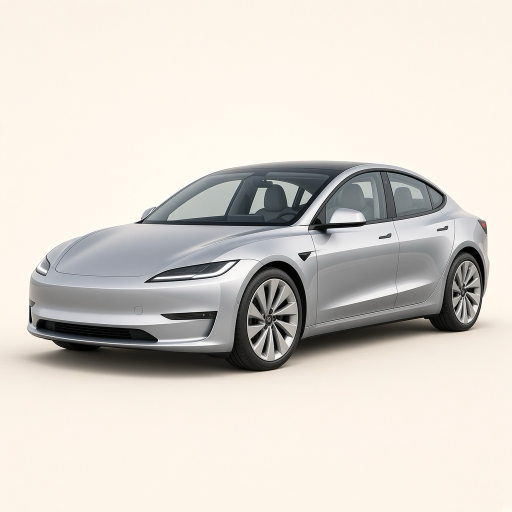
Tesla is an American company that builds cars that run on electricity instead of gasoline. It started in California in 2003, and it is named after Nikola Tesla, an inventor who worked with electricity more than a hundred years ago. A Tesla has no gas tank and no engine that burns fuel. Instead it carries a big battery, and the driver plugs the car in to fill it back up.
Why Tesla is tricky to understand
Lots of people think Elon Musk started Tesla. He did not. Two engineers named Martin Eberhard and Marc Tarpenning started the company in 2003. Musk put money into it the next year and became the chairman, which means he led the group in charge. He became the boss of the whole company in 2008.
The other tricky part is that electric cars are not new. Cars that ran on batteries were on the road in the early 1900s, before gas cars took over. What Tesla did was build an electric car that could drive a long way on one charge, which is the part older electric cars could not do.
Key facts about Tesla
Tesla was started on July 1, 2003, in California.
The name comes from Nikola Tesla, who helped invent the kind of electricity that comes out of a wall outlet.
Tesla’s first car was the Roadster, a small two-seat sports car. The first one went to a customer in February 2008.
The Roadster could drive 244 miles (393 km) on one charge. That was farther than any electric car you could buy at the time.
Tesla built its own charging stops, called Superchargers. The first six opened in California in 2012.
A Tesla has no engine under the hood, so there is an extra trunk up front for backpacks and groceries.
Teslas get new features from software updates sent over the internet, the same way a phone does.
The Cybertruck’s flat sides are made of stainless steel, the shiny metal used for kitchen sinks. That metal is too stiff to bend into curves, which is why the truck looks the way it does.
Tesla’s California factory is not new. General Motors built it in the early 1960s, and from 1984 General Motors and Toyota used it together to build gasoline cars.
The Tesla that is in space
In 2018 a company called SpaceX tested a huge new rocket called Falcon Heavy. Test rockets usually carry a block of concrete or metal so engineers can see how the rocket handles weight. This one carried a red Tesla Roadster instead, with a mannequin in a spacesuit strapped into the driver’s seat. People nicknamed the mannequin Starman.
The rocket launched on February 6, 2018, from Kennedy Space Center in Florida. The car did not land on anything. It went into a long, looping orbit around the Sun that carries it out past the orbit of Mars and back again. It is still out there today, going around and around.
Common myths about Tesla
Myth: Elon Musk invented and built the first Tesla by himself.
Martin Eberhard and Marc Tarpenning started the company. Musk joined in 2004 as an investor and chairman. A legal settlement in 2009 said that five people are allowed to call themselves co-founders.
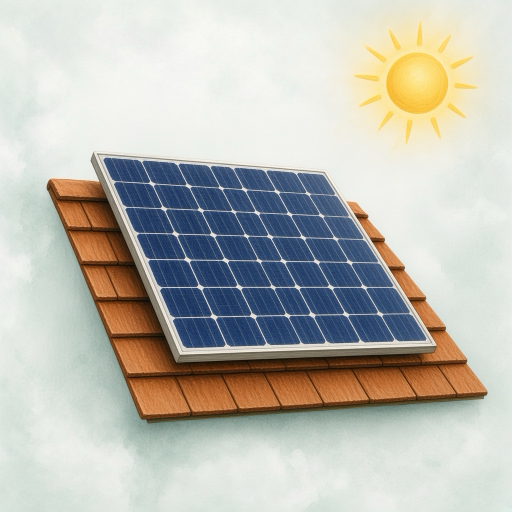
Myth: Teslas run on solar panels on the roof.
Teslas plug in. A panel the size of a car roof cannot collect enough sunlight to move a car. Tesla does sell solar panels for houses, but that is a different product.
Myth: A Tesla has a small gas engine as a backup.
It does not. Some other companies build cars that work that way, but no Tesla carries fuel of any kind.
Myth: You can only charge a Tesla at home.
You can charge at home, but there are also thousands of public Supercharger stops along highways. A Supercharger puts most of a charge back in about 15 to 30 minutes.
Frequently asked questions about Tesla
Who started Tesla?
Martin Eberhard and Marc Tarpenning started it in 2003. Elon Musk joined in 2004, became chairman, and became chief executive in 2008.
Why is it called Tesla?
It is named after Nikola Tesla, an inventor born in 1856 who helped develop the electricity that powers homes. He died in 1943 and had nothing to do with the company.
What was the first Tesla car?
The Roadster, a two-seat sports car. Tesla sold about 2,450 of them between 2008 and 2012.
How far can a Tesla go on one charge?
It depends on the model. The first Roadster was rated at 244 miles (393 km). Newer Teslas go farther.
Is there really a car in space?
Yes. A red Roadster launched on a rocket in February 2018 and now orbits the Sun. NASA’s history pages describe the launch.
Where are Teslas built?
Tesla builds cars in Fremont, California and Austin, Texas, plus factories in Shanghai, China and near Berlin, Germany.
Source notes
The founding date, the name, and the story of who started the company come from the Tesla, Inc. encyclopedia entry. Roadster details, including the 244-mile range and the February 2008 first delivery, come from the first-generation Roadster record. NASA’s Falcon Heavy history page covers the 2018 launch that carried the Roadster into orbit around the Sun. The Supercharger and factory facts come from the Supercharger and Fremont factory entries.
Tesla is an American company that designs and builds electric vehicles, home batteries, and solar equipment. Two engineers, Martin Eberhard and Marc Tarpenning, incorporated it on July 1, 2003, and named it after Nikola Tesla, the inventor whose work on alternating current made household electricity practical. Elon Musk led the company’s first funding round in February 2004 and became chairman and largest shareholder, then chief executive in 2008. Over the next twenty years Tesla turned the electric car from a curiosity into something ordinary carmakers had to copy.
Why Tesla’s story is easy to get wrong
The founding is genuinely confusing, and not by accident. Eberhard and Tarpenning started the company. Musk arrived several months later with money and a board seat. Ian Wright was an early employee, and JB Straubel joined in 2004 and ran the engineering side as chief technology officer until 2019. After Eberhard sued the company and settled in September 2009, all five gained the legal right to call themselves co-founders. So the answer to “who founded Tesla” depends on whether you mean who signed the incorporation papers or who the settlement covers.
The second thing people get wrong is how close Tesla came to failing. In 2008 the company was running out of money in the middle of a financial crisis. In May 2009 the German automaker Daimler bought a stake of just under 10 percent for about $50 million, and that cash arrived when there was very little left. Tesla later borrowed $465 million from a US Department of Energy program and repaid it in May 2013, roughly nine years early.
How the first Tesla was built
Designing a car from nothing is slow and expensive, so Tesla did not. The Roadster used the bonded-aluminum chassis design Lotus had developed for the Elise, a small British sports car, though Tesla redesigned the tub to its own specification rather than starting from an Elise chassis. Tesla stretched the wheelbase about 2 inches (5 cm) and stiffened the structure to carry the weight of a battery. Tesla counted the parts the two cars shared and put the total at under 7 percent.
The battery was the clever part. Instead of designing a custom automotive cell, Tesla wired together 6,831 small lithium-ion cells of the same size that laptop makers already bought by the million. Each one is a cylinder about 0.7 inches (18 mm) across and 2.6 inches (65 mm) long. Buying an existing part in huge numbers kept the cost down and the supply steady.
Tesla also planned a two-speed gearbox so the Roadster could accelerate hard and still reach a high top speed. No supplier could build a two-speed unit that survived the torque of the electric motor, and the early transmissions were rated to last as little as a few thousand miles. The first cars shipped with the two-speed gearbox locked in second gear, and from September 2008 Tesla fitted a single fixed gear from BorgWarner and made up the lost performance with about 30 percent more motor torque.
Key facts about Tesla
Incorporated in Delaware on July 1, 2003, by founders working in California, and named after inventor Nikola Tesla.
First car: the Roadster, delivered starting February 2008. About 2,450 were sold.
The Roadster was the first highway-legal, serial-production, all-electric car to use lithium-ion battery cells, rated by the EPA at 244 miles (393 km) per charge.
Tesla sold shares to the public on June 29, 2010 at $17 each, raising $226 million. It was the first American carmaker to go public since Ford in 1956.
The Model S sedan reached its first customers on June 22, 2012, at the Fremont, California factory.
The Model X SUV arrived in September 2015 with falcon wing rear doors, which are hinged at the roof and have a second hinge partway along so they can open in tight parking spaces.
Tesla revealed the Model 3 on March 31, 2016. More than 325,000 people put down deposits within a week, without a single advertisement.
Tesla announced the Powerwall home battery in April 2015 and installed its first units later that year.
Tesla bought the solar company SolarCity in November 2016 for about $2.1 billion in stock, which is how a car company ended up selling rooftop solar.
Gigafactory Nevada, near Sparks, produces battery cells in partnership with Panasonic.
Tesla moved its headquarters from Palo Alto, California to Austin, Texas in 2021, while keeping the California factory open.
Common myths about Tesla
Myth: Elon Musk founded Tesla in his garage.
He joined in February 2004, several months after the company was incorporated, by leading its first funding round. The first car was engineered by a team using a chassis bought from Lotus.
Myth: Tesla invented the electric car.
Electric cars competed with gasoline cars in the early 1900s and lost on price and convenience. By 1912 a gasoline car cost $650 while an electric roadster sold for $1,750, cheap Texas crude and new filling stations made gasoline easy to buy, the electric starter introduced that same year removed the hand crank, and most Americans outside cities had no electricity at home. Tesla’s contribution was a battery pack good enough to make range practical.
Myth: Tesla built its factories from scratch.
Its first car plant was a used one. The Fremont site was built by General Motors in the early 1960s, reopened in 1984 as NUMMI, a joint venture between General Motors and Toyota, and closed in 2010. Tesla bought it that year for about $42 million.
Myth: The Model 3 was Tesla’s first affordable car.
It was the cheapest at launch, but “affordable” was relative. The advertised starting price was $35,000, and most versions sold for more.
Frequently asked questions about Tesla
Who really founded Tesla?
Martin Eberhard and Marc Tarpenning incorporated the company in 2003. A 2009 settlement lets five people use the co-founder title: Eberhard, Tarpenning, Ian Wright, Elon Musk, and JB Straubel.
What car did Tesla make first?
The Roadster, a two-seat sports car whose chassis Lotus built to Tesla’s own design, delivered from February 2008 to 2012.
How many batteries are in a Tesla Roadster?
6,831 individual lithium-ion cells, the same size used in laptop battery packs of that era.
When did Tesla become a public company?
June 29, 2010, on the NASDAQ market at $17 per share. No American automaker had held an initial public offering since Ford in 1956.
What are falcon wing doors?
The Model X rear doors, which lift upward instead of swinging outward. A second hinge lets the door fold as it rises so it needs very little space beside the car.
Does Tesla make anything besides cars?
Yes. Tesla sells home and utility batteries, a business it started on its own in 2013, and solar products, which came from buying SolarCity in 2016.
Source notes
Founding dates, the co-founder settlement, and the 2010 stock market debut come from the Tesla, Inc. encyclopedia record. The Lotus chassis, the 6,831-cell pack, and the 244-mile EPA rating come from the first-generation Roadster entry. Tesla’s own June 2012 press release documents the first Model S deliveries. Falcon wing door details come from the Model X entry, the reservation figures from the Model 3 entry, and the Nevada battery plant from the Giga Nevada entry.
Tesla, Inc. is an American manufacturer of electric vehicles, battery storage systems, and solar equipment, incorporated in Delaware on July 1, 2003 by Martin Eberhard and Marc Tarpenning. It is named after Nikola Tesla, whose work on alternating current made the electrical grid practical. The company’s historical significance is narrower than the noise around it suggests and also easy to state: Tesla demonstrated that a lithium-ion battery car could be desirable, could be built at volume, and could be sold profitably, and the rest of the industry restructured its product plans in response.
Why the record is harder to pin down than it looks
Tesla’s history attracts superlatives, and most of them need qualification. The company did not invent the electric car; battery-powered vehicles competed seriously with gasoline in the 1900s and lost on price and fueling convenience, with a gasoline car selling for $650 in 1912 against $1,750 for an electric roadster. It did not invent the lithium-ion cell, which Sony commercialized in 1991. It was not the first company to put a battery in a modern production car.
What it did do is verifiable and specific. The 2008 Roadster was the first serial-production, highway-legal car to use lithium-ion cells, and the first production electric car rated for more than 200 miles (320 km) on a charge, at an EPA figure of 244 miles (393 km). That threshold is what separated an electric car usable only inside a city from one usable between cities.
The founding is also contested. Eberhard and Tarpenning incorporated the company; Elon Musk led the February 2004 funding round and became chairman, then chief executive in 2008. A September 2009 settlement of Eberhard’s lawsuit granted co-founder status to five people, adding Ian Wright and JB Straubel. The five-founder framing is the outcome of a legal agreement rather than a historical finding.
Engineering decisions that shaped the company
Commodity cells. The Roadster used 6,831 cells in the 18650 format, the size already produced in enormous volume for laptops. Choosing an existing high-volume part gave a startup a supply chain it could not otherwise have built, at a price no custom automotive cell could match at that scale.
A single gear. Tesla intended the Roadster to use a two-speed gearbox. The two-speed units its suppliers built could not survive the shift duty of a high-torque, high-rpm electric motor, and the early transmissions were rated to last as little as a few thousand miles. The first cars shipped with the two-speed unit locked in second gear; in September 2008 Tesla selected BorgWarner to build a fixed single-speed reduction gear, recovering the performance with about 30 percent more motor torque and a more capable inverter. Nearly every electric car since uses a single ratio.
Charging as infrastructure. Tesla opened its first six Supercharger stations in California in September 2012, positioned so a Model S could drive San Francisco to Los Angeles by stopping along the way. Selling a long-range car without a charging network would have limited the car to owners with a garage and a short commute.
Casting instead of assembling. Tesla ordered very large aluminum die-casting machines, known as Giga Presses, from the Italian manufacturer IDRA. A rear underbody that had been welded together from roughly 70 stamped pieces became a single casting, which removed the joints and the robots that used to align them.
Manufacturing and speed
Tesla bought its first car plant secondhand. The Fremont, California site was built by General Motors in the early 1960s and reopened in December 1984 as NUMMI, a General Motors and Toyota joint venture, before closing in April 2010; Tesla completed the purchase that October for about $42 million.
The Model 3 ramp in 2018 produced one of the more unusual episodes in modern manufacturing. Short of floor space and chasing a target of 5,000 cars per week, Tesla erected a fabric-covered structure on the Fremont lot in about three weeks and ran a general assembly line inside it. Within weeks the line was building a measurable share of weekly output.
Gigafactory Shanghai compressed the timeline further. Construction began in January 2019 and the first China-built Model 3 sedans reached customers that December, under twelve months from groundbreaking. It was the first wholly foreign-owned car plant in China.
Key facts
Incorporated July 1, 2003; named for Nikola Tesla; first vehicle delivered February 2008.
Daimler bought a stake of just under 10 percent for about $50 million in May 2009, when Tesla was nearly out of cash.
Tesla borrowed $465 million under the Department of Energy’s Advanced Technology Vehicles Manufacturing program and repaid it on May 22, 2013, about nine years early, the first automaker in the program to repay in full.
Initial public offering June 29, 2010 at $17 per share, raising $226 million, the first American automaker to go public since Ford in 1956.
Model S deliveries began June 22, 2012; Model X with falcon wing doors in September 2015; Model 3 on July 28, 2017; Model Y in 2020; Cybertruck in November 2023.
On June 12, 2014 Tesla pledged not to initiate patent suits against good faith users of its technology. It kept ownership of the patents.
First profitable full year: 2020, with net income of $721 million on revenue of $31.5 billion, helped by $1.58 billion in regulatory credits sold to other automakers.
Added to the S&P 500 on December 21, 2020, the largest company ever admitted to the index.
In the first quarter of 2023 the Model Y outsold every other vehicle worldwide, the first quarter in which a battery electric vehicle led global sales.
Tesla’s Semi, a Class 8 tractor, reached its first customer, PepsiCo, on December 1, 2022.
The plug that became a standard
Tesla designed its own charging connector because no adequate standard existed when the Model S launched. In November 2022 it published the design as the North American Charging Standard and invited others to use it. Ford announced in May 2023 that it would adopt the connector, General Motors followed within weeks, and most of the industry followed them. The SAE then took the design through its standards process and published it as SAE J3400.
The result is unusual: a connector designed by one automaker for its own cars became the shared North American standard, and the competing CCS plug is being displaced in that market.
Energy storage
Tesla acquired SolarCity in November 2016 for about $2.1 billion in stock, folding rooftop solar into a company that had been selling battery storage since 2013. The clearest demonstration of the storage side came a year later in Australia. After a statewide blackout in South Australia, Tesla won a tender and installed a 100 MW, 129 MWh battery near Jamestown under a public promise to finish within 100 days of contract signing or supply it free. The Hornsdale Power Reserve was energized in late 2017, ahead of the deadline, and became a working demonstration that grid batteries can respond to frequency events faster than conventional generators.
Common misconceptions
“Tesla invented the electric car.” Electric vehicles date to the 19th century. Tesla’s advance was a lithium-ion pack with enough usable range to make an electric car a general-purpose vehicle.
“Tesla gave away its patents.” The 2014 pledge was a promise not to sue good faith users. Tesla retained ownership and continues to file patents.
“Tesla has always been profitable because the cars are expensive.” Tesla lost money for seventeen consecutive years. 2020 was its first profitable year, and without regulatory credit sales that year would also have been a loss.
“Superchargers are just fast public outlets.” They are a proprietary DC network Tesla built, operates, and now shares with other brands, and the connector design became an SAE standard.
“The Model Y was the world’s best-selling car in 2023.” It led the first quarter of that year on JATO Dynamics figures. The full-year comparison is disputed, because Toyota counts several Corolla body styles under one nameplate.
Frequently asked questions
Was Elon Musk a founder of Tesla?
Not at incorporation. He led the first funding round in February 2004, became chairman, and became chief executive in 2008. A 2009 legal settlement allows him and four others to use the co-founder title.
What made the Roadster technically significant?
It was the first serial-production highway-legal car to run on lithium-ion cells, and the first production electric car rated above 200 miles (320 km) per charge.
Did taxpayers pay for Tesla?
Tesla borrowed $465 million from a federal loan program and repaid it with interest in 2013, roughly nine years ahead of the due date. It has also earned substantial revenue from selling regulatory credits to other automakers.
Why did other carmakers adopt Tesla’s plug?
Tesla published the connector design in 2022 and had already built the largest fast-charging network in North America. Ford and GM adopted it in 2023, and the SAE standardized it as J3400.
How fast did Tesla build the Shanghai plant?
Groundbreaking was January 2019 and the first customer cars were delivered in December 2019, under a year.
What does Tesla sell besides vehicles?
Battery storage for homes, businesses, and electrical grids, plus solar products acquired with SolarCity in 2016.
Tesla, Inc. is an American manufacturer of battery electric vehicles, stationary energy storage, and solar products, incorporated in 2003 and renamed from Tesla Motors, Inc. in February 2017 to reflect a business that had grown past vehicles. Its engineering identity rests on a series of decisions about cells, packs, and factories rather than on any single invention. The most consequential of those decisions was to treat the battery cell as a commodity to be bought in enormous quantity and engineered around, rather than as a component to be designed from first principles.
Why the engineering record resists a simple summary
Tesla is frequently credited with inventions it did not make and denied credit for the integration work it actually did. Sony commercialized the lithium-ion cell in 1991. Induction motors date to the 1880s. Die casting is a century old. None of the underlying technologies originated at Tesla.
The company’s contribution is at the level of system architecture and manufacturing: which cell format to standardize on, how to package thousands of cells so they can be cooled and protected, how to reduce a body-in-white to fewer pieces, and how to build a charging network that makes long-range use practical. Those choices are less quotable than an invention, and they are what changed the industry’s product plans.
A second complication is that Tesla’s public technical claims arrive at product events, ahead of production, and some arrive years ahead of what shipped. The 4680 cell was presented in September 2020; volume production of vehicles using it followed slowly. Reading the record accurately means separating announced designs from delivered ones.
Cell formats: 18650 to 2170 to 4680
Tesla’s cell naming follows physical dimensions in millimeters, not capacity. An 18650 cell measures 18 mm in diameter by 65 mm in length. The 2170 measures 21 mm by 70 mm. The 4680 measures 46 mm by 80 mm.
The Roadster used 6,831 cells in the 18650 format, arranged as 11 sheets in series, each sheet holding 9 bricks in series, each brick holding 69 cells in parallel. The pack weighed roughly 990 pounds (450 kg) and stored about 53 kWh at a nominal 375 volts. Nothing about that cell was designed for automotive service. It was chosen because laptop demand had already driven its cost down and its supply up.
The 2170, developed jointly with Panasonic for Gigafactory Nevada, was the first format Tesla specified for its own purposes, entering production for the Model 3 and for the Powerwall 2 and Powerpack 2 storage products.
The 4680 changed the tradeoff. Its volume is roughly five and a half times that of a 2170, which cuts the number of cells, welds, and interconnects in a pack by a large factor. Larger cylindrical cells normally suffer for it: in a conventional wound cell, current has to travel the length of the electrode foil to reach a small welded tab, and both resistance and heat generation rise with that path length. Tesla’s answer was a tabless design that makes contact along the entire edge of the wound electrode, so the conduction path stays short as the cell grows. The design goal presented in 2020 was higher power capability and lower cost per kilowatt-hour at pack level.
The dry electrode process
Conventional electrode manufacturing mixes active material into a solvent slurry, coats it onto metal foil, and then evaporates the solvent in drying ovens that can run the length of a building. The ovens consume floor area, capital, and energy.
Tesla acquired Maxwell Technologies in May 2019, primarily for a dry electrode process that applies the active material as a powder and skips the drying step. Tesla sold Maxwell’s ultracapacitor business to UCAP Power in 2021 while retaining the electrode technology. Moving that process from prototype to high-volume production proved slower than the acquisition timeline implied, which is a useful reminder that process technology is where battery manufacturing is usually hardest.
Packs as structure
Early Tesla packs were self-contained assemblies bolted beneath the floor: modules inside an enclosure, with the vehicle’s structure built around them. The structural pack introduced with 4680-cell Model Y production inverts that relationship. The pack becomes a load-bearing member of the body, tying the front and rear underbody castings together, with the cells themselves transferring shear between the upper and lower pack skins. Modules and their intermediate supports disappear.
The aerospace analogy Tesla has cited is the wet wing, where the wing structure doubles as the fuel tank rather than carrying a separate tank inside it. The benefit is mass and part count; the cost is serviceability, since a structural pack is considerably harder to open and repair than a bolted module assembly.
Motors
The Roadster, Model S, and Model X used alternating current induction motors, in which the stator’s rotating field induces current in the rotor and the rotor turns slightly slower than that field. Induction machines need no permanent magnets and tolerate wide speed ranges, but the induced rotor currents dissipate energy as heat.
The Model 3 introduced an internal permanent magnet synchronous reluctance machine. It draws torque from two sources at once: magnets embedded within the rotor, and reluctance torque produced by shaping the rotor so it tends to align with the stator field. That combination raises efficiency at the cruising loads where a car spends most of its energy, at the price of depending on rare earth magnet material. Dual-motor Teslas have paired the two machine types, using each where its efficiency curve suits the duty.
Tesla also abandoned multi-speed gearing early. The Roadster was designed for a two-speed gearbox, but the transmission its first supplier delivered proved not to be durable under the motor’s torque, with early units rated to last as little as a few thousand miles. Tesla shipped early cars with that gearbox locked in second gear, then selected BorgWarner in September 2008 to build a fixed single-speed reduction gear, recovering the lost performance through roughly 30 percent more motor torque and a more capable inverter. Nearly all battery electric cars since use a single ratio, because an electric machine already produces usable torque across a wide speed range.
Manufacturing
Giga castings. Tesla ordered very large aluminum high-pressure die-casting machines from IDRA of Italy, with clamping forces in the range of 5,500 to 6,100 tons. A rear underbody previously assembled from roughly 70 stamped and welded parts became a single casting. Removing joints also removes the fixtures, welding robots, and dimensional variation associated with holding many parts in alignment. The tradeoff appears after a collision: a large casting is not repaired the way a stamped assembly is.
The Fremont tent. During the 2018 Model 3 ramp, Tesla ran out of covered floor space while chasing a target of 5,000 vehicles per week. It erected a fabric-covered structure on the Fremont lot in about three weeks and ran a general assembly line, known internally as GA4, inside it. The line produced a measurable share of weekly output within weeks of going up.
Shanghai. Construction of Gigafactory Shanghai began in January 2019 and the first China-built Model 3 sedans were delivered in December of the same year. It was the first wholly foreign-owned automobile plant in China, permitted under rules Beijing had recently relaxed.
Vehicle electrical architecture
Passenger cars have used 12-volt low-voltage systems since the 1950s. The Cybertruck moved to a 48-volt low-voltage architecture. For a given power draw, quadrupling the voltage quarters the current, and because resistive loss scales with the square of current, the heat dissipated in the harness falls by a factor of about sixteen. Thinner conductors follow, along with less mass and less copper.
The Cybertruck also uses steer-by-wire, with no mechanical column connecting the steering wheel to the front wheels. Electric actuators do the work, which allows the steering ratio to vary with speed so that low-speed maneuvering needs less than a full turn of the wheel. The 48-volt system is what makes actuators of that capacity practical.
Its body panels are 300-series stainless steel, left unpainted. Stainless of that grade work-hardens as it deforms, which is why the vehicle’s panels are flat rather than drawn into curves.
Charging and the standard
Tesla designed its own connector because no adequate North American fast-charging standard existed when the Model S launched, and it opened the first six Supercharger stations in California in September 2012. In November 2022 it published the design as the North American Charging Standard and invited adoption. Ford committed in May 2023, General Motors followed within weeks, and the SAE subsequently published the connector as SAE J3400.
The competitive dynamic is worth noting: a proprietary interface built by one manufacturer displaced the industry-designed CCS connector in one market, largely because the network behind it already existed at scale.
Grid storage
Tesla acquired SolarCity in November 2016 for about $2.1 billion in stock. The clearest demonstration of the storage business followed a statewide blackout in South Australia. Tesla won a tender and installed a 100 MW, 129 MWh system next to the Hornsdale wind farm near Jamestown, under a public commitment to deliver within 100 days of contract signing or provide it at no cost. The system was energized in late 2017, inside the window.
Its operational significance was in frequency control. A grid battery can inject or absorb power within milliseconds, far faster than a thermal generator can change output, and the Hornsdale installation demonstrated that behavior at market scale.
Key facts
Cell format names encode dimensions in millimeters: 18650 is 18 mm by 65 mm, 4680 is 46 mm by 80 mm.
The Roadster pack held 6,831 cells in an 11-series, 9-series, 69-parallel arrangement, about 53 kWh at 375 volts nominal.
A 4680 cell has roughly five and a half times the volume of a 2170.
Tabless electrode construction shortens the internal conduction path so a larger cylindrical cell does not pay a resistance penalty.
Maxwell Technologies was acquired in May 2019 for its dry electrode process; its ultracapacitor business was divested in 2021.
Giga Press castings replaced rear underbody assemblies of roughly 70 parts with one piece.
The Model 3 introduced an internal permanent magnet synchronous reluctance motor; the Model S and Model X had used induction machines.
The Cybertruck uses a 48-volt low-voltage architecture, steer-by-wire, and unpainted 300-series stainless panels.
Tesla published its connector as NACS in 2022; the SAE standardized it as J3400 after Ford and GM adopted it in 2023.
Hornsdale Power Reserve: 100 MW, 129 MWh, energized in 2017 under the 100-day commitment.
Common misconceptions at expert level
“The 4680 number is a capacity rating.” It is a dimensional code, consistent with the 18650 and 2170 names before it.
“Tabless means the cell has no current collector.” The cell still has collectors. The change is that contact is made along the full edge of the wound electrode rather than at a discrete welded tab.
“Structural packs are simply packs that carry load.” The distinguishing feature is that intermediate modules are removed and the cells participate in shear transfer between pack skins, which is why the front and rear castings can be tied through the pack.
“Tesla uses permanent magnet motors throughout.” Model S and Model X shipped with induction motors for years. Later dual-motor vehicles have combined machine types.
“Giga casting is just bigger die casting.” Scale changes the engineering problem: alloys must fill long, thin sections without heat treatment distortion, which is why Tesla developed casting alloys alongside the machines.
Frequently asked questions
Why did Tesla start with laptop cells?
Because 18650 cells were already produced in the billions each year for consumer electronics. A startup could buy quality cells at a price and volume no bespoke automotive cell could match in 2006.
What problem does the tabless design solve?
Resistance and heat. In a conventional wound cell, current travels the length of the electrode to reach a tab, so a larger cell means a longer path and more loss. Full-edge contact keeps the path short as diameter grows.
Why did the two-speed Roadster gearbox fail?
The two-speed transmission designed by Tesla’s first supplier proved not to be durable under the motor’s torque, and no supplier delivered a unit that survived the duty cycle on schedule. Tesla shipped a single fixed ratio from BorgWarner in September 2008 instead.
Is a 48-volt architecture unique to Tesla?
The concept is not; mild hybrids have used 48-volt subsystems for years. Applying it as the vehicle’s entire low-voltage architecture, paired with steer-by-wire, is what made the Cybertruck implementation unusual.
How did a proprietary plug become an SAE standard?
Tesla published the design in 2022 and had the largest North American fast-charging network behind it. Ford and GM adopted it in 2023 and the SAE published it as J3400.
What made Hornsdale technically significant?
Response speed. Battery storage can change output within milliseconds, which suits frequency control services that thermal plants cannot provide at the same speed.
Source notes
Corporate history and the 2017 renaming come from the Tesla, Inc. record. Roadster pack architecture and range figures come from the first-generation Roadster entry, with the single-speed gearbox change documented in Tesla’s own BorgWarner announcement. Cell geometry and the tabless design come from the 4680 battery entry, the dry electrode acquisition and divestiture from Maxwell Technologies, and casting practice from Giga Press. The 48-volt architecture, steer-by-wire, and stainless panel specification come from the Cybertruck entry, the connector history from North American Charging System, and the Australian storage project from Hornsdale Power Reserve.
Think you know Tesla?
Test yourself. Can you spot the true fact among 3 convincing bluffs?